Grow it. · PickleRadio
Growing Adam F1 beside other cucumbers
Adam F1 can set fruit without bees. Before adding another cucumber to the greenhouse, check its pollination needs and decide how much seedless fruit matters to you.
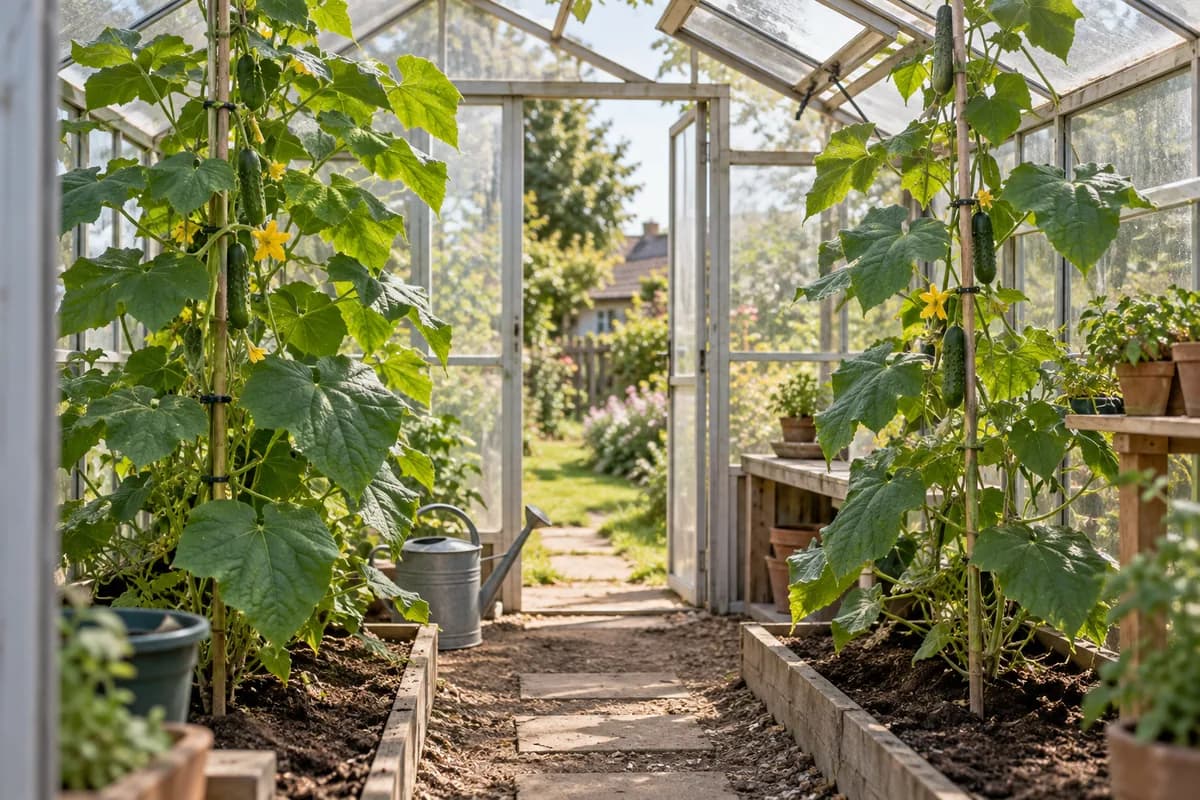
In this guide7 sections
Choose the planting mix before you sow
Adam F1 does not need a second cucumber to supply pollen. Johnny’s identifies Adam Gherkin F1 as parthenocarpic, meaning it can form fruit without pollination. Choose a companion for its harvest, then check whether its pollination needs fit the arrangement.
For a first greenhouse crop, we would start with plants whose pollination requirements you can manage together. Settle how insects will enter or be excluded before adding another packet to the order.
If you are still choosing Adam for small whole pickles, the Latvian greenhouse comparison covers its documented picking window. Here the question is what happens when another cucumber shares that growing space.
Read the second cucumber’s label
Find its exact variety name, then look for an explicit pollination instruction. “All female” alone leaves the question unanswered. Purdue separates female flowering from parthenocarpy: gynoecious describes a plant producing predominantly female flowers; parthenocarpic describes its ability to set fruit without pollination. A cultivar can have both traits.
Keep the packet or supplier’s description with the name. Our cucumber catalogue shows which growing requirements have supporting evidence and which remain unknown. Where a field is blank, check the supplier before relying on that trait.
For an unnamed seedling, ask the supplier to identify it before deciding on insect exclusion. The seed-packet guide explains the other labels you may meet. A photograph of a cucumber cannot reliably answer this planning question.
How important is seedless fruit to you?
Fruit set without pollen and keeping a fruit seedless are separate aims. Minnesota Extension explains that pollinated parthenocarpic cucumbers can develop seeds and become misshapen. This is a possible effect, not a prediction that every fruit beside another variety will be spoiled.
Maryland’s guidance on mixed plantings treats seed development as a consideration when seedless fruit is your aim. Decide whether that matters enough to change your planting; some variation may be acceptable for your own harvest.
Both varieties can set fruit without pollination
There is no need to add a pollen-producing cucumber for either plant’s fruit set. This is the pairing we would investigate first if you want a straightforward enclosed planting.
Check each supplier’s flowering and isolation advice if seedlessness is important. Seeing “parthenocarpic” on both packets does not establish that no pollen can reach the flowers. Keep that requirement in the plan even when the fruit-set question is settled.
The other variety needs pollen, and you want seedless Adam fruit
We would reconsider the companion variety here. Supplying pollen to one planting while limiting the other’s exposure complicates a shared space. Choosing a different companion before sowing is simpler than adding a second growing structure.
Maryland describes using insect barriers with parthenocarpic crops. If you keep both, investigate a separately protected space for Adam with adequate ventilation. We have no reliable isolation distance to offer for pots sharing one open greenhouse.
The other variety needs pollen, and some seeds are acceptable
You may choose to keep the mixed planting and accept the possible change in Adam’s fruit. Make provision for the companion’s pollination requirement; a barrier around both plants could prevent it receiving the pollen it needs.
Keep the names beside the plants so later observations belong to the right variety. Record which fruit you liked using and whether the arrangement was manageable. That gives next season’s choice a better basis than trying to make every packet fit the same greenhouse.
Keep the greenhouse ventilated
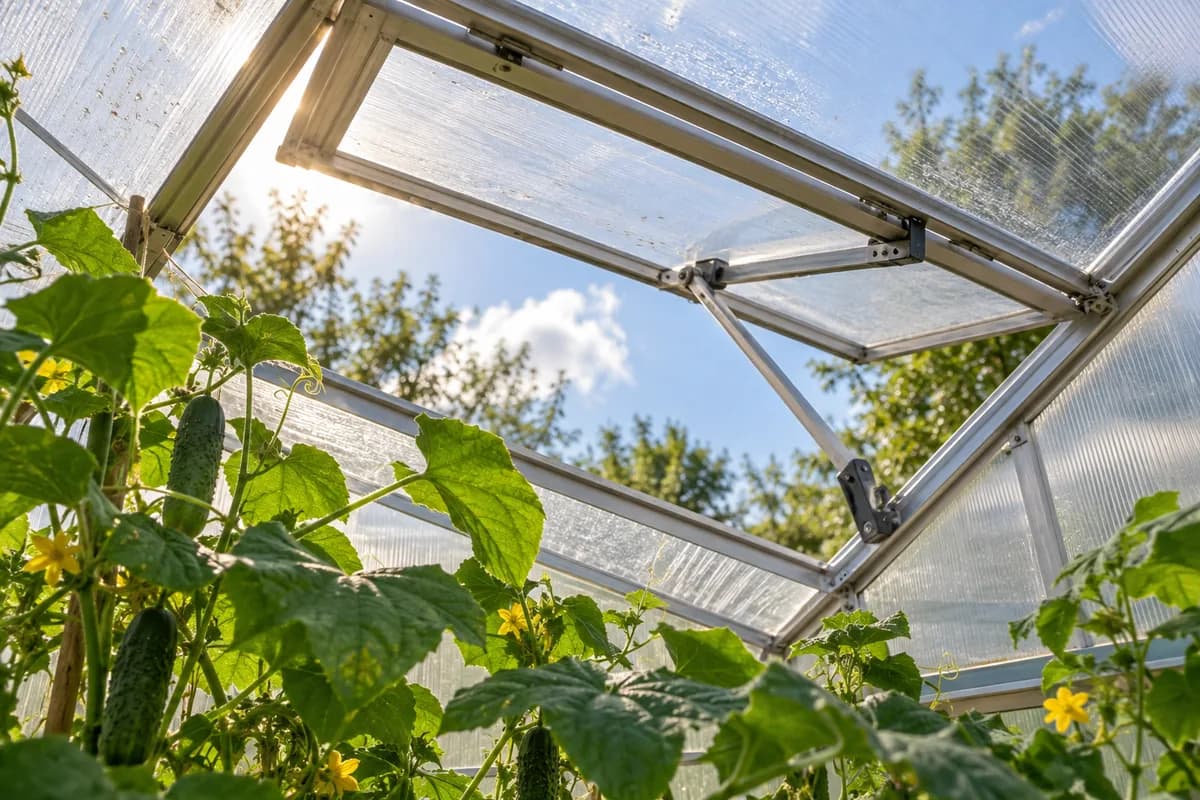
Closing the door to exclude insects can also remove ventilation. The RHS recommends monitoring greenhouse temperature and using vents and shading to control excess heat. A pollination plan still has to leave the plants a suitable growing environment.
Look at how your own greenhouse works on a sunny day. Which openings release heat? Which need to remain usable if you install a barrier? Note who can check the space when you are away. Work through those questions before buying netting or making a cover.
We would keep a thermometer and a workable ventilation arrangement ahead of an extra cultivar on the shopping list. This guide does not specify a mesh size: a material that excludes an insect still needs to suit the greenhouse’s ventilation design.
If a cucumber starts to curve
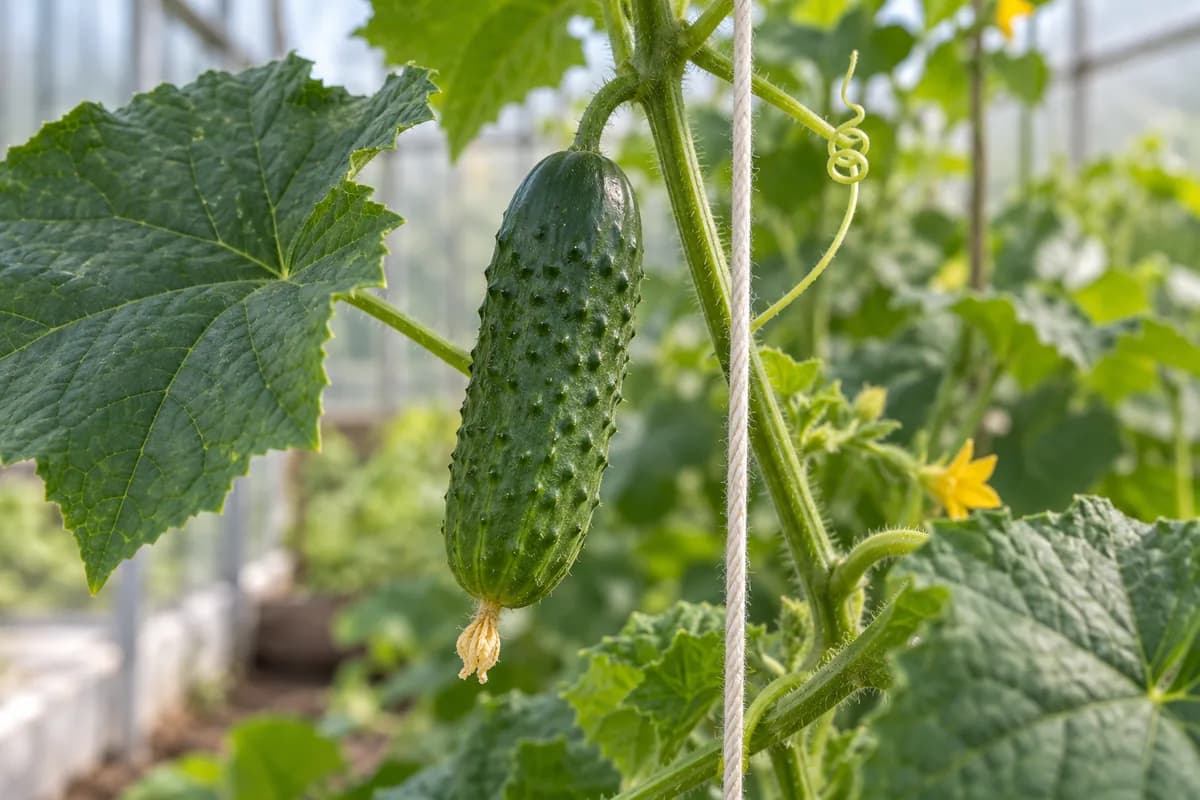
If an Adam fruit develops an odd shape, inspect the growing conditions before reaching for a pollinating brush. Purdue identifies uneven water supply, cool conditions and obstruction by ties or stems among other causes of curved cucumbers. Shape alone cannot tell you which cause applies.
Check that the fruit has room to expand and review the watering checks. If flowers or small fruit keep failing, follow the flowers-without-fruit guide with the exact cultivar name to hand.
Write down the decision before buying seed
Make a short note you can use beside the plants. For example: “Adam F1 plus a companion not yet chosen. Seedless fruit matters. Check the companion’s pollination instructions and the vent arrangement before ordering.”
- Write every intended cucumber’s exact name and whether it needs pollen, can set fruit without it, or remains unverified.
- Decide whether seedlessness is a requirement or a preference you can relax.
- Record the next unresolved job, such as identifying a seedling or checking how a proposed barrier affects ventilation.
- Keep that note with your supplies and planting plan so a later substitution does not silently change the arrangement.
Sources
Checked 18 September 2026. The planting choices above are editorial recommendations drawn from the linked guidance. PickleRadio has not carried out a comparative Adam greenhouse trial.
Keep your project growing.
Small greenhouse picklers for Latvia
Compare verified greenhouse traits, small-pickle harvest lengths and regional seed references.
Read the guidePlan everyday careWater and feed your cucumber plant
Use the plant, potting mix and conditions to guide its everyday care.
Read the guideIf fruit fails to developFlowers, but no cucumbers?
Work through flowering, pollination and plant conditions before changing your care.
Read the guide