Grow it. · PickleRadio
White powder on cucumber leaves: checking for powdery mildew
Inspect the leaf pattern, compare the main lookalike and decide what is worth doing for the crop you still have. A white mark alone is not a complete diagnosis.
In this guide8 sections
White patches deserve a closer look
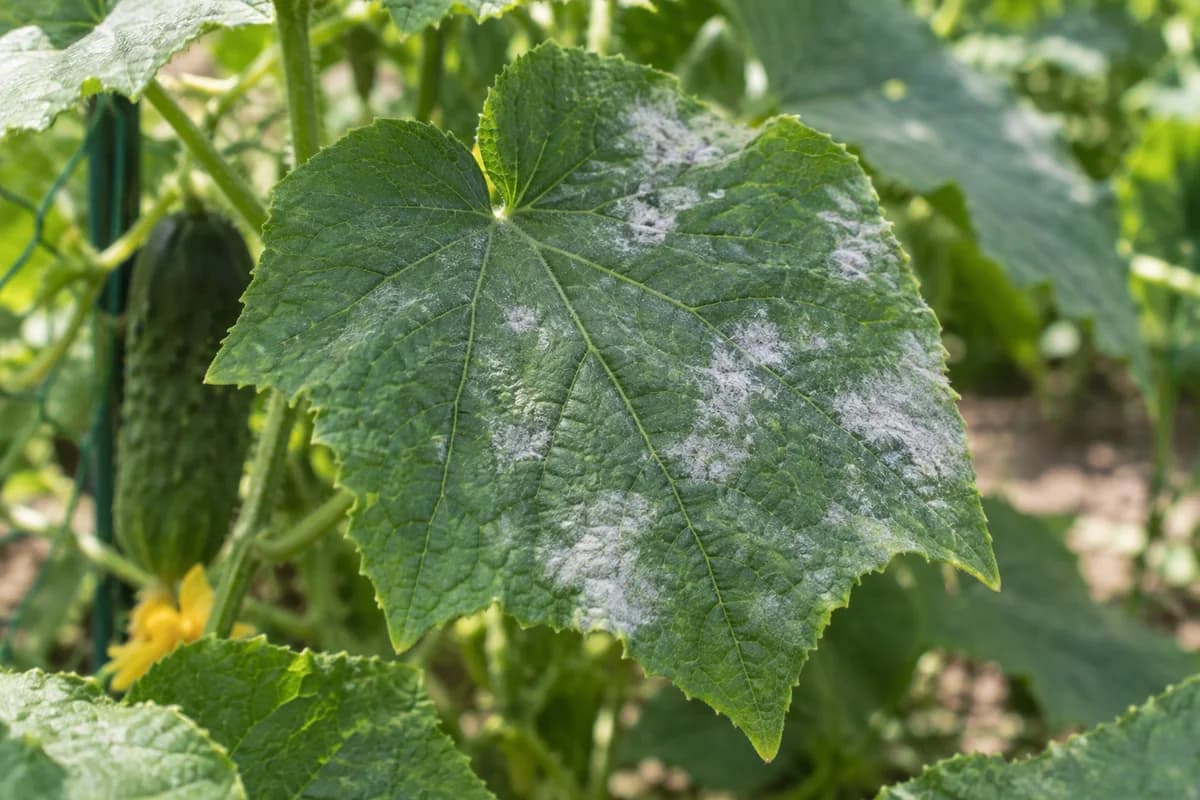
Powdery mildew is a plausible explanation when white, dusty-looking patches spread across cucumber leaves. Minnesota Extension describes patches on either leaf surface that can join into larger areas. Start by checking several leaves and the rest of the plant; one pale mark in a photo is not enough to identify the cause.
Our first choice is to inspect and record the pattern before spraying or cutting. On a mature vine with only a few affected leaves, there may still be useful crop to protect. On a plant declining quickly, the priority is a reliable diagnosis, especially if the marks do not match the powdery pattern.
Inspect both sides before choosing a treatment
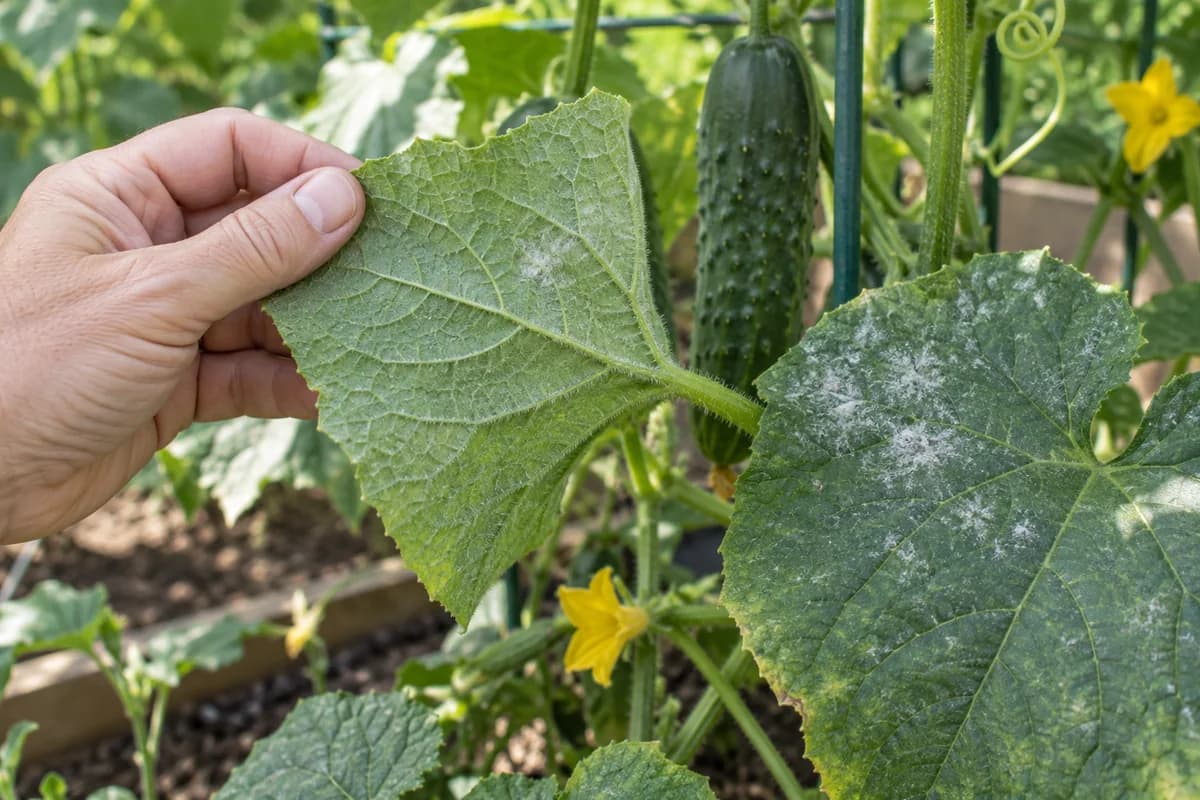
Lift an affected leaf gently and look underneath. Check an older leaf, a newer one and the stem nearby. Take clear photographs of both leaf surfaces plus one of the whole plant. Keep the date and note whether the patches have expanded since the previous check.
- Powdery mildew: look for irregular white or grey superficial patches, often first noticed on older foliage. Minnesota’s identification guidance also describes yellowing before obvious powder appears. A leaf can have more than one symptom.
- Downy mildew: yellow patches can be angular and bounded by veins, with darker purplish-grey growth underneath. Maryland’s downy-mildew guide warns that the underside growth is not always visible and symptoms vary. Do not rename every white, yellow or brown cucumber leaf “powdery mildew”.
- If the pattern is unclear, send the photographs and growing history to your local extension service or horticultural adviser. Mention anything recently sprayed on the plant. Avoid adding a second product while you are still trying to identify the first marks.
Dry weather does not rule it out
A run of dry days is not evidence against powdery mildew. Maryland explains that this fungus can develop in dry conditions and does not need wet foliage in the way many other leaf diseases do. Humidity and air movement around crowded foliage are different observations from whether it rained.
Keep root watering appropriate to the plant. Withholding water to make the leaves “drier” can create another problem. Equally, a thirsty-looking vine is not a reason to flood an already wet container. Use the root-moisture and drainage checks alongside the leaf inspection.
Open up the growing space without stripping the vine
Move weeds and avoid crowding around the plant. Minnesota recommends spacing and support that allow good air movement. On a patio, first check whether neighbouring pots, storage boxes or a folded cover have closed the space around the lower leaves. Moving those is often simpler than cutting the cucumber.
Where a small infestation can be removed, UC IPM includes selective removal of affected plant parts among nonchemical measures. Assess what would remain before cutting. If most leaves are affected, repeatedly removing every marked leaf would leave little working foliage; seek advice on the whole plant instead.
Keep the vine supported with access for inspection. The trellis guide explains gentle training and secure supports. Choose an inspection route that lets you turn a leaf gently without pulling the vine off its support.

Treatment depends on diagnosis and the crop left to protect
Some situations justify a fungicide; others do not. UC IPM distinguishes preventive products from treatments for an existing infection and notes that control becomes harder once mildew is extensive. A product cannot be chosen sensibly from the word “fungus” alone.
If considering a product, check that its current local label permits cucumber, the diagnosed problem and your growing situation. Follow its application, temperature, compatibility and harvest-interval instructions. A recommendation for a farm crop or another country is not automatically a home-garden instruction.
We would not improvise a milk, bicarbonate, detergent or oil mixture for a food crop. UC IPM documents crop-injury risks from some oil and sulfur uses. This page offers no spray formula or substitute dose. Take the product label and your photographs to a local adviser if the choice is unclear.
Can I cure leaves already covered in mildew?
An existing infection can sometimes be reduced, but extensive mildew is harder to control. At the next inspection, check whether it is spreading and how much functioning foliage remains. An old leaf becoming spotless is not the test of success. Worsening symptoms or rapid leaf collapse call for reassessment.
For a mature plant near the end of its crop, compare the work and permitted waiting time with the harvest still available. Maryland notes that infections often arrive on mature plants. That observation supports a proportionate decision; it does not make every late infection harmless.
What causes it to return?
Spores can reach foliage on air currents, according to Maryland’s explanation of disease spread. A recurrence is not proof that your last watering caused it. Review crowding, the site and the variety as well as cleaning up the old crop.
At the end of the season, remove the plant debris as Maryland advises.
For the next sowing, look for resistance specifically to powdery mildew; resistant or less susceptible varieties are part of UC IPM’s prevention advice. “Disease resistant” without the disease name is not enough detail to compare packets. Keep that evidence with the other seed-selection criteria.
Keep your project growing.
Compare signs of downy mildew
Check angular yellow patches on both leaf surfaces and separate the closest lookalikes.
Read the guideImprove access to leavesSupport a cucumber growing in a pot
Choose a suitable support and keep the plant accessible as it grows.
Read the guideCheck everyday careWater and feed your cucumber plant
Use the plant, potting mix and conditions to guide its everyday care.
Read the guide