Grow it. · PickleRadio
Angular yellow spots on cucumber leaves: checking for downy mildew
Compare the upper patches with the underside of the same leaf. Check the lookalikes, reduce leaf wetness and decide when the plant needs prompt local advice.
In this guide8 sections
Turn the leaf over before deciding
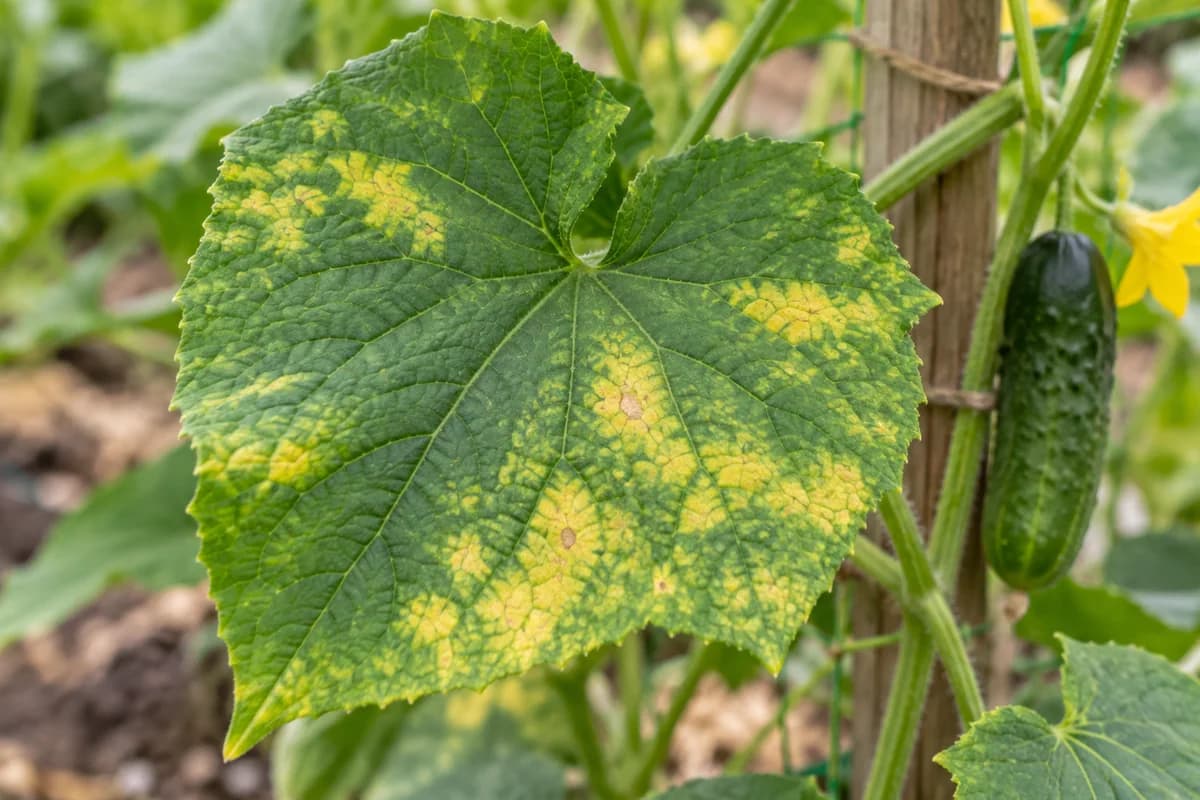
Yellow patches with edges that follow the leaf veins are a reason to check for downy mildew. UC IPM describes these angular spots and the growth that can appear underneath them. A matching photograph is a useful clue; it cannot establish the cause of your plant’s marks.
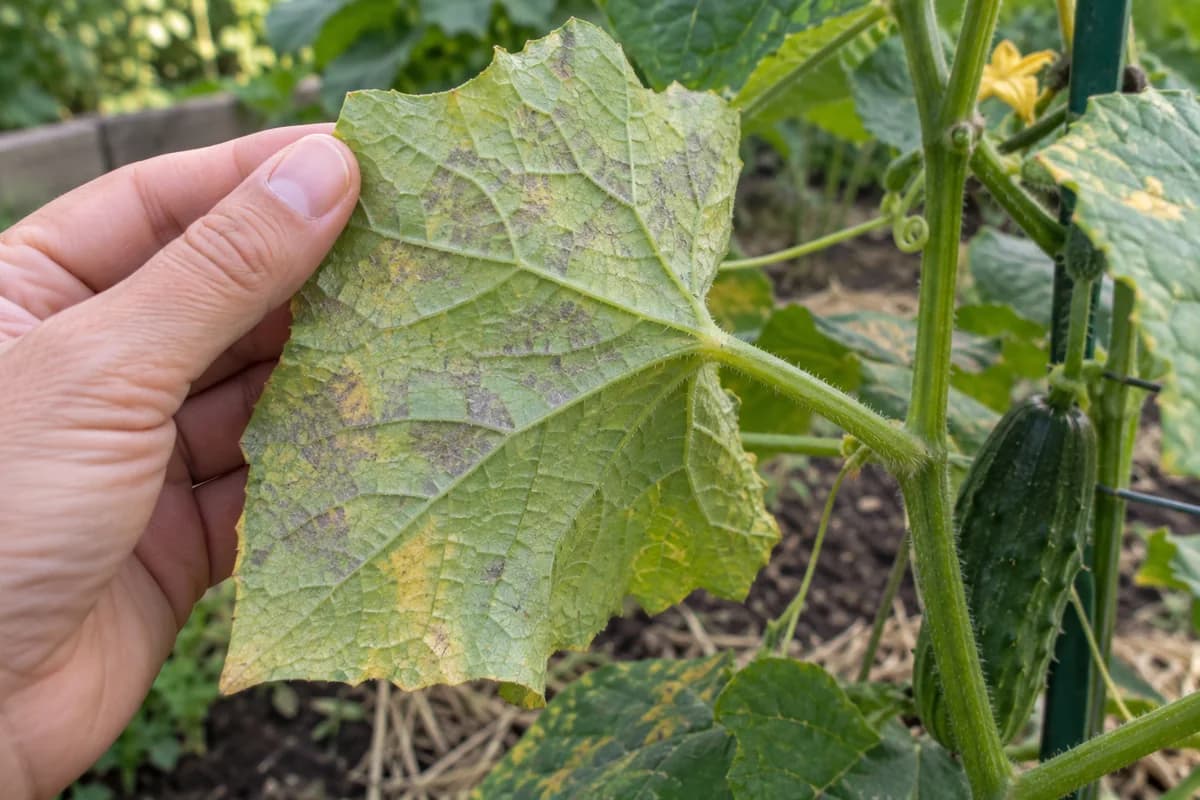
Photograph an affected leaf from above, then gently lift its edge and photograph the underside. Add a view of the whole vine. If several leaves are browning quickly, ask a local plant clinic or horticultural adviser for help promptly, with those views ready.
Compare the upper and lower surfaces
Start with a leaf that still has both green tissue and affected patches. A completely brown leaf has lost much of the pattern you are trying to compare. Look at more than one leaf before deciding that a missing feature rules something out.
- On top, look for pale green or yellow areas contained between veins. They may join and turn brown as the damage advances, as shown in UC’s symptom description. “Angular” means the veins give the patches corners; it does not mean every spot is a neat square.
- Underneath, inspect the areas opposite those patches for fine grey to purple growth. Maryland notes that this growth is not always present and is most visible on humid mornings. A dry afternoon photograph may miss it.
- Keep the date with both photographs. On your next inspection, compare the edge of a recognisable patch and check whether new leaves have developed similar marks. Use the record when asking for a diagnosis.
Check the closest lookalikes
A broad white, dusty coating leads to a different comparison: our powdery-mildew guide. The two diseases share part of their names, but their appearances and management are different.
Fine speckles can merge into larger yellow areas after mite feeding. Maryland shows how spider-mite damage can resemble downy mildew. Inspect beneath the leaf with a hand lens rather than identifying a disease from the upper surface alone.
Other leaf diseases, including angular leaf spot, can make a similar pattern. Maryland warns that several bacterial and fungal cucumber leaf spots are difficult to separate without laboratory diagnosis. If the underside offers no clear clue, describe that uncertainty when seeking help.
For evenly fading lower leaves or yellowing without a spot pattern, start with the yellow-leaf checks. They include ageing leaves and root-zone problems that this disease comparison does not cover.
Why it can appear after damp weather
Downy mildew is caused by a water mould, a fungus-like organism. Minnesota Extension explains that its spores can travel on air currents and that moisture on a leaf allows infection. Wet, humid conditions then favour rapid development.
That combination helps explain why a previously healthy planting can develop trouble after suitable weather. Review rain, dew, overhead watering and a closed, humid growing space. Those observations help the investigation; they do not prove that one watering caused the outbreak.
What to change while you seek confirmation
Keep the roots supplied according to the watering and drainage checks. Withholding needed water to dry the leaves would add another problem. Direct water onto the growing mix instead of wetting the canopy; Maryland recommends irrigation at the plant base.
Clear objects that crowd the lower leaves and keep greenhouse ventilation working. UC advises reducing canopy density and humidity to limit spread. A reachable trellis lets you inspect leaves without pulling the vine apart. Better airflow will not restore leaf tissue that has already died.
Plan tying, picking and removal work for when foliage is dry, following Maryland’s advice to avoid handling wet leaves. Inspect neighbouring cucumbers as well, and tell the adviser whether they show the same pattern.

Decide whether to keep the plant
For a few uncertain spots, get identification before stripping the vine. Once a plant is badly affected, Maryland recommends removing badly infected leaves or entire plants. For a small planting losing most of its foliage, we would remove the failing plant rather than keep buying rescue products.
Follow any more specific advice for a confirmed case: Minnesota’s home-garden guidance recommends removing plants with disease symptoms. Ask how to handle the material locally, and keep it away from healthy cucumber foliage while removing it.
Before buying a replacement, check whether there is enough growing season left and whether local disease pressure still makes another cucumber a sensible choice. Save the cultivar name, onset date and photographs for that discussion.
Check the disease name before buying a spray
Do not assume a product used for powdery mildew will control downy mildew. Minnesota reports no effective downy-mildew pesticide products for home gardeners in its guidance. That is a reason to seek current local advice, not to copy a commercial spray programme from another region.
If a qualified local adviser recommends a treatment, check the current product label for cucumber, the disease and your growing situation. Follow its directions, protective precautions and waiting time before harvest. The EPA’s garden-label guide explains why those details matter. Product availability and permitted uses differ by country.
Take the product name and any previous application dates to that conversation. Mixing a household spray or increasing a dose makes it harder to judge the original problem and can add plant injury.
Sources
Checked 18 September 2026. Regional treatment guidance stays with its source; the photographs illustrate what to inspect and do not confirm a plant diagnosis.
- UC IPM: Downy Mildew on Cucurbits
- University of Minnesota Extension: downy mildew of cucumber, melon and squash
- University of Maryland Extension: Downy Mildew of Vegetables
- University of Maryland Extension: Key to Common Problems of Cucumbers
- University of Maryland Extension: Managing Downy Mildew of Cucurbits
- US EPA: Read the Label First, Protect Your Garden
Keep your project growing.
Investigate angular leaf spots
Compare intact spots and missing tissue, then limit splash and wet handling.
Read the guideIf the patches are whiteWhite patches on cucumber leaves
Inspect both leaf surfaces and choose a response without stripping the vine.
Read the guideIf you see fine specklingInspect for spider mites
Check beneath speckled leaves with a hand lens and white card before choosing a response.
Read the guideCheck the watering setupWater and feed your cucumber plant
Use the plant, potting mix and conditions to guide its everyday care.
Read the guide