Pickle it. · PickleRadio
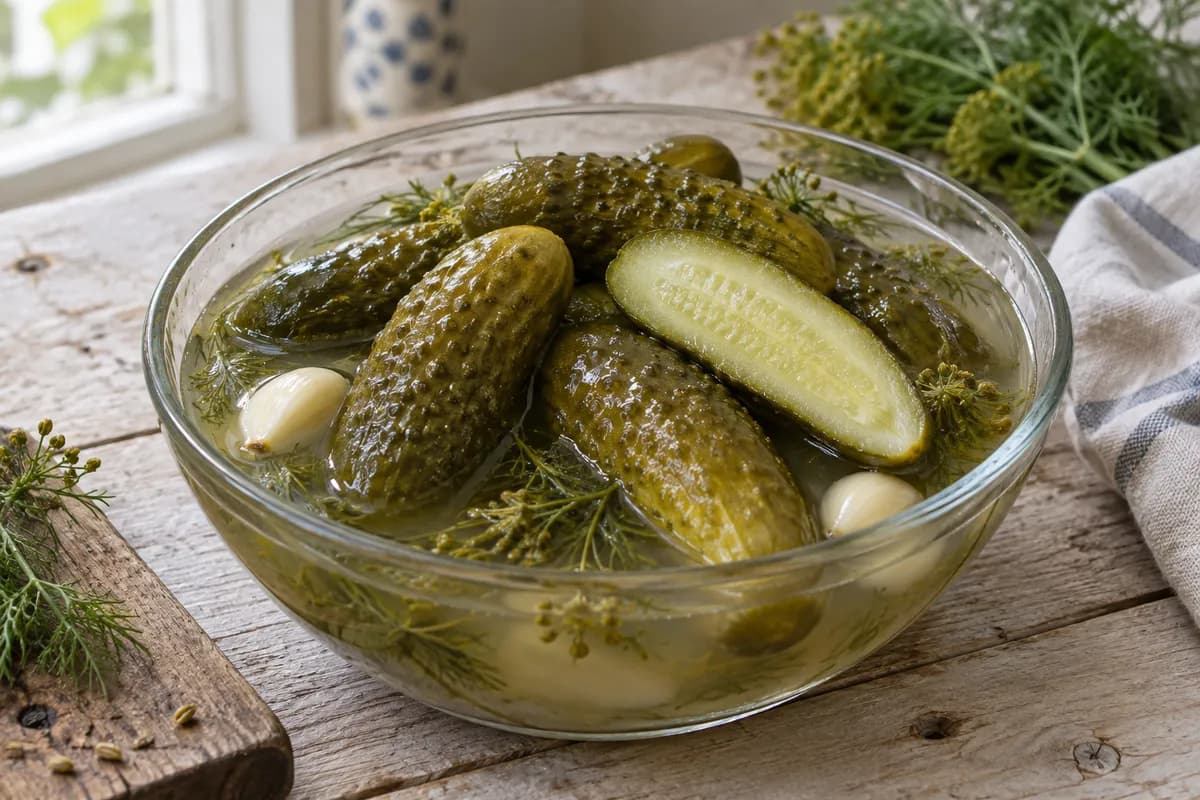
Fermented dill pickles
A complete four-pound batch of fermented dill cucumbers, with temperature, weighting, inspection and refrigerator-storage instructions.
In this guide5 sections
Plan for a batch you can watch
Yield: one 4 lb batch, using a container with at least 1 gallon capacity.
Choose this project when you want a full batch of whole sour cucumbers and can check it regularly. For a smaller first attempt with a shorter wait, use refrigerator cucumber pickles. The pickling-method guide explains the different commitments.
Formula: NCHFP Dill Pickles. Keep the US measures and brine unchanged.
Set up before measuring
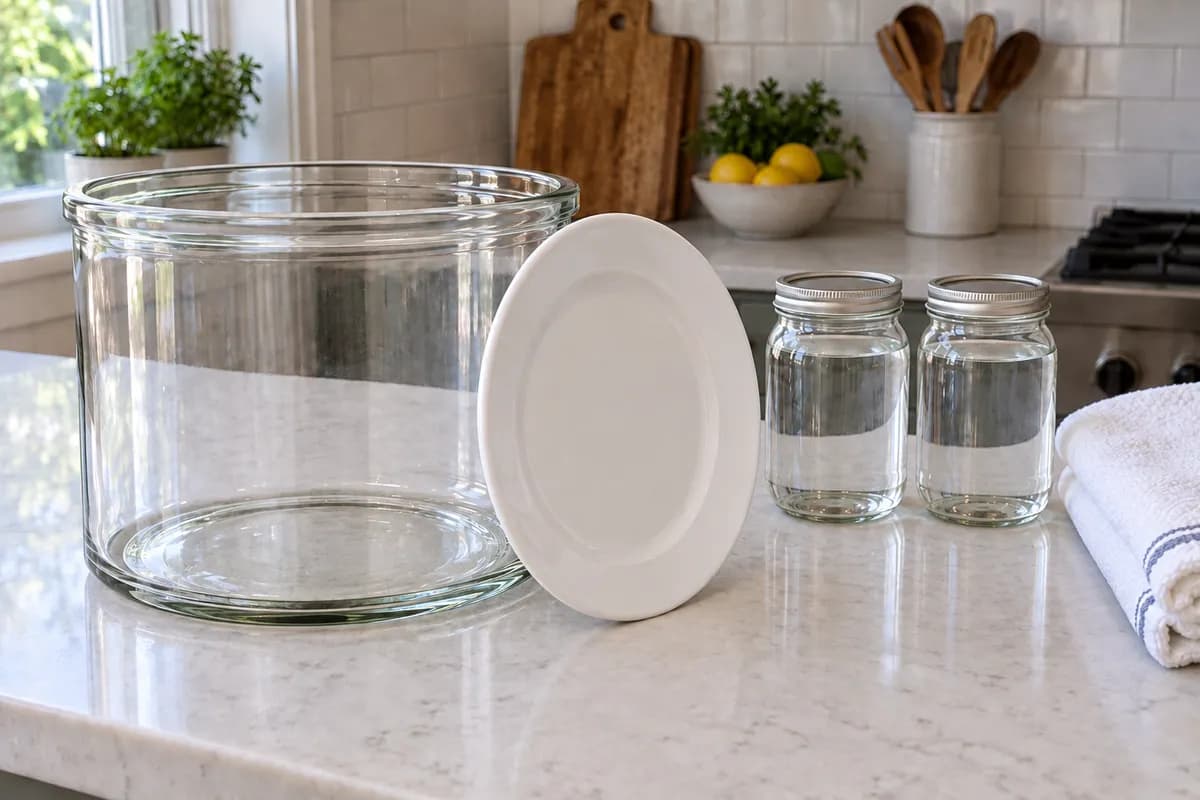
Choose food-grade glass, plastic or a sound stoneware crock. NCHFP’s container guidance explains the plate-and-weight arrangement used below. Food must touch only food-grade materials; never use rubbish bags.
Check the fit before opening the ingredients: a plate that catches on the sides cannot keep floating cucumbers down. Choose a position where you can see and reach the container without moving a heavy, full crock every time.
Ingredients
- 4 lb pickling cucumbers, about 4 inches long
- 4–5 heads fresh dill
- 1/2 cup pickling salt
- 1/4 cup vinegar, labelled 5% acidity
- 8 cups water
- 2 garlic cloves, optional
Method
- Wash the container, plate and weights in hot soapy water; rinse well with very hot water. Use only food-grade materials.
- Wash cucumbers. Remove 1/16 inch from each blossom end; leave 1/4 inch of stem.
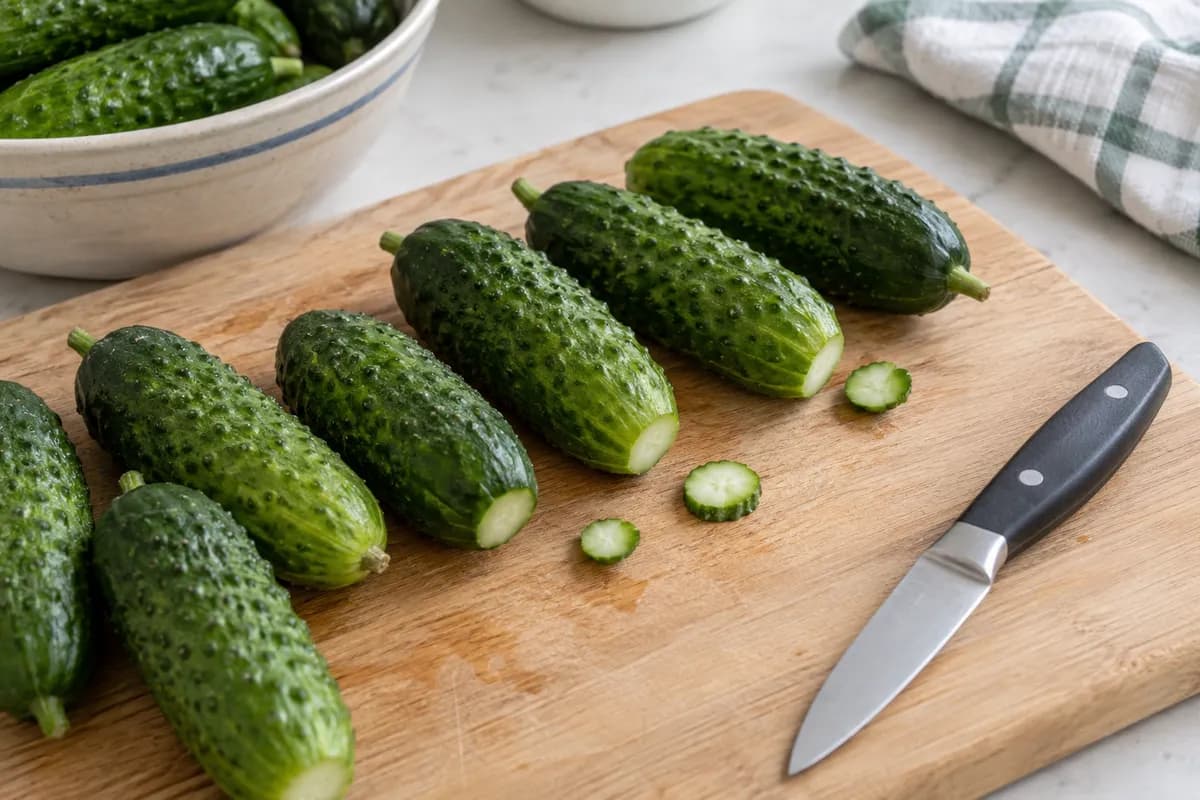
Remove the thin blossom-end slice; leave a short piece of stem. - Put half the dill and optional garlic in the clean container. Add cucumbers and the remaining dill and garlic.
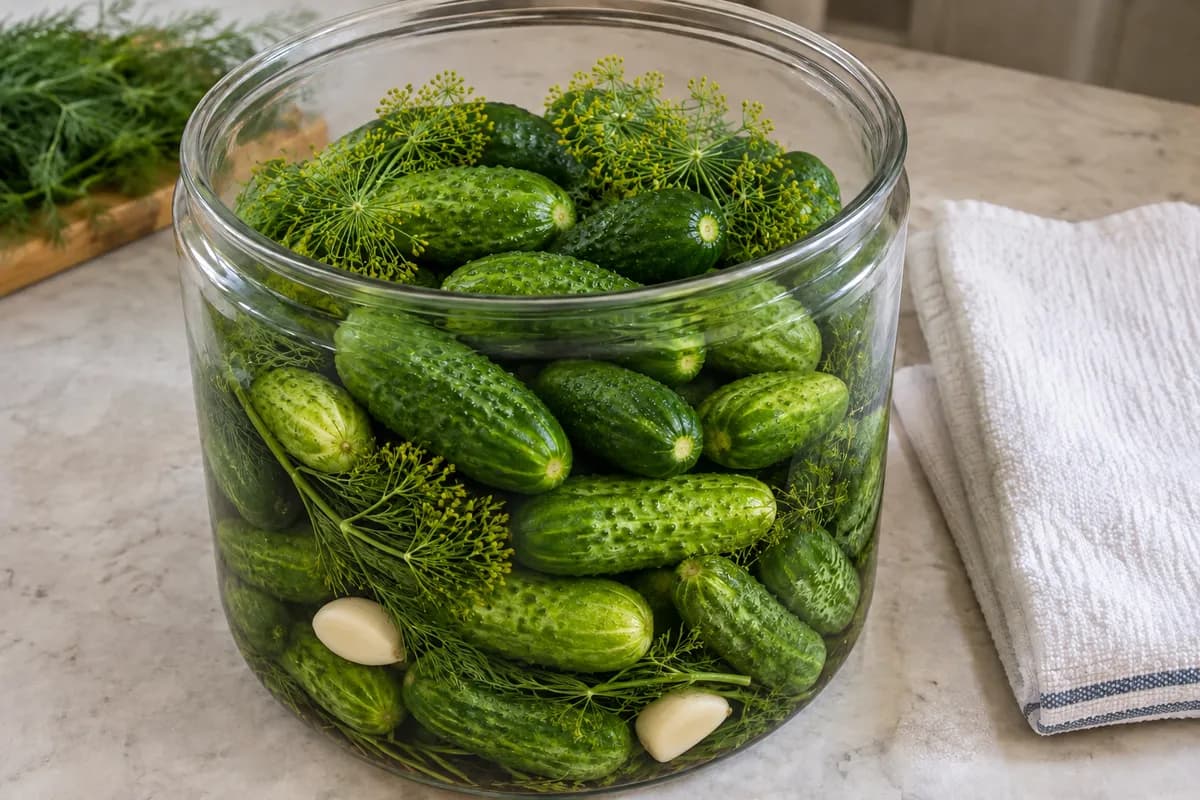
Layer whole cucumbers with dill and the optional garlic before adding brine. - Dissolve salt in vinegar and water; pour over cucumbers. Keep them 1–2 inches below brine with a suitably sized plate weighted by sealed water-filled jars. Cover the container opening with a clean heavy towel.
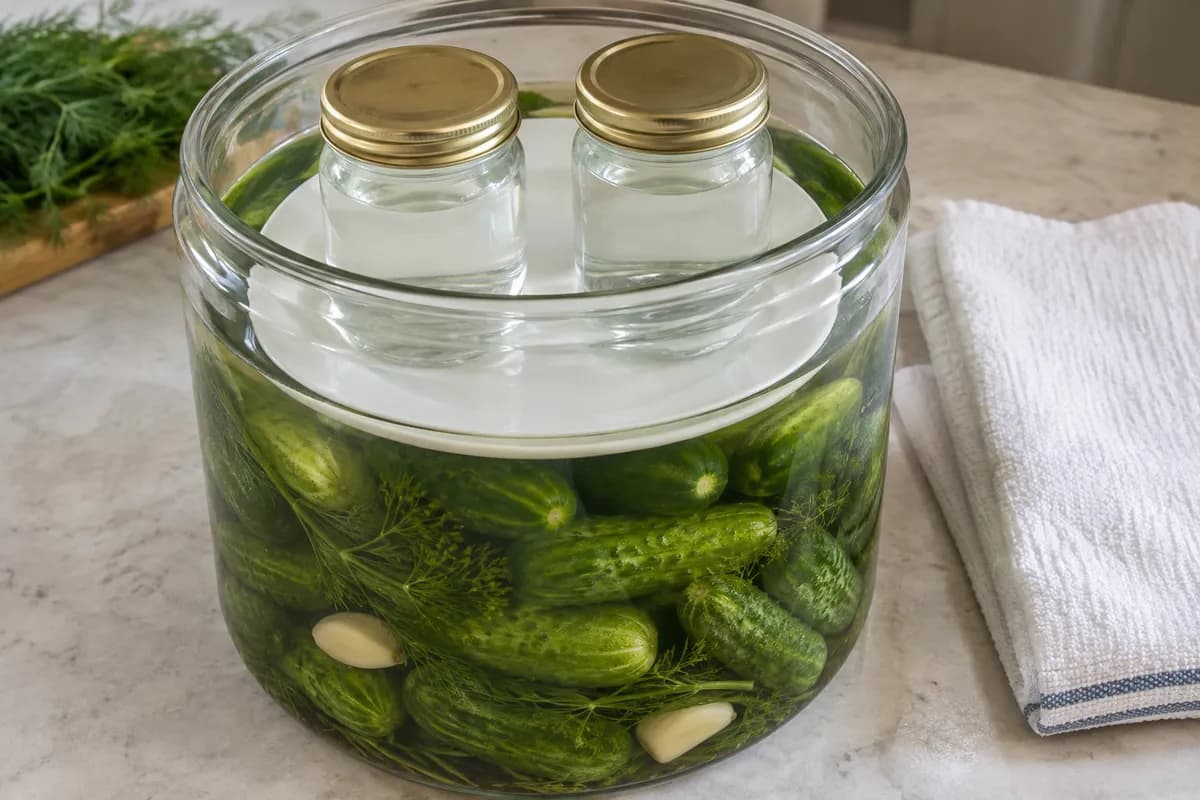
The plate and sealed jar weights keep the cucumbers 1–2 inches below brine. - Ferment at 70–75°F (21–24°C) for about 3–4 weeks. At 55–65°F (13–18°C), allow 5–6 weeks. Avoid temperatures above 80°F (27°C).
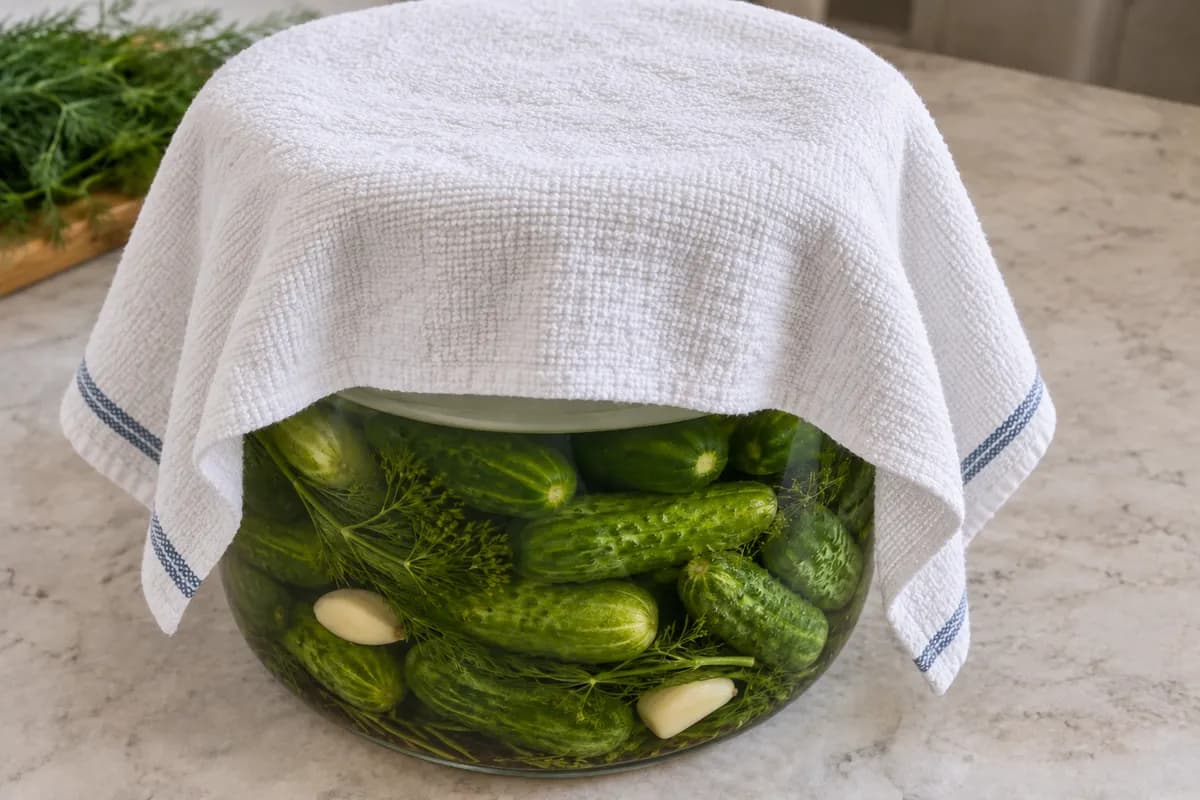
Cover the opening with a clean heavy towel; keep the batch within the recipe’s temperature range. - Inspect several times weekly and promptly remove surface scum or mould. Discard cucumbers that become soft, slimy or unpleasant-smelling.
- Once fully fermented, refrigerate in the original container for 4–6 months, removing surface scum or mould regularly.
Decide how you will use the batch
Whole pickles make an easy side for potatoes, beans or a sandwich. Cut a serving into spears at mealtime; dice another portion for a salad. Keep a note of the start date and the temperatures you observed, so the next batch has a useful record rather than a guessed timetable.
This page uses the source’s refrigerated-storage option only. It does not give a process for shelf-stable jars.
Keep the jar open
Browse all recipes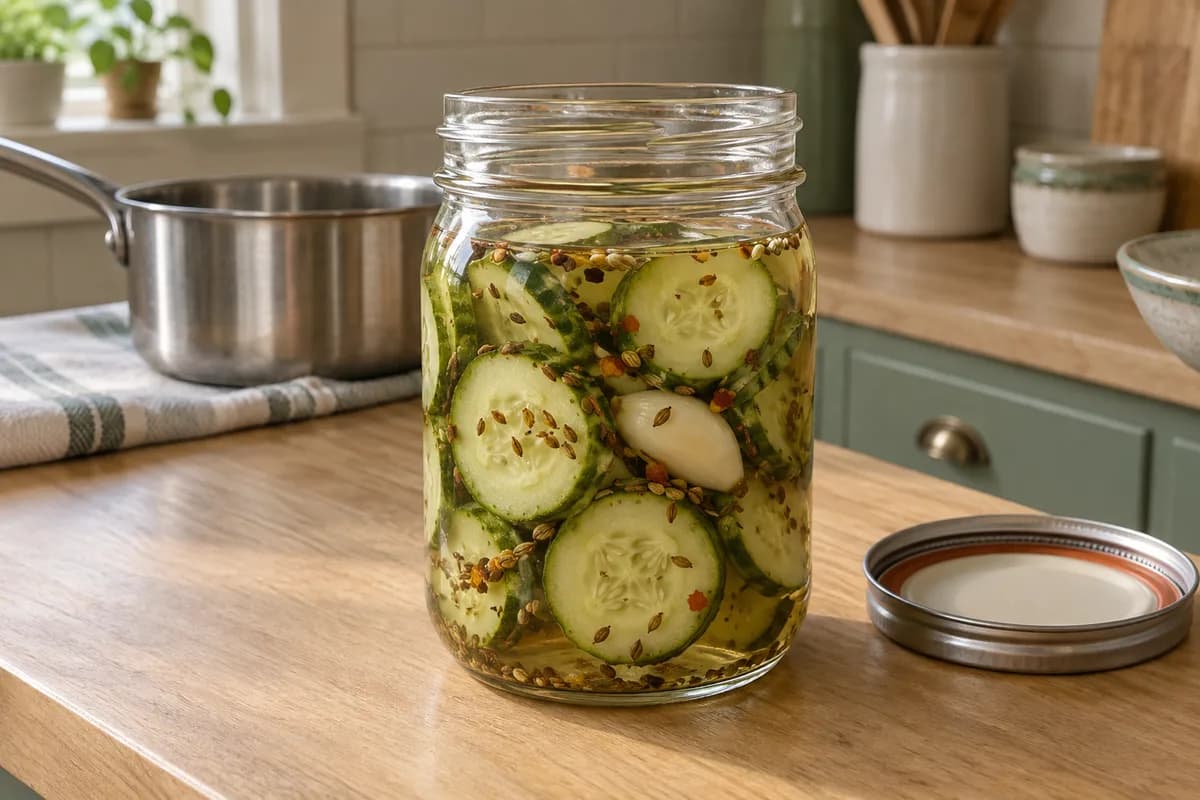
Pickles & ferments
One-jar refrigerator dill pickles
A first pickling project, with the beginner questions answered.
Make this recipe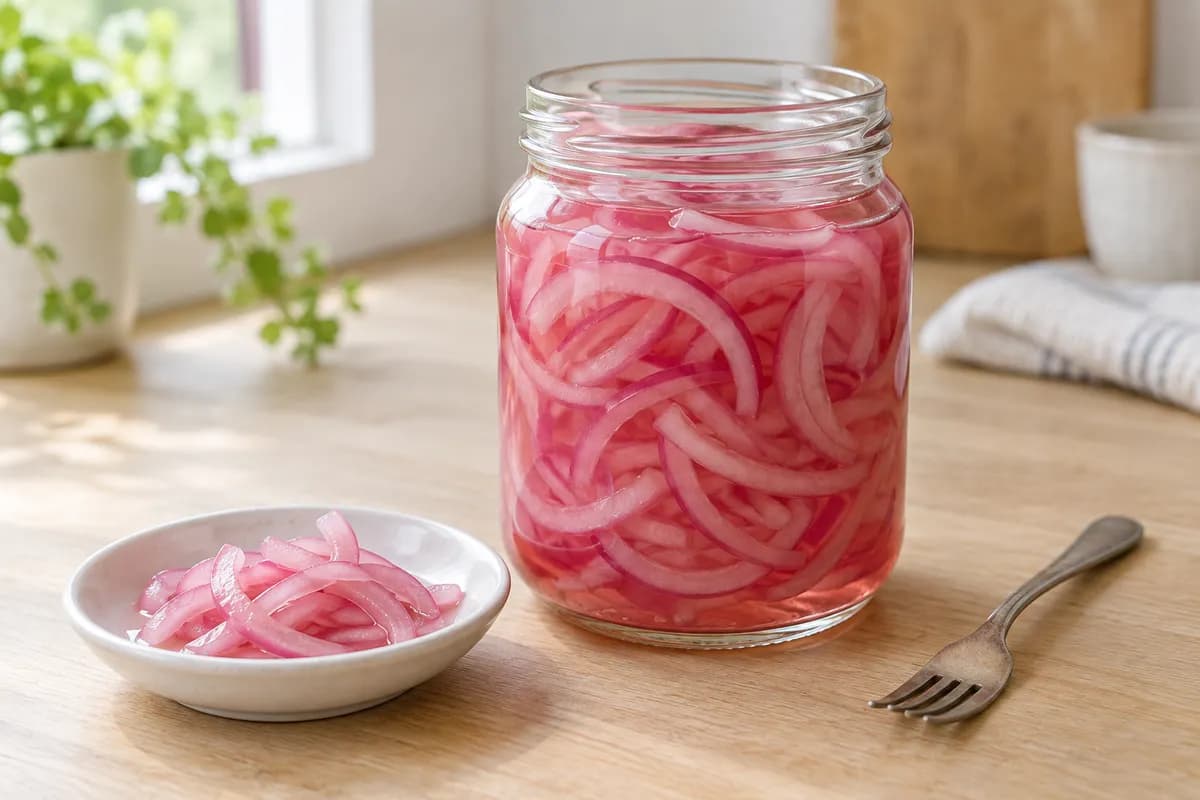
Pickles & ferments
Quick pickled red onions
Thin red-onion slices in a simple rice-vinegar pickle, ready after two hours in the fridge and useful for sandwiches and bowls.
Make this recipe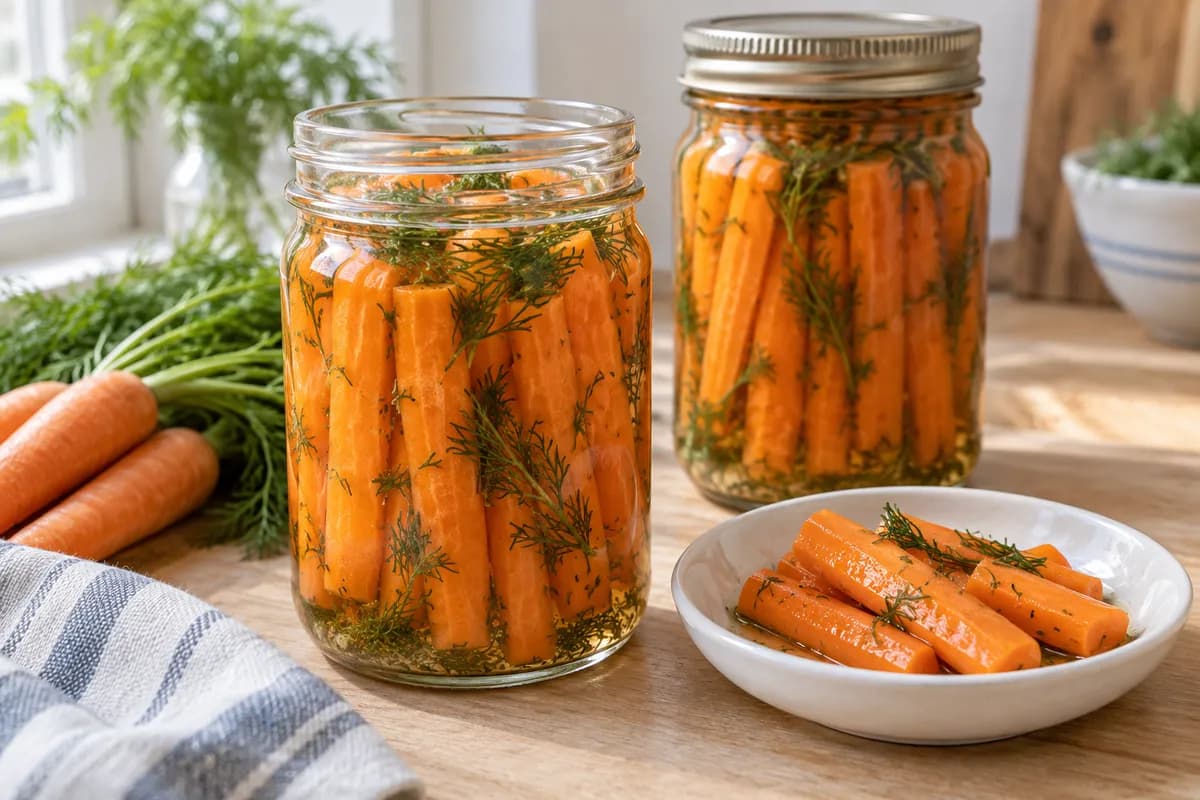
Pickles & ferments
Refrigerator pickled carrots with dill
Two pint jars of crisp carrot sticks with dill, using FoodHero’s complete refrigerator-pickle formula and storage instructions.
Make this recipe