Pickle it. · PickleRadio
Your first refrigerator cucumber pickles: make one jar
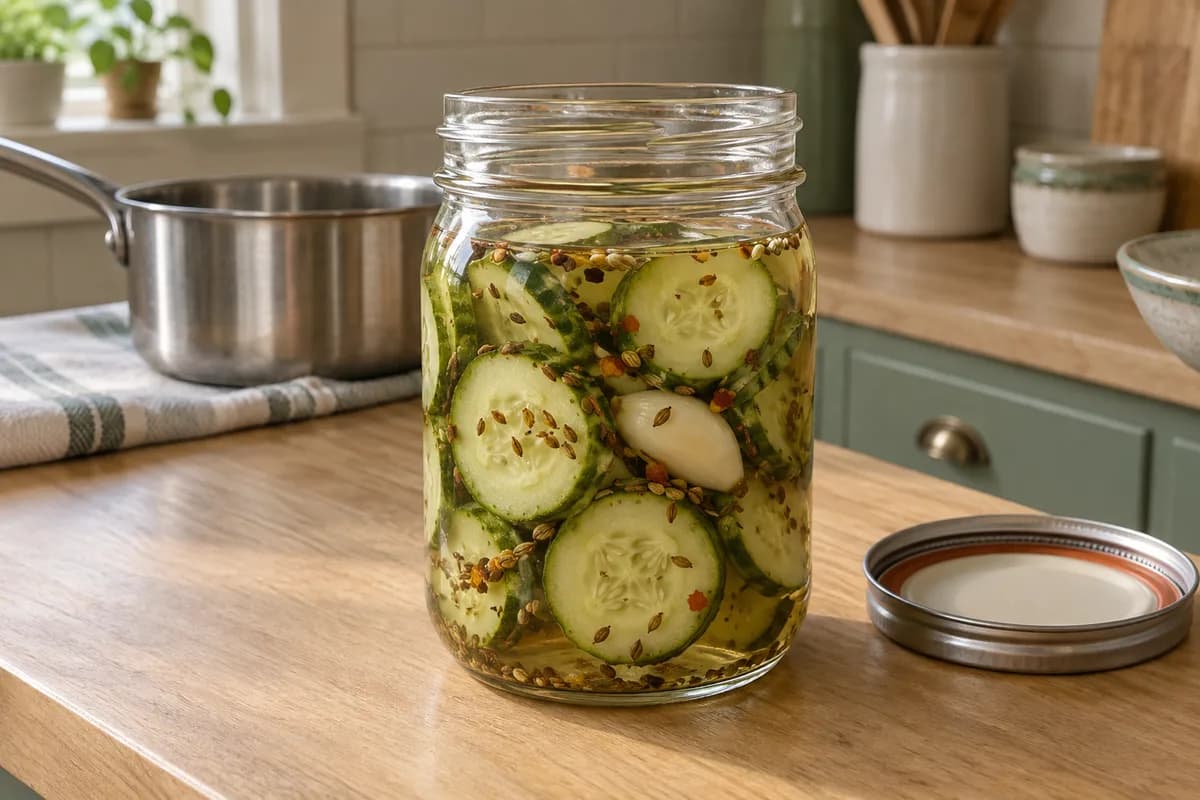
A modest cucumber harvest is enough. Make one dill-and-garlic jar with measured ingredients, then give it 1–3 days in the fridge before serving.
In this guide9 sections
Start with a jar you can finish
A first batch should be small enough to fit into an ordinary week. Put these cucumber slices beside a sandwich, bring them to the lunch table, and decide whether you want to make another jar. There is no need to wait for a bumper harvest.
We recommend this Oregon State University Food Hero recipe for a first project because the equipment is simple and the whole process is here: measure, prepare, fill and chill. Yield: one pint. Preparation: 20 minutes. Allow 1–3 days in the fridge for flavour to develop.
The recipe below uses its dill-and-garlic seasoning option. If your cucumbers are still on the vine, pick for the jar you intend to make before bringing the ingredients into the kitchen.
Set up your workspace
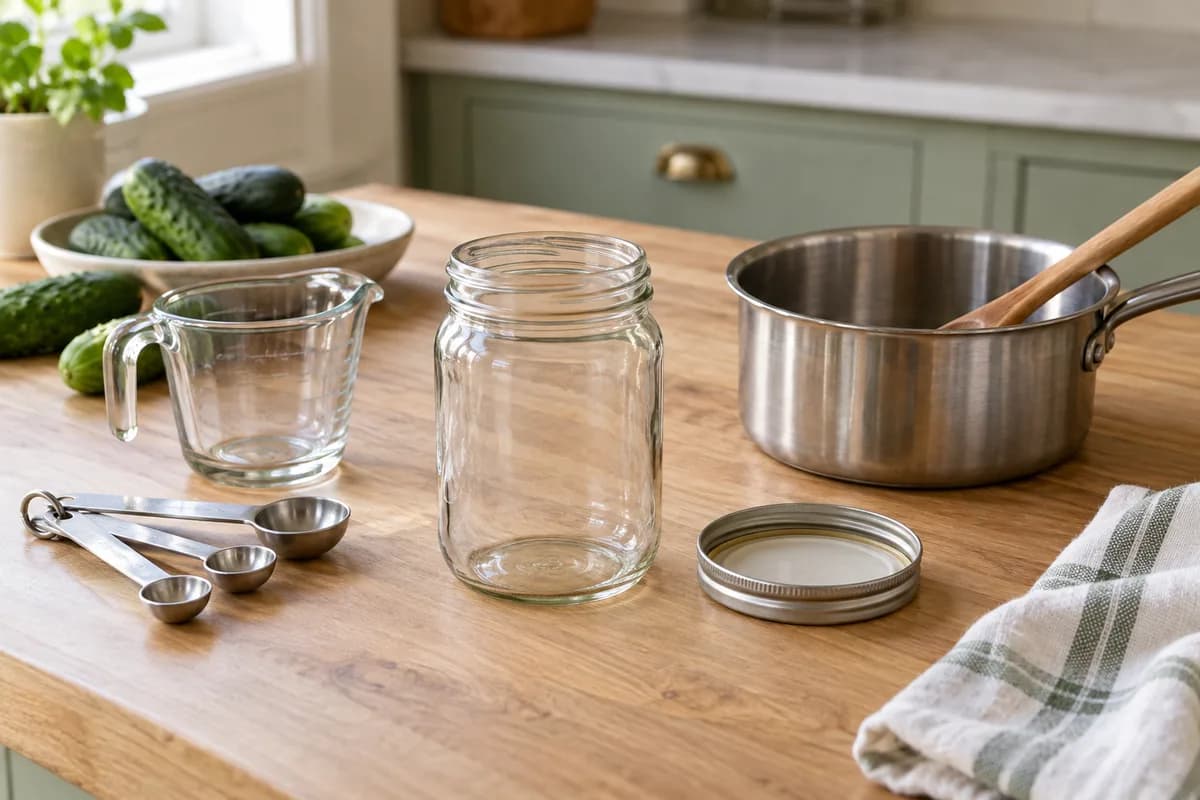
Set out a clean pint glass jar and lid, a small saucepan and spoon, a knife, chopping board, vegetable brush, measuring cups and spoons, and a label. These are US recipe measures: use measuring utensils, not a drinking mug or an eating spoon. Leave room beside the hob for the jar before heating the liquid.
Check the fridge with an appliance thermometer. FDA guidance specifies 4°C or below. Make space where raw meat cannot drip onto the jar. Reliable cold storage is part of this project from the beginning.
Choose firm, fresh cucumbers and bottled white vinegar labelled 5% acidity. Set aside the idea of adjusting the sourness by adding extra water: the proportions below belong together.
Ingredients
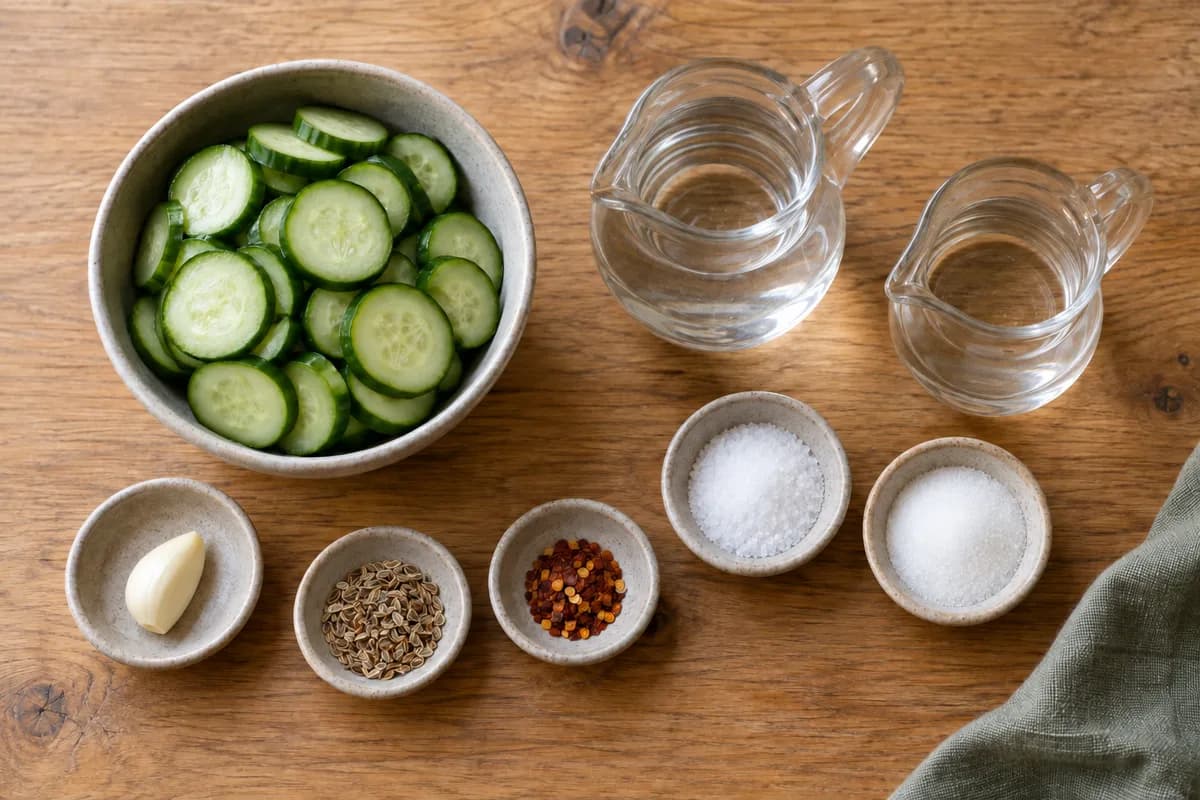
- 1½ cups cucumber slices
- ⅔ cup white vinegar, 5% acidity
- ⅓ cup water
- 1 teaspoon canning or pickling salt
- 2 teaspoons sugar
- 1 garlic clove, peeled
- ⅛ teaspoon red pepper flakes
- 1 teaspoon dill seed
Prepare the cucumbers
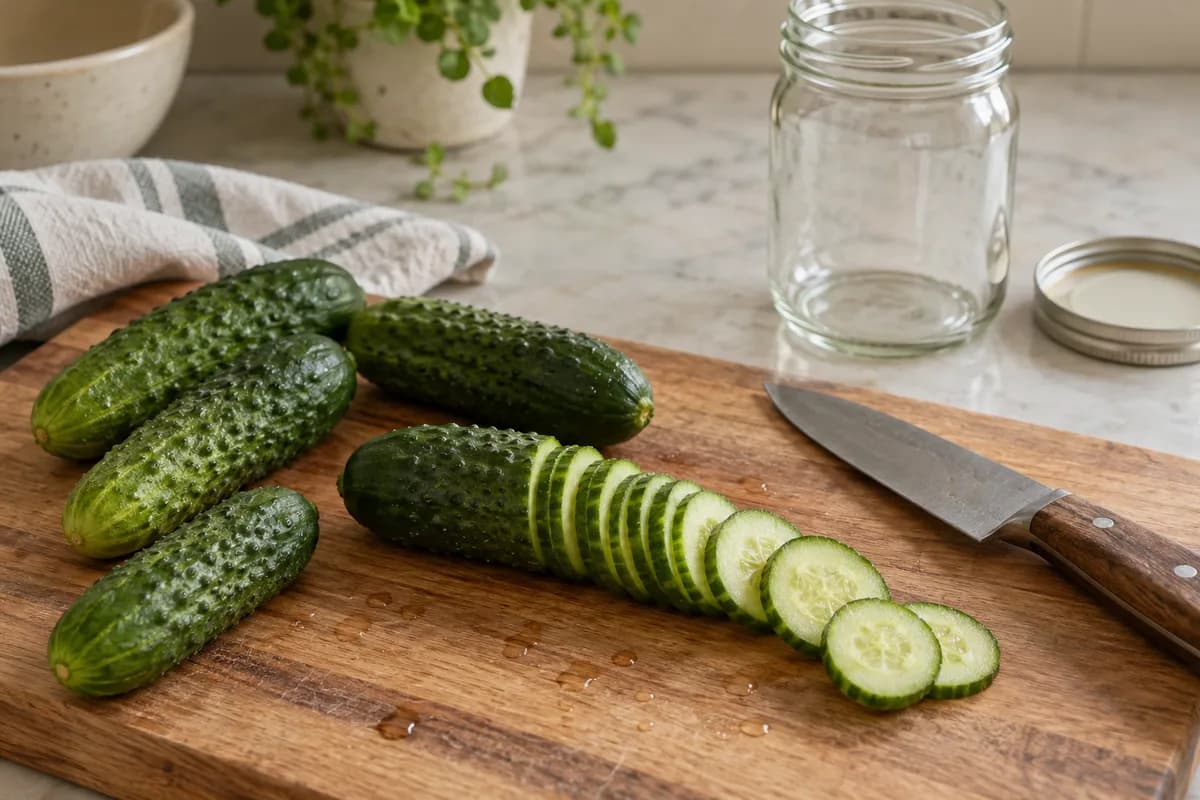
Wash your hands with soap for 20 seconds. Scrub the cucumbers under running water using a clean vegetable brush, then dry with a clean towel. Keep soap on your hands, not on the vegetables.
Remove a thin 1/16-inch slice from the blossom end of each cucumber to reduce softening. This is the end opposite the stem. Slice the cucumbers and measure 1½ cups. Fruit sizes vary, so count cups of slices rather than guessing how many whole cucumbers will do.
Make the jar
- Heat vinegar, water, salt and sugar to a simmer, stirring until dissolved. Take off the heat.
- Put garlic, pepper flakes and dill seed in the jar. Pack in slices, leaving ½ inch at the top.
- Pour in warm liquid to cover the cucumbers. Fit the clean lid and refrigerate.
- Wait 1–3 days for flavour. Keep refrigerated; use within three months.
Label it before putting everything away
Write the date made, the use-by date and “keep refrigerated” on the jar now. A good label answers the question somebody else will ask when they find it behind the milk. Keep checking the fridge temperature throughout storage.
Discard a batch that is mouldy or suspicious. A normal smell cannot prove that poorly stored food is safe: harmful bacteria may be present without obvious spoilage.
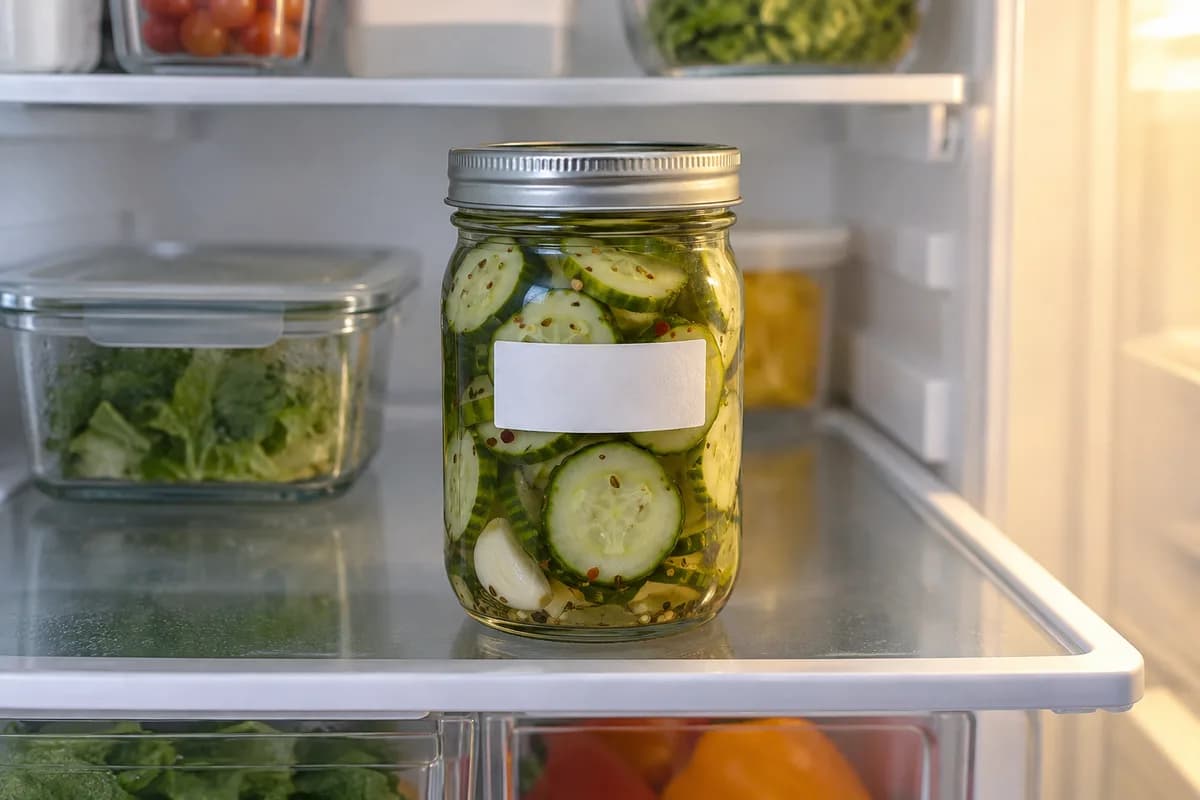
Keep this recipe a refrigerator recipe
A closed lid does not make this a pantry preserve. If your goal is winter storage in a cupboard, choose a pickling method for pantry storage and its appropriate recipe. Adding a processing time found elsewhere would create a different, unverified method.
The NCHFP guidance on vinegar and ingredient proportions explains why a known-acidity vinegar matters. Use the specified bottle and amounts; homemade vinegar and improvised dilution introduce uncertainty at exactly the point where precision is useful.
Let the next batch inform next season
Write the cucumber variety on your batch note if you know it. A note about the texture you enjoyed is useful when choosing pickling cucumber varieties for another season. That closes the loop: grow something suited to your space, pick it at the useful stage, and make food you actually want to eat.
Sources and further reading
The formulation and storage period come from OSU Food Hero. FDA and NCHFP supply the separately identified handling guidance.