Grow it. · PickleRadio
Aphids on cucumber plants: inspect the colony and choose the next step
Look under the young leaves for the insects themselves. Decide whether to watch, remove a colony by hand or use a targeted water spray, then check the new growth.
In this guide8 sections
Look underneath before choosing a treatment
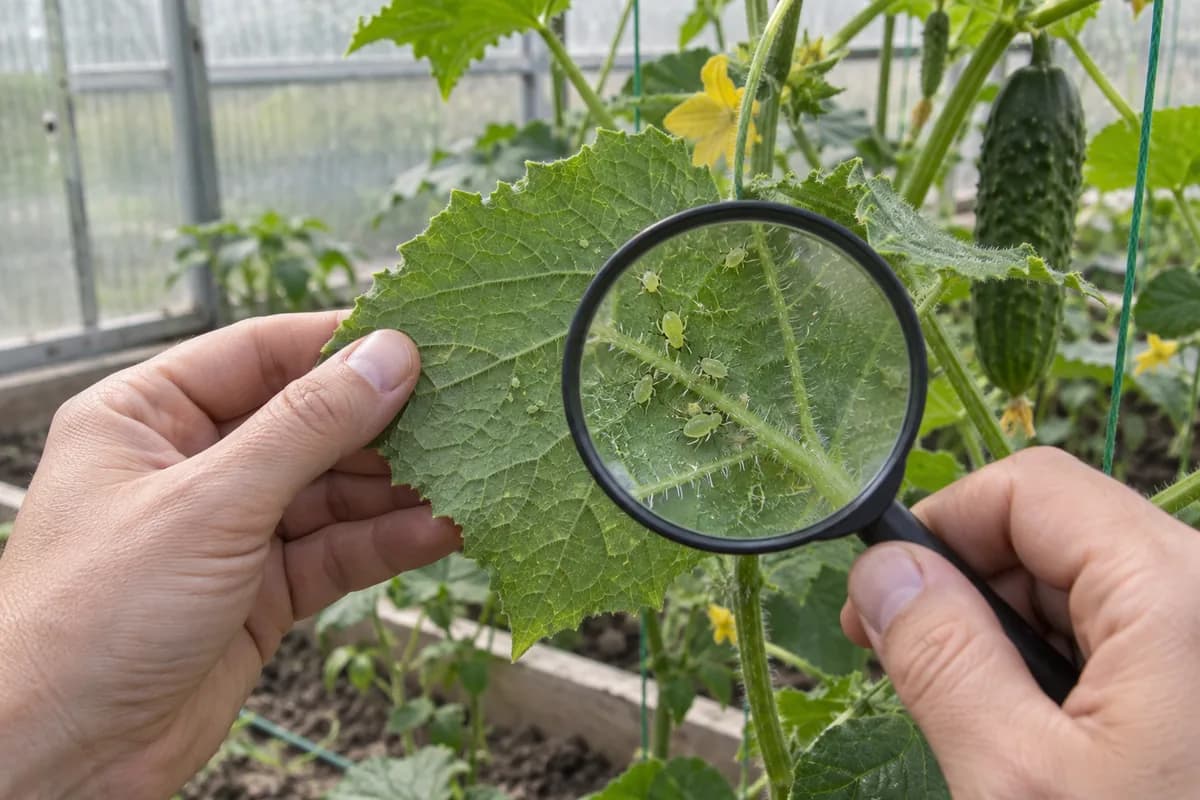
Turn over a young cucumber leaf and look closely at its veins and the growing tip. If you find a cluster of small insects, keep that leaf attached while you inspect it. A curled leaf on its own gives you too little information to choose a treatment.
The RHS lists young leaf undersides and shoot tips as common places for aphid colonies. Sticky honeydew, pale shed skins and ants may draw your attention to them. Check a second leaf and a nearby plant so you know whether you are looking at one small colony or a wider problem.
For yellowing without visible insects, start with the yellow cucumber leaf checks. Fine webbing and tiny moving specks belong with the spider-mite inspection guide.
What an aphid looks like
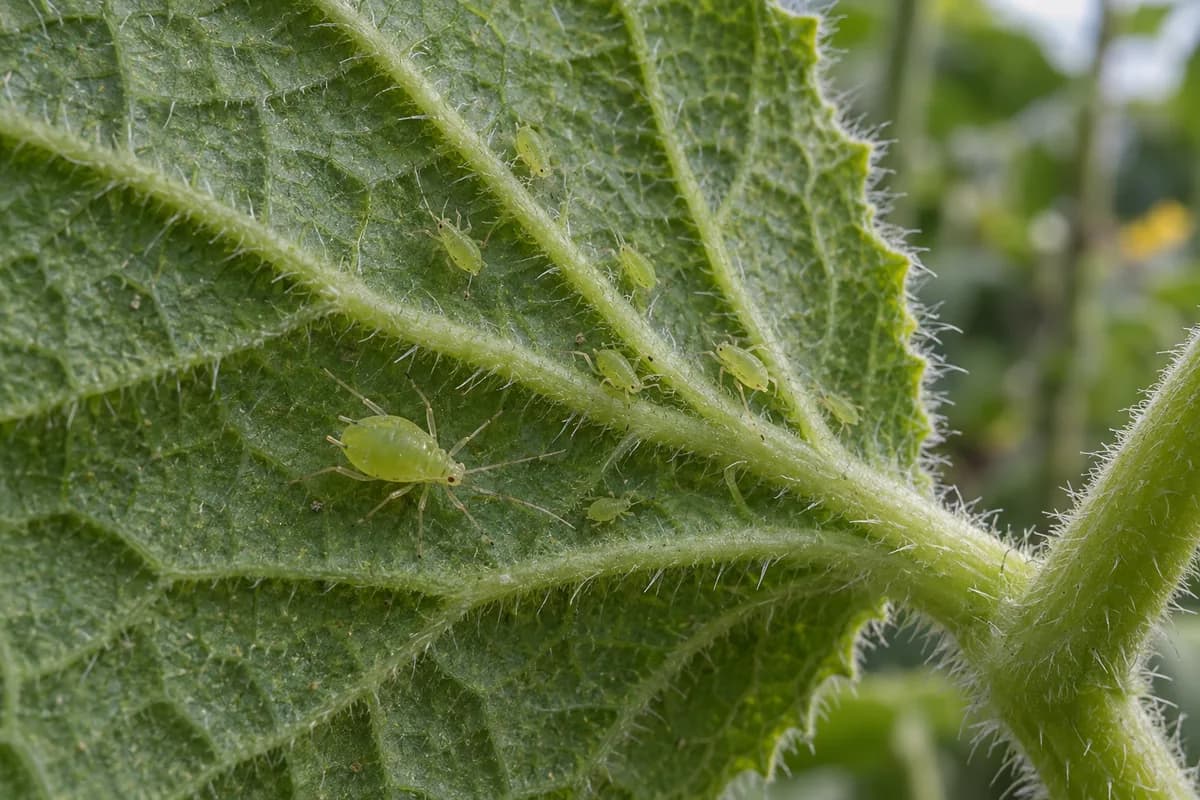
Aphids have soft, pear-shaped bodies, long antennae and usually a pair of small tubes near the rear, called cornicles. UC IPM’s identification photographs show these features. Colour varies, and some adults have wings. Use a hand lens when the shape is hard to see.
Compare the actual insects with the linked identification photographs. An illustration cannot establish which species is on your plant. Keep a close photograph of what you find if you need help identifying it.
Choose a response that fits the plant
A few aphids on a growing outdoor vine can be left under observation. RHS recommends tolerating them where possible. We would act sooner on a small seedling whose growing tip is crowded with insects, or when colonies are expanding across several leaves.
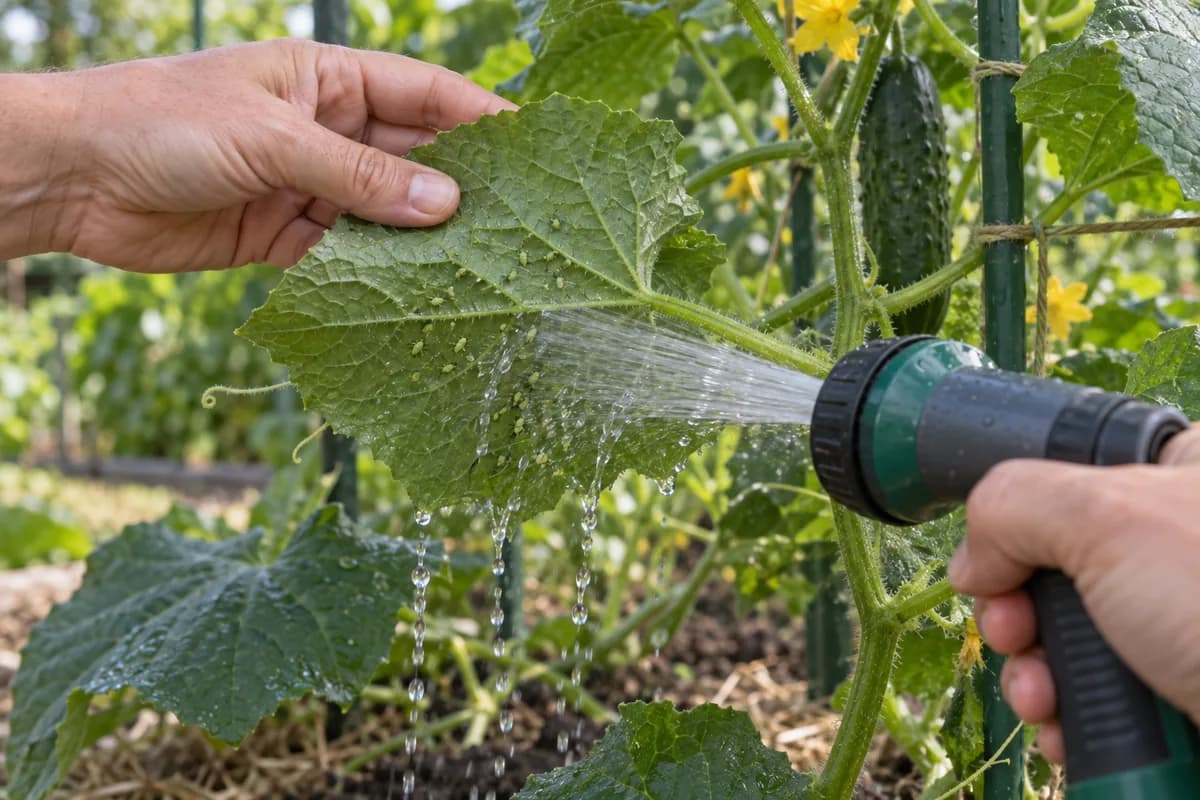
For a reachable colony, Maryland Extension recommends rubbing aphids off or dislodging them with plain water. Choose the action you can perform without crushing the shoot or tearing the leaf.
- Check the area for other insects first. Leave an unfamiliar larva alone until you have compared it with the predator guide below.
- For hand removal, steady the leaf and gently rub or squash the visible aphids with finger and thumb. Keep pressure off the soft growing tip.
- For a water spray, support an accessible leaf and direct the stream at the colony, including its underside. UC limits its strong-water recommendation to sturdy plants. Reduce the force or stop if the leaf bends sharply; a tender seedling needs gentler handling.
- Look again after removal. Note which leaves still have live colonies so the next inspection can check those places.
Keep useful insects and dry foliage in mind
Ladybird and hoverfly larvae are among the insects that feed on aphids. They look different from the familiar adults; the RHS aphid-predator guide includes photographs. It also describes biological controls used in greenhouses. Ask a specialist about the actual growing conditions before ordering live insects.
After a targeted wash, allow the foliage to dry and keep greenhouse ventilation working. Cucumber downy mildew needs moisture on the leaf to begin infection. Repeatedly misting the whole plant is a different practice from washing a visible colony off a leaf.
Ants may defend aphids while collecting their honeydew, as UC IPM explains. Record ant activity with your other observations. Ants alone do not identify the insect causing the leaf damage.
Judge the next leaves as well as the old ones
Inspect the same areas again and look at the newest growth. Leaves distorted during aphid feeding may remain deformed, so an old curled leaf cannot tell you whether removal worked. Look for live insects and changes in the colony.
Keep the normal watering and feeding plan steady unless you find a separate problem. Write down what you removed and when. If the growing tip continues to decline, photograph the whole vine and both sides of an affected leaf for a local plant clinic or horticultural adviser.
Aphids can transmit viruses affecting cucumbers. Minnesota describes mottling and stunted growth among possible symptoms. Persistent distortion or a green-and-yellow mosaic needs assessment; the presence of aphids does not confirm a virus, and removing the insects does not diagnose the plant.
Are greenfly and blackfly different problems?
They are common names used for aphids. RHS notes that aphids also occur in other colours. Follow the shape and colony checks above instead of selecting a remedy from colour alone.
Should I add washing-up liquid to the water?
Use plain water for the physical-removal step. Maryland advises against household soap or detergent remedies. If a persistent infestation needs further treatment, get advice for edible cucumbers in your location and follow a suitable product’s current label, including any harvest restriction.
Sources
The UK and US sources below support inspection and nonchemical management. Product permissions and greenhouse biological-control choices require local advice.
Keep your project growing.
Inspect for spider mites
Check beneath speckled leaves with a hand lens and white card before choosing a response.
Read the guideIf no insects are visibleCheck yellowing cucumber leaves
Read the leaf pattern and inspect the root zone before choosing a treatment.
Read the guideKeep everyday care steadyWater and feed your cucumber plant
Use the plant, potting mix and conditions to guide its everyday care.
Read the guide