Grow it. · PickleRadio
Cucumber leaves turning yellow: what to check before treating
Separate an ageing lower leaf from a spreading problem. Check the root zone, leaf pattern and recent changes before adding water, feed or a treatment.
In this guide8 sections
Start with where the yellowing is happening
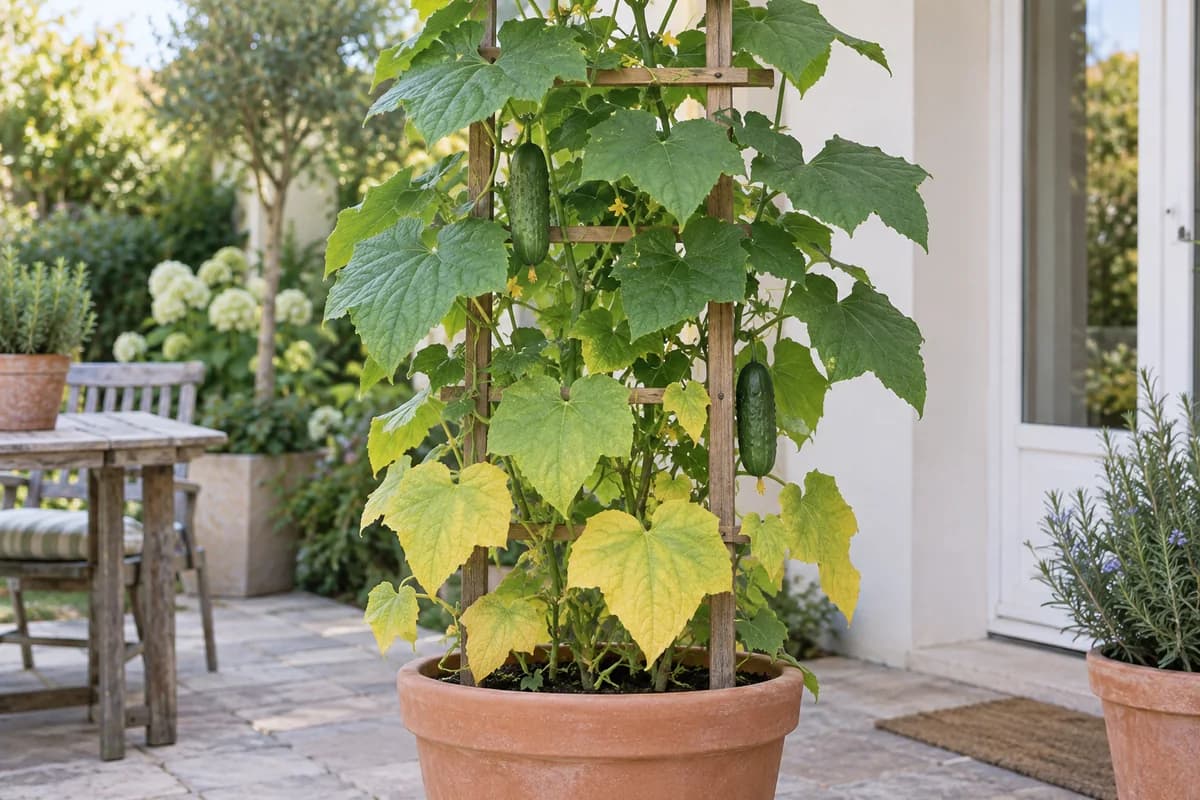
One old leaf near the base needs a different response from yellowing that is moving through the vine. Maryland Extension lists normal ageing alongside water stress, nutrient problems, pests and diseases. Leaf colour alone cannot choose between them.
Before adding anything, look at the growing tip and the rest of the plant. Are new leaves opening normally? Is the yellowing confined to the oldest foliage, or appearing on several levels? An otherwise vigorous vine with a single fading lower leaf is a reason to observe, not immediately change its whole feeding programme.
Our preferred first move is a short inspection with a photo. A dated picture gives you something to compare tomorrow; a dose of feed changes the situation before you know what it was.
Read the pattern before reaching for feed
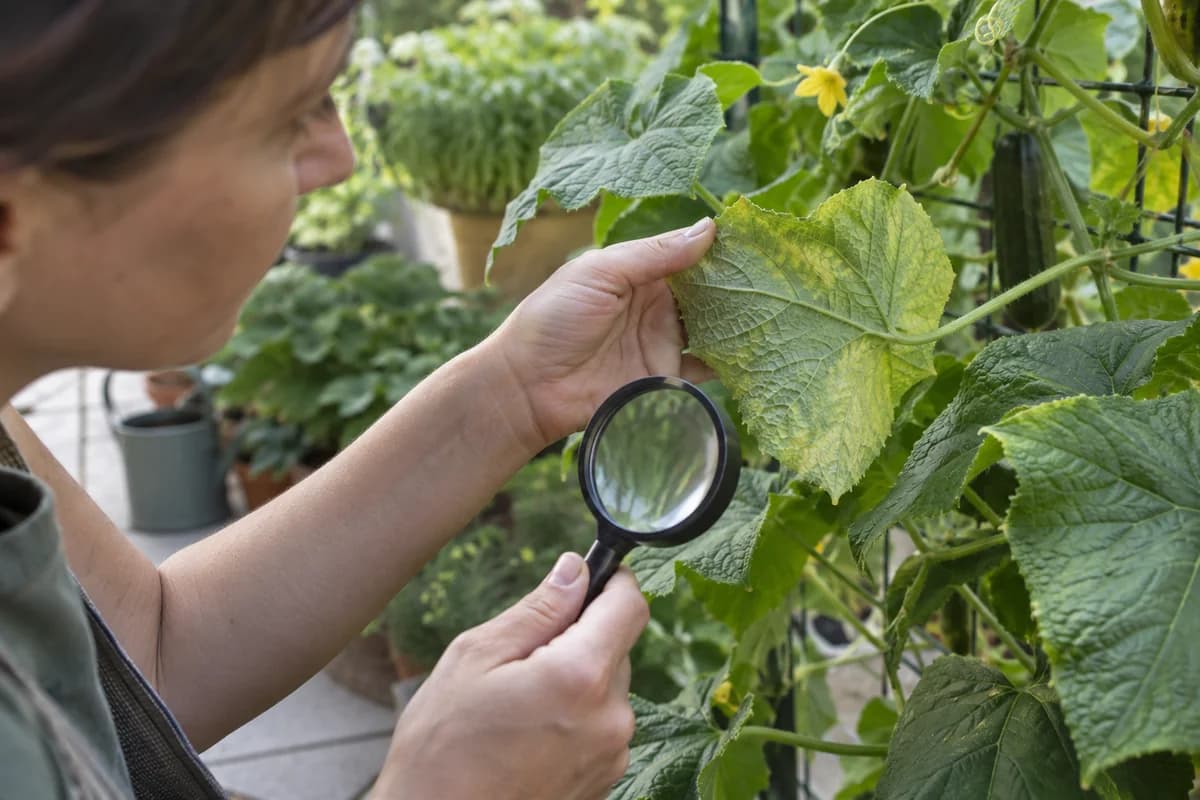
Choose a yellowing leaf that is still attached. Look at its top, lift the edge gently to see underneath, and compare it with a newer leaf. Keep these observations separate from your eventual diagnosis.
- Fine pale speckles that merge into patches: inspect the underside with a hand lens. Maryland notes that spider-mite feeding can resemble downy-mildew damage. Seeing yellow dots is not enough to choose a spray.
- Angular yellow areas held between veins: Minnesota includes this pattern in its downy-mildew diagnosis. Darker growth beneath the leaf can be another clue, but uncertain symptoms need expert confirmation.
- White dusty patches along with the yellowing: use our powdery-mildew inspection guide to compare the pattern and decide what evidence to collect.
- Irregular green-and-yellow mottling with distorted new growth: Minnesota lists these among possible virus symptoms. Ask for a diagnosis; do not conclude that the plant needs magnesium from the colour alone.
Check what the roots are sitting in
Feel below the surface near the root zone before watering. Maryland explains that both prolonged drought and poorly drained, oxygen-starved roots can cause yellowing and wilt. The dry crust on top of a pot does not tell you what is happening underneath.
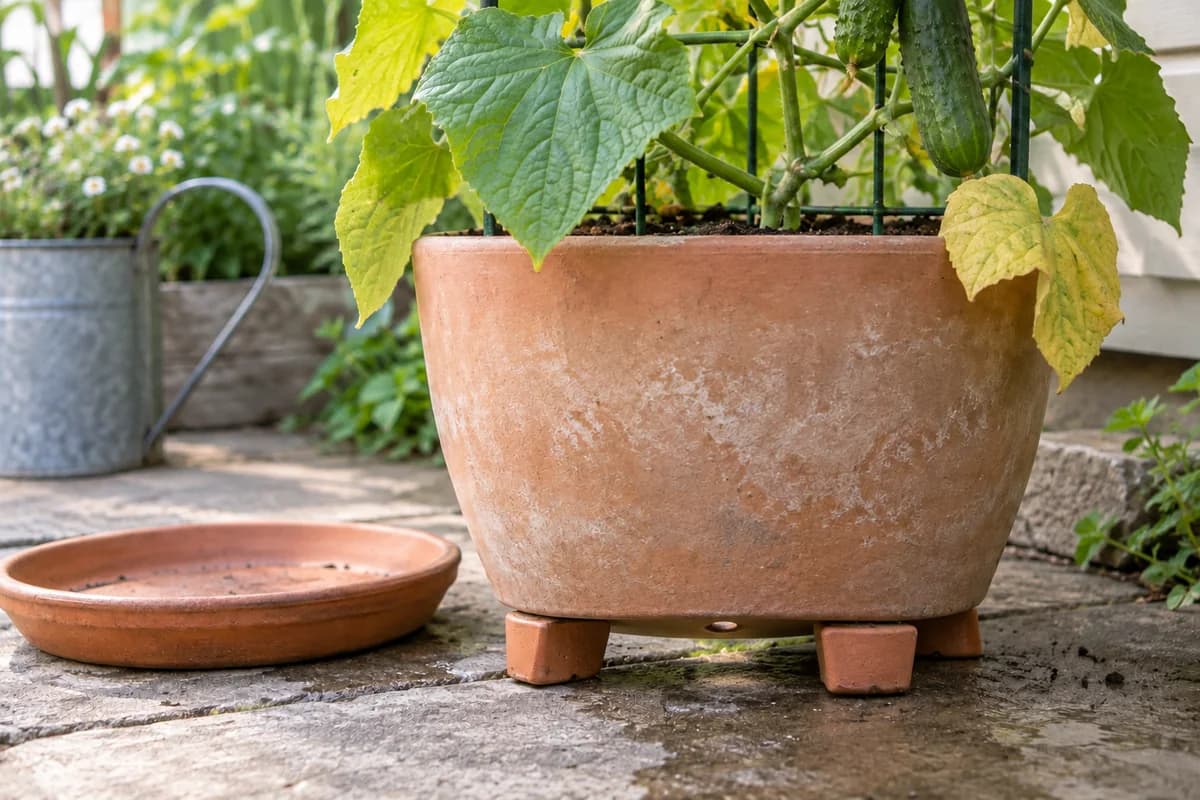
In a conventional pot with drainage holes, look for a blocked outlet, a full saucer or water trapped inside a decorative outer pot. Check carefully without tipping a heavy, trellised plant over. A designed self-watering container has different instructions; its reservoir is not the same as an ordinary pot standing in runoff.
If the root zone is dry, correct the watering. If it is already wet, check drainage before adding more. The watering and feeding guide explains that decision in detail. Record what you found so a later yellow leaf does not automatically trigger another soaking.
Review the last change, not just the last watering
Write down when the yellowing began and what happened shortly beforehand: planting out, a cold night, several very hot days, a new fertiliser or a sprayed product. Keep the product name and amount if you used one. Timing can narrow the investigation, although it cannot prove the cause.
Newly moved seedlings deserve a separate check. If the trouble began just after planting, follow the transplant-shock checks for exposure and the small original root ball. A mature vine that has grown in the same position for months needs a different history.
For persistent pale growth, review fertility using evidence. Minnesota recommends soil testing for nutrient planning and describes tissue testing as an additional diagnostic tool. Nutrients may be present in the soil yet unavailable to the plant, so a leaf photograph is a poor basis for buying several supplements.
For a container, save the growing-mix label and feeding record. Ask the testing service what it accepts before sending a sample: a laboratory request for garden soil is not necessarily a suitable test for a bagged container mix. If feeding is due, use the product instructions already chosen for the crop; do not double a dose to chase the colour.
Bring a useful record to the diagnosis
Rapid spread, wilting stems or distorted young growth justify asking for help promptly. Maryland warns that several cucumber leaf diseases are difficult to distinguish without laboratory diagnosis. A local extension service, plant clinic or qualified horticultural adviser can tell you what sample it needs.
Send one view of the whole plant, both surfaces of an affected leaf and a close view of the stem at soil level. Add the variety, pot or bed setup, planting date, recent weather and the changes you recorded. Say whether nearby cucumbers have the same symptoms.
Keep inspecting the plant after correcting an obvious watering or drainage problem. More yellow leaves, a spreading patch pattern or declining new growth means the explanation needs another look. Avoid changing the fertiliser, applying a spray and cutting half the foliage on the same afternoon; that makes the next observation much harder to interpret.
Should I cut off every yellow cucumber leaf?
No. First establish whether you are seeing a few ageing leaves, widespread stress or a diagnosed disease. Removing every yellow area from a badly affected vine could leave very little foliage without addressing the cause.
The mildew guide covers selective leaf removal and its limits. Follow diagnosis-specific advice for diseased material rather than using leaf colour as a pruning rule.
Do yellow leaves mean the cucumbers are unsafe to eat?
Leaf yellowing does not settle a food decision. Examine the fruit separately, respect any product-label harvest restriction, and use the yellow-fruit guide if the cucumbers themselves have changed colour. The bitterness guide addresses unusually bitter fruit and why it should stay out of the batch.
Sources
- University of Maryland Extension: causes of yellow vegetable leaves
- University of Maryland Extension: drought, waterlogging and wilt
- University of Maryland Extension: cucumber symptom comparisons and diagnostic limits
- University of Minnesota Extension: discoloured cucumber leaves
- University of Minnesota Extension: soil and foliar testing
Keep your project growing.
Water and feed your cucumber plant
Use the plant, potting mix and conditions to guide its everyday care.
Read the guideIf patches follow the veinsCompare signs of downy mildew
Check angular yellow patches on both leaf surfaces and separate the closest lookalikes.
Read the guideIf spots dry into holesInvestigate angular leaf spots
Compare intact spots and missing tissue, then limit splash and wet handling.
Read the guideIf the leaf has fine specklesInspect for spider mites
Check beneath speckled leaves with a hand lens and white card before choosing a response.
Read the guideIf the problem followed plantingHelp a wilted cucumber transplant
Check the original root ball, exposure and stem before adding more water.
Read the guide