Eat it. · PickleRadio
Latvian-inspired rosols with potatoes and pickles
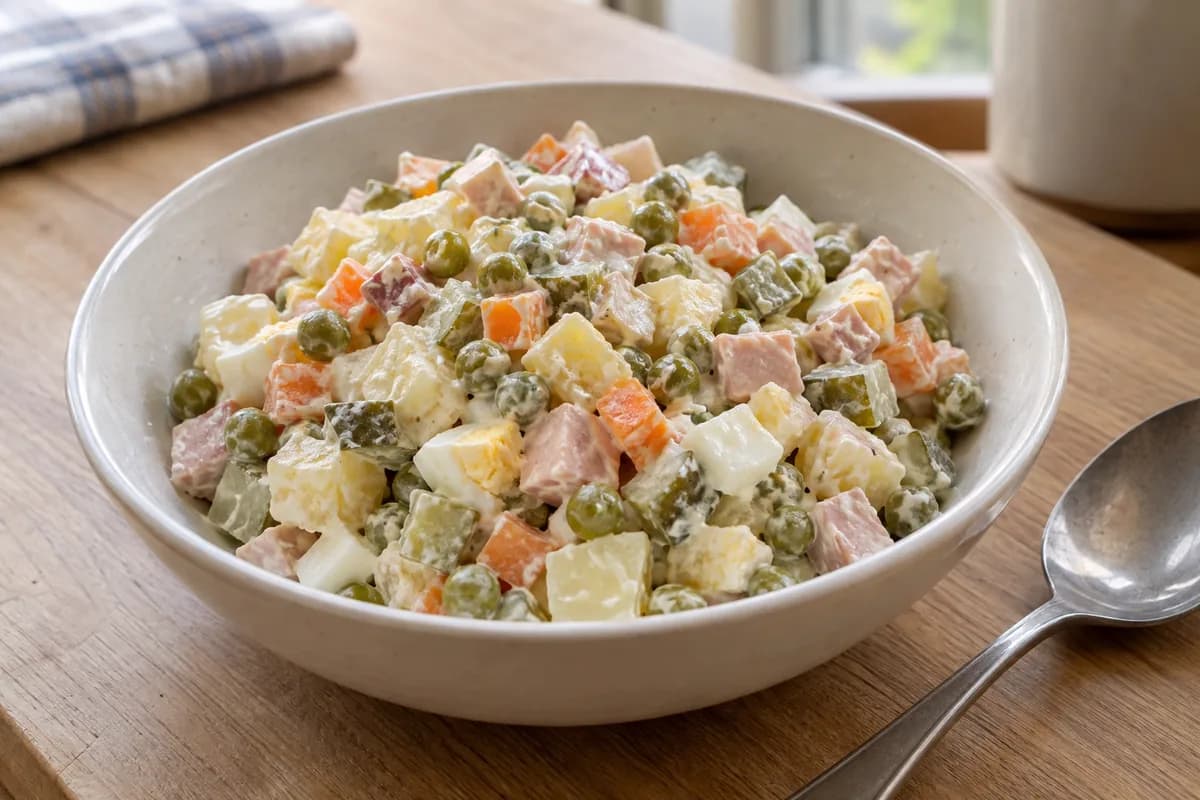
A substantial cold salad of diced potato, egg, cooked sausage and pickles, with peas and a sour-cream mayonnaise dressing.
 LatviaLatvian-inspired
Our version of rosols, also spelled rasols, uses cooked sausage, potatoes, eggs and pickles with a mayonnaise and sour-cream dressing. Latvian cooks use different meats and pickle styles.
In this guide6 sections
Small pieces make a better spoonful
The point of this bowl is to get potato, egg, meat and pickle together, rather than chase a large piece of sausage around a plate. Cut the ingredients to a similar size and keep the dressing light enough to see them. We would choose a firm dill or sour cucumber pickle; a sweet relish changes the whole salad.
Rosols is also written rasols. In Ina Poliščenko’s Latvian Radio discussion, the salad includes marinated cucumber, potatoes, eggs, peas and carrots. Armands Avens’s version favours fermented cucumbers. This version uses ready-to-eat cooked sausage and a mixture of mayonnaise and sour cream.
Yield: 6 generous side servings. Prep time: 30 minutes. Cook time: 25 minutes. Allow about 90 minutes more for cooling and chilling; the cooked ingredients must be cold before mixing.
Choose the sausage before you start
Use a chilled, fully cooked, ready-to-eat sausage such as Latvian doktordesa or a smooth bologna, bought as a piece you can dice. Check the package: a sausage that requires cooking cannot go straight into this salad. Remove any inedible casing. Smoked salami and loose raw sausage meat are different ingredients.
You need 180 g of drained pickles, so weigh them after lifting them from the jar. Our refrigerator cucumber pickles work once their stated chilling period is complete. If you prefer a fermented cucumber, use the complete fermented dill pickle method well ahead of salad day.
Ingredients
- 450 g waxy potatoes, weighed after peeling
- 150 g carrot, weighed after peeling
- 3 large eggs
- 200 g fully cooked, ready-to-eat doktordesa or smooth bologna sausage, chilled
- 180 g firm dill or sour cucumber pickles, drained
- 120 g canned peas, drained
- 100 g prepared mayonnaise
- 80 g sour cream
- 10 g (2 teaspoons) Dijon mustard
- ¼ teaspoon ground black pepper
Method
- Cut the peeled potatoes into 2 cm pieces and the carrot into 1 cm pieces. Put them in a saucepan, cover with cold water and bring to a boil. Reduce to a steady simmer and start checking after 10 minutes; they usually need 10 to 15 minutes. A fork should enter the centre easily, while the pieces still hold together. Drain thoroughly.
- While the vegetables cook, put the eggs in a second saucepan with enough cold water to cover them by about 2 cm. Bring to a boil, then simmer gently for 12 minutes, until both whites and yolks are firm. Transfer to cold water, refreshing it as it warms, and peel when cool enough to handle.
- Spread the drained vegetables in shallow containers. Let them cool, then refrigerate within two hours of cooking; chill until cold throughout. Refrigerate the peeled eggs separately. Leave the sausage, dairy and mayonnaise in the fridge while you wait.
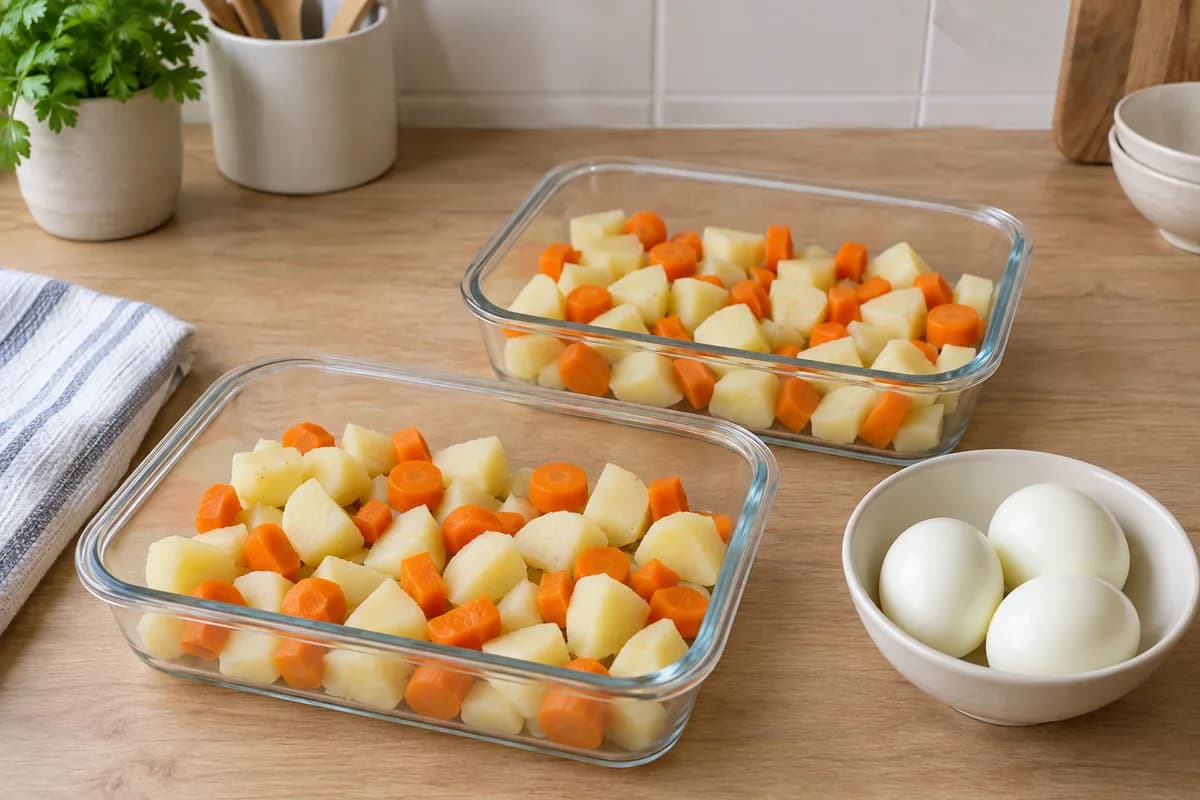
Spread the vegetables out for cooling instead of leaving them in a deep heap. - Remove any inedible sausage casing. On a clean board, dice the cold potatoes, carrots, peeled eggs and sausage into roughly 7 mm pieces. Dice the drained pickles to match, then blot them dry. Put everything in a large mixing bowl with the drained peas. Keep the egg pieces recognisable instead of mashing them into the potatoes.
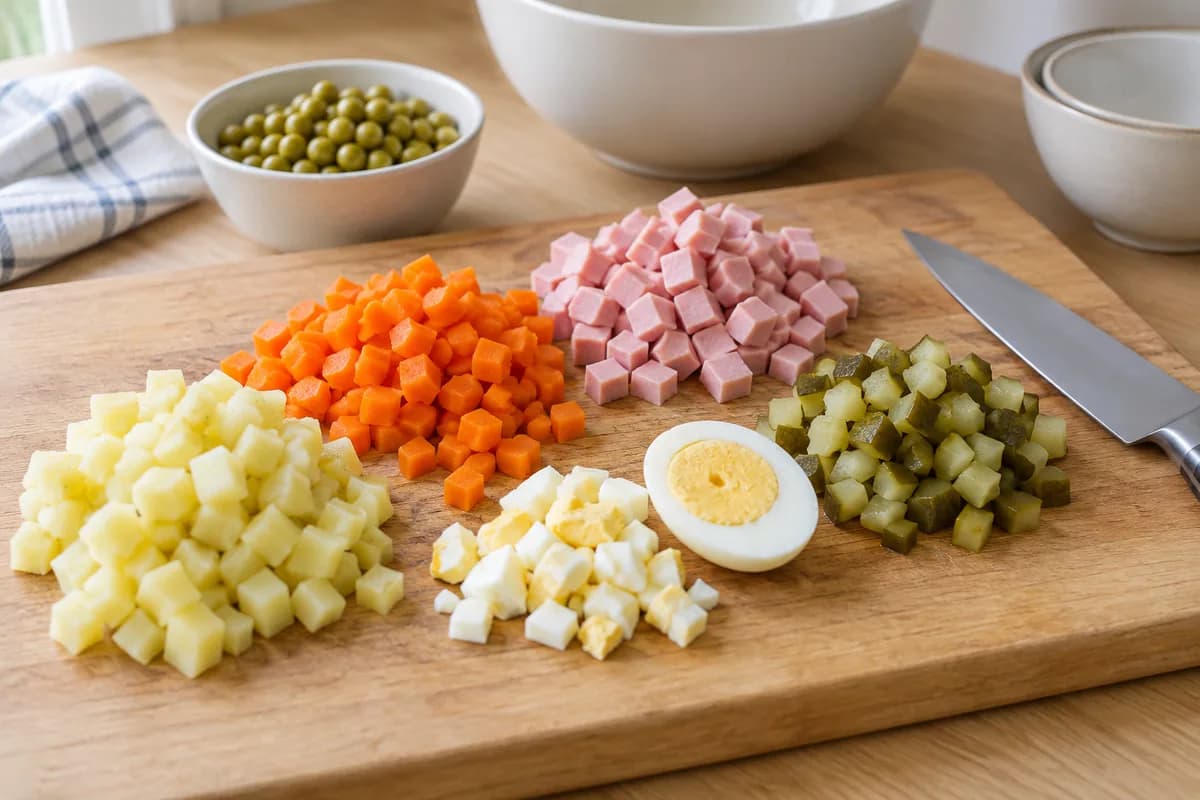
Aim for roughly 7 mm pieces so the ingredients fit together on a spoon. - In a small bowl, stir the mayonnaise, sour cream, mustard and black pepper until evenly mixed. Taste a little dressing with a piece of pickle before adding it: this recipe relies on the pickles and sausage for salt and does not need a pour of brine.
- Spoon the dressing over the diced ingredients. Fold from the bottom with a broad spoon, turning the bowl as you work, until the pieces have a light, even coating. Stop before the potato edges dissolve into the sauce. Cover and refrigerate for 30 minutes before serving.
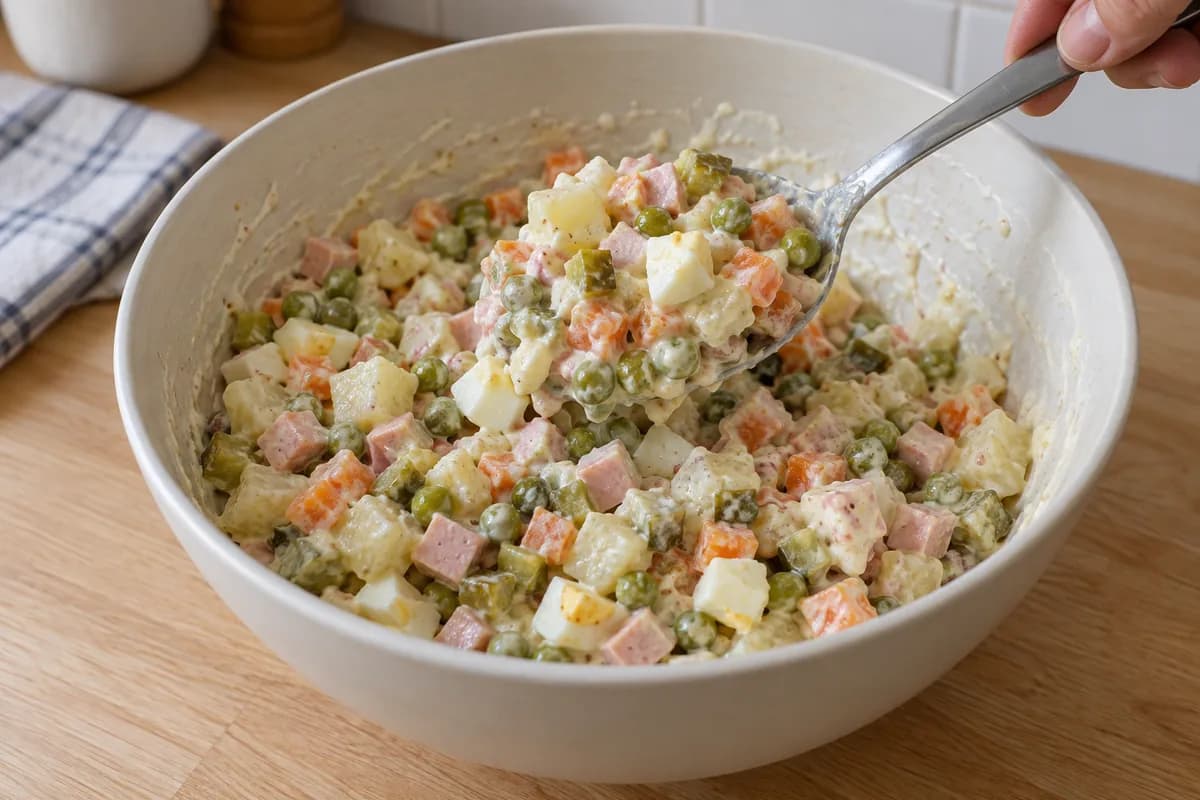
Fold gently from the bottom and stop while the potato cubes still hold their shape. - Serve a small bowl and leave the rest covered in the fridge at 4°C/40°F or colder. Use within 48 hours of cooking the vegetables and eggs, or sooner if a sausage, dairy or mayonnaise label gives a shorter limit. Mixing does not restart that clock. Discard salad left unrefrigerated for more than two hours, or one hour above 32°C/90°F.
If the dressing gathers at the bottom
Look at the liquid before adding more mayonnaise. Wet pickles and poorly drained peas can leave a thin puddle; more dressing only gives it more volume. Blot the pickles before mixing and let the peas sit in a sieve while you chop. Cold, intact potato cubes are easier to fold through than warm, crumbling ones.
For a meat-free bowl with a different dressing, choose our beetroot, apple and pickle salad. It has no potato, egg or mayonnaise, so it offers a useful contrast on the same table.
Keep the serving bowl small
For a longer buffet, keep the serving bowl on ice and replenish it from the fridge. Save any untouched portion in its own covered container. Pickles season the salad; they do not turn its potato, egg and meat into a preserved food.
Keep the jar open
Browse all recipes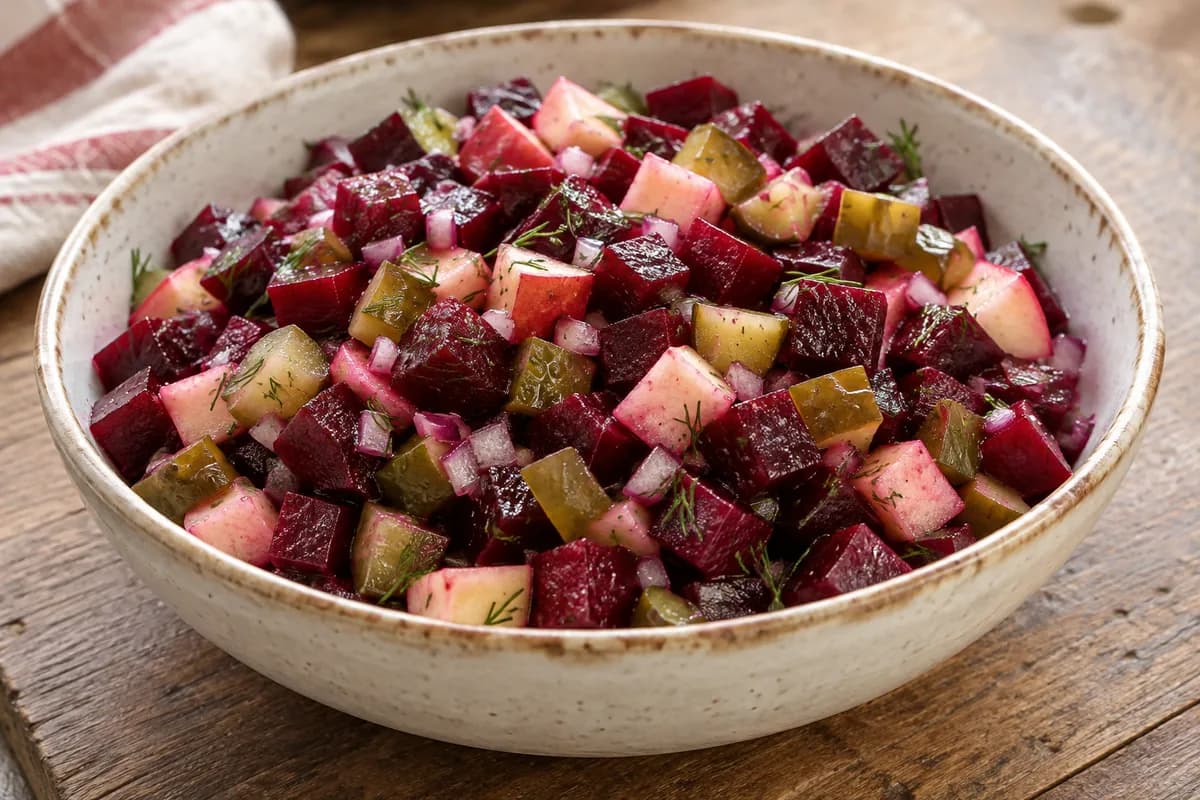
Salads
Beetroot and pickle salad with apple and dill
Cooked beetroot, sharp dill pickles and crisp apple in a simple mustard dressing, without turning everything into a mayonnaise salad.
Make this recipe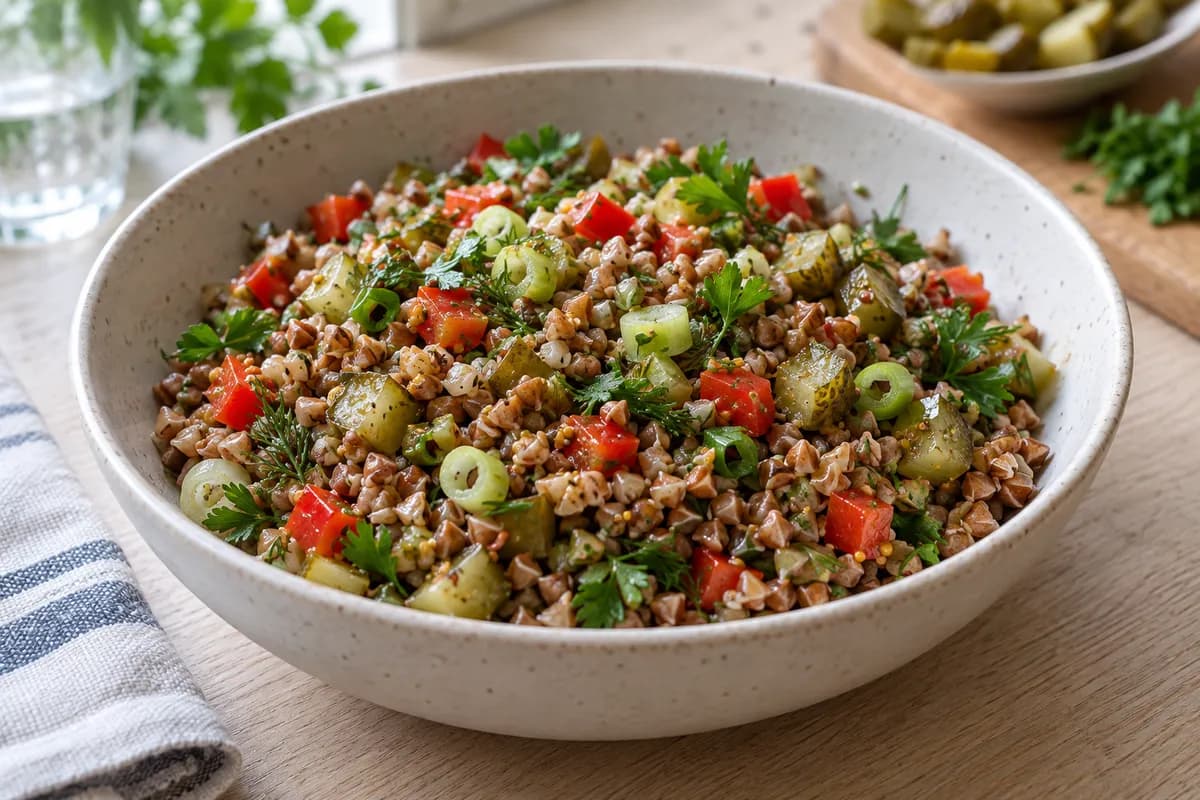
Salads
Buckwheat and pickle salad
Toasted buckwheat groats with diced pickles, red pepper and a mustard dressing, made to keep the grains separate.
Make this recipe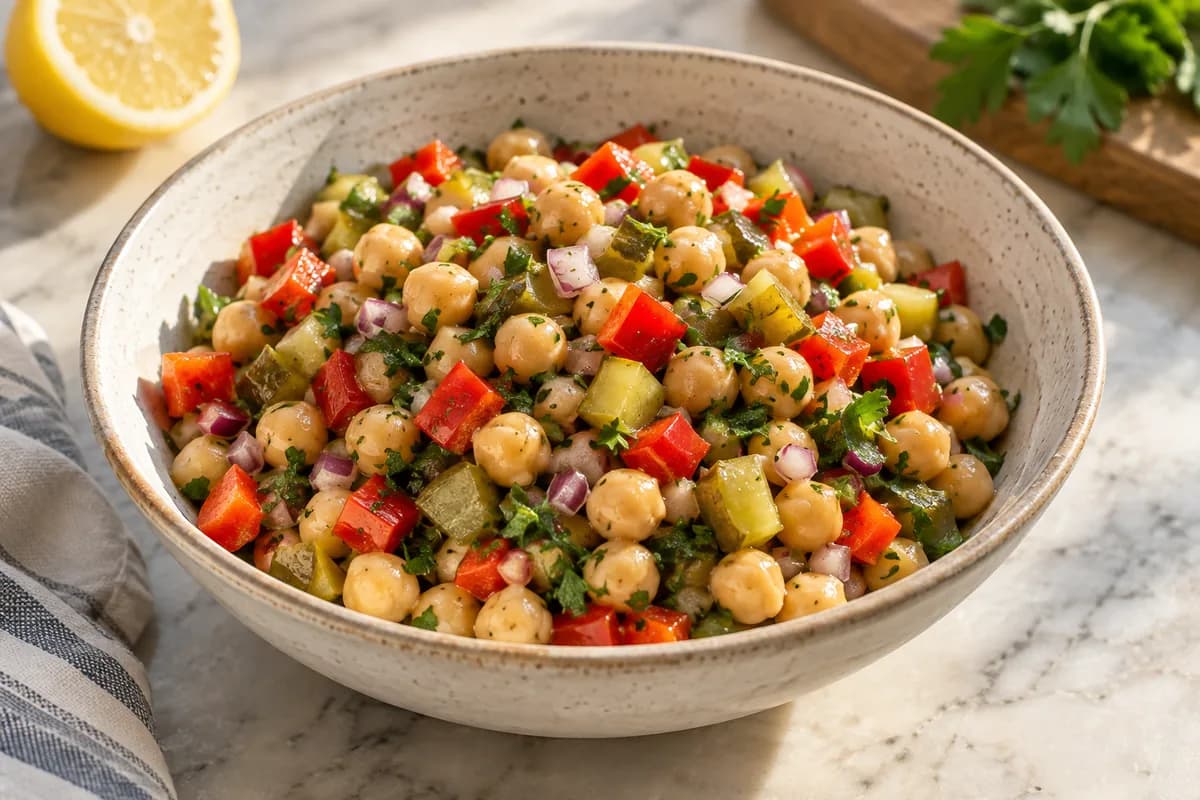
Salads
Chickpea and pickle salad with a lemon dressing
A substantial cold salad of chickpeas, diced pickles, red pepper and parsley with a simple mustard lemon dressing.
Make this recipe