Grow it. · PickleRadio
How to water cucumber plants while you are away
Arrange a person or a watering system before departure, then run the routine while you are still home. Check each cucumber pot, the water supply and the fallback plan.
In this guide9 sections
Choose who will check the plants
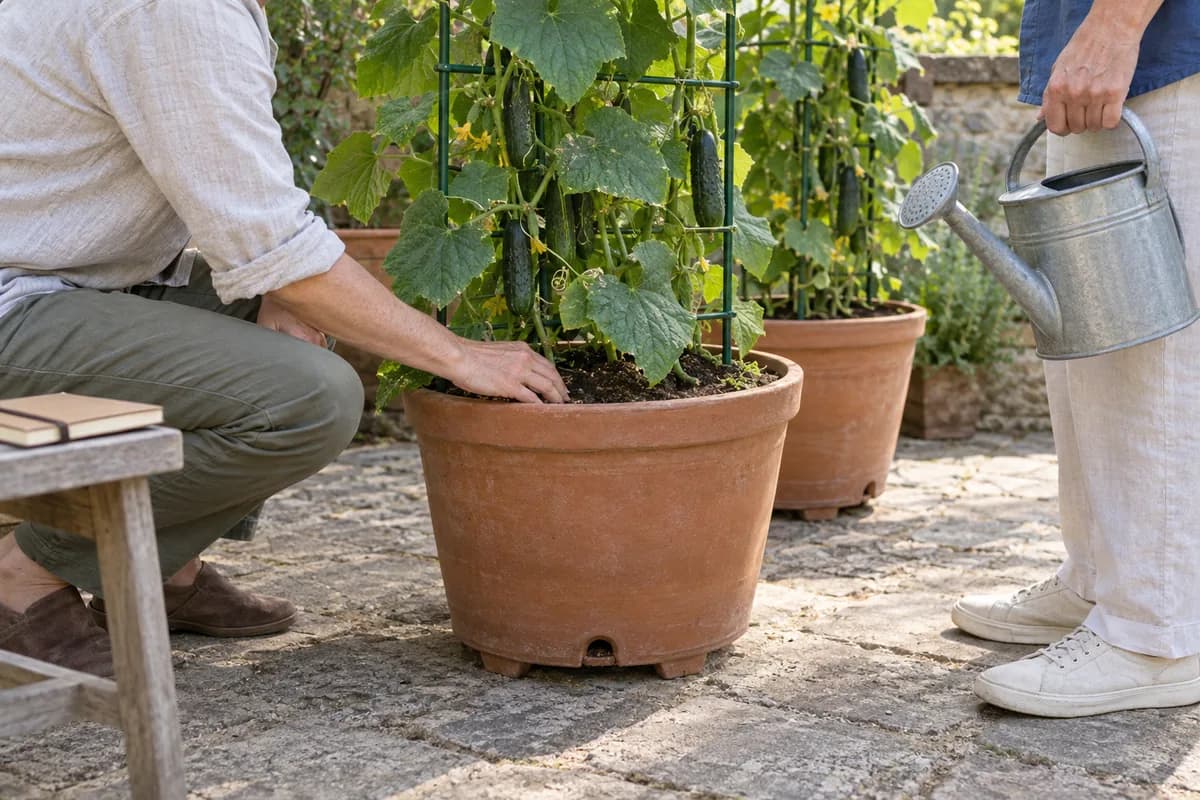
For one or two cucumber plants, we would first ask someone reliable to check and water them. Show that person the actual pots while you are home. If you use automatic watering, arrange a check on the equipment as well as the plants, especially during a long absence or a hot spell.
The RHS holiday guidance prioritises containers and vegetables for a helper because they need more attention than established garden planting. Cucumbers in a greenhouse also need someone to understand its ventilation routine. Decide who can enter and where the water comes from before choosing equipment.
Use the routine cucumber watering guide to establish what your plant currently needs. This page covers handing over or automating that routine.
Write a short note for each growing place
A note saying “water the cucumbers” leaves too many decisions to the visitor. Walk through a normal check together, then leave the instructions beside the watering equipment or send a photograph of the setup.
- Identify the pots or bed to check, including any plant hidden behind the greenhouse door.
- Show where to feel the growing mix and what it feels like when watering is needed. Include where drainage water should escape.
- Explain how to use the tap, watering can or controller, and who to contact if a tube comes loose or the water stops.
- Mark the cucumbers that are ready to pick and leave the harvesting instructions. Give permission to harvest them while you are away.
Choose a system for the water source you have
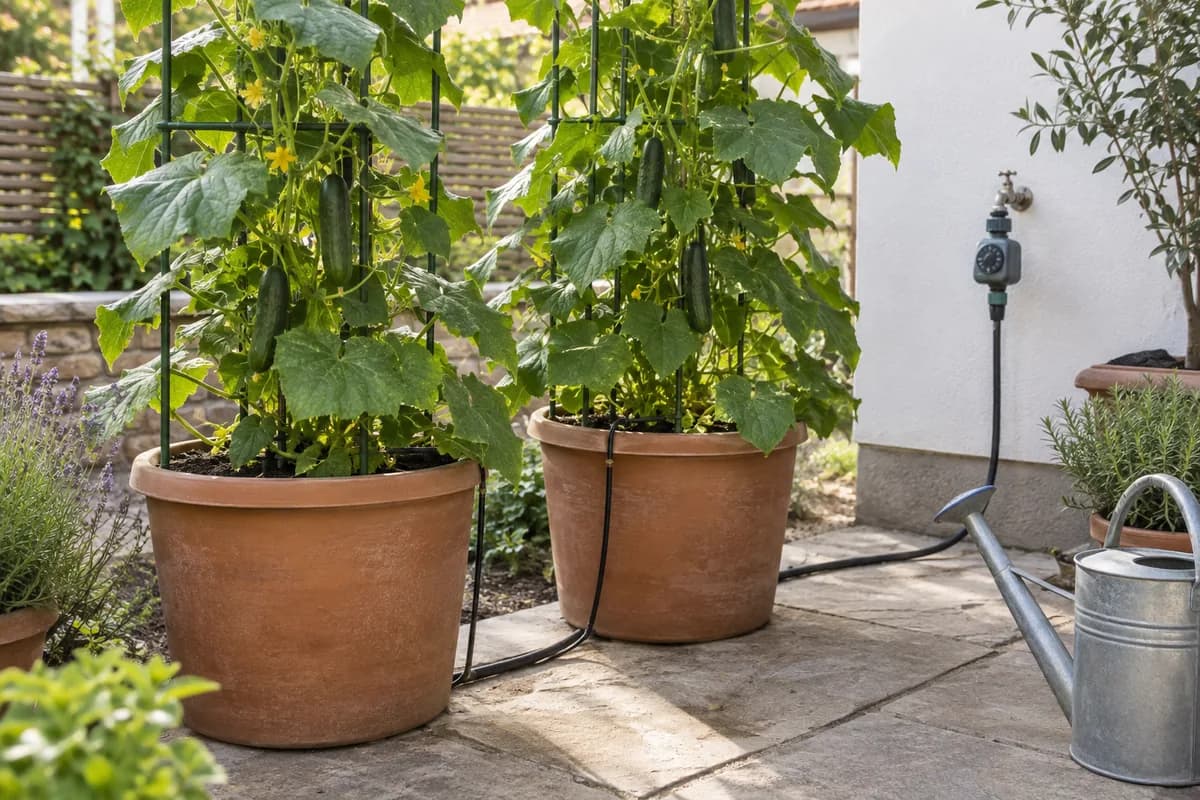
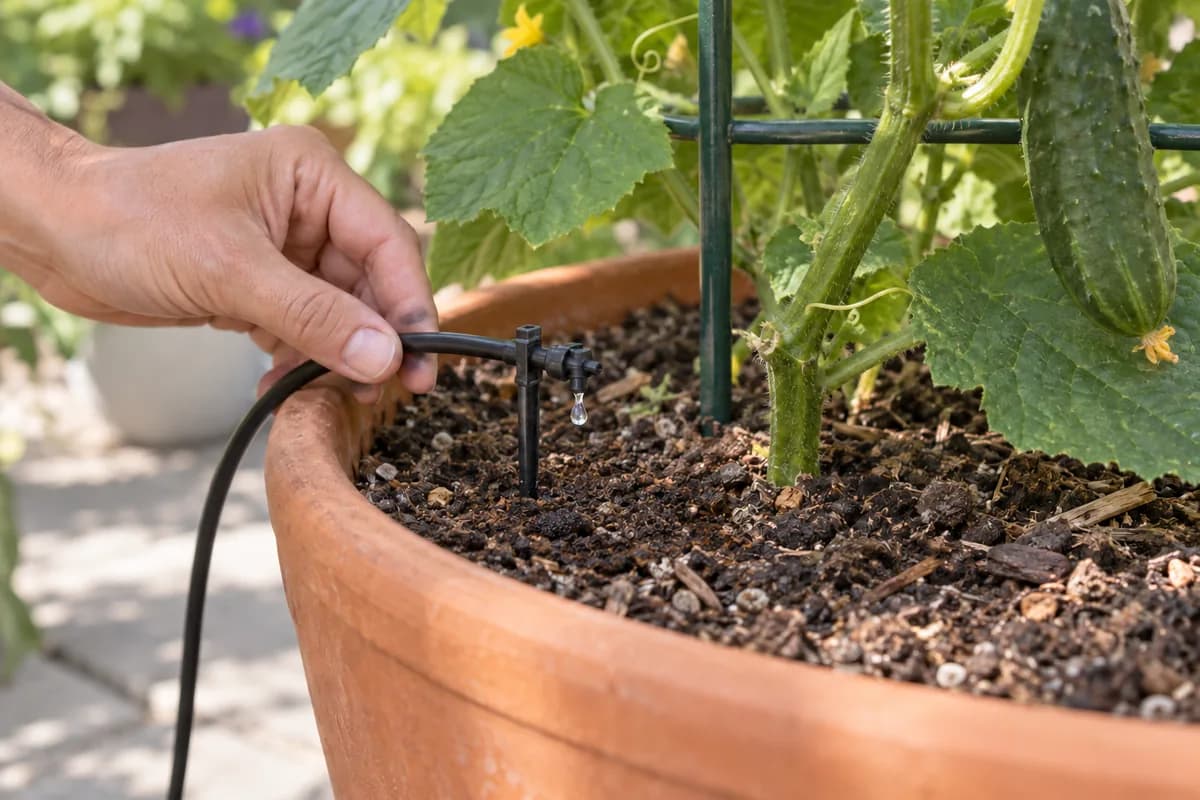
With an outdoor tap, a timed drip line can deliver water to the roots. Use the kit instructions to match its connections, filtration and pressure components. For example, GARDENA’s Master Unit regulates pressure and has a removable filter; those specifications belong to that system, so follow the instructions for the equipment you actually have. Keep tubing clear of paths and doors.
If you intend to use stored water, choose a system designed for that supply. Check its power, container position and refill requirements in the manual. A kit intended for a pressurised tap cannot be assumed to work from a bucket placed beside the pot.
Record the equipment you already have in your grow plan before buying a replacement setup. A working watering can and a reliable visitor may solve this particular trip; repeated summer absences may justify an automatic system you will use again.
Run the full watering routine before leaving
Set it up early enough to observe several normal watering cycles and make adjustments while you are home. Use the intended water source, final tubing positions and the actual plants. This is a practical check of your installation, not proof that the same schedule will suit every day of the holiday.
- Watch a complete scheduled start and stop. A successful manual button press does not establish that the timer has the right time or programme.
- Check every outlet, including the furthest one. Changes in height and operating pressure can affect delivery. Look for a loose connection, a kink or an emitter that has come out of its pot.
- After watering, check the growing mix in each pot and drainage beneath it. A wet patch directly under an outlet does not show whether the rest of the rootball received enough water.
- Before the next cycle, inspect the mix again. Adjust the programme using those observations and the kit instructions; record the setting that worked for the present conditions.
- Inspect the filter and each outlet. If an outlet stops delivering, follow the kit’s cleaning instructions and watch it run again before relying on it.
If there is a reservoir, measure what the system uses
Record the starting water level and the amount used through a complete planned programme. Compare that observed consumption with the usable supply and the number of cycles before the next refill. Check the manual’s minimum operating level; the last water in a container may not be available to the system.
That measurement tells you what the equipment delivered. It does not establish what a growing cucumber will need throughout your absence. Leave a refill plan and arrange a person who can respond if the reservoir empties faster than expected or a pot is drying between cycles.
Make the last check about the weather
Recheck the forecast and the plants before departure: weather, growing medium and plant size change water demand. A programme observed during cool weather needs another look if a heatwave is approaching.
For genuinely portable containers, RHS suggests a sheltered position away from strong afternoon sun to slow drying during an absence. Leave an established vine attached to its fixed trellis in place; do not drag the container away from its support. Keep access and ventilation clear.
Apply water at the soil surface with a watering can or drip outlet when it is needed. Keep the usual pot-drainage checks in the handover instructions too.
Check local water restrictions before leaving a tap-controlled system in service. Tell your helper whether the plan has changed, and leave the manual or a photograph of the final controller setting where they can find it.
How long can a cucumber go without watering?
There is no dependable number of days that covers a small pot, a greenhouse bed and different weather. Base the plan on checks of your own root zone and provide a waterer or a tested setup that keeps it suitably moist. A larger reservoir does not help if its outlet fails.
Can a bottle or wick cover the whole trip?
Treat a homemade device as an installation that needs the same observation period. Check how it delivers water in that exact pot, whether the mix stays suitable between deliveries and how quickly its supply is used. We would not make an unobserved bottle or wick the only water source for a fruiting cucumber during a long absence.
If you cannot test and adjust it before leaving, arrange a person to water. Leave that person a simple manual fallback even when an automatic system is already working.
Sources
UK garden advice, US irrigation principles and a manufacturer’s component documentation support different parts of this plan. Example hardware capacities and regional garden-bed watering amounts are not cucumber-pot settings.
Keep your project growing.
Water and feed your cucumber plant
Use the plant, potting mix and conditions to guide its everyday care.
Read the guideShow your helper what to pickPick at the right time
Recognise a useful harvest and handle the cucumbers with care.
Read the guideCheck the container setupGrow pickling cucumbers in a pot
Choose your spot, check your container and put a workable setup together.
Read the guide