Grow it. · PickleRadio
Grow pickling cucumbers in pots: give one plant a proper home
Start with one roomy pot, a sunny position and a watering routine you can keep. The useful decisions happen before the cucumber vine takes over.
In this guide9 sections
Our starting point: one plant in a roomy pot
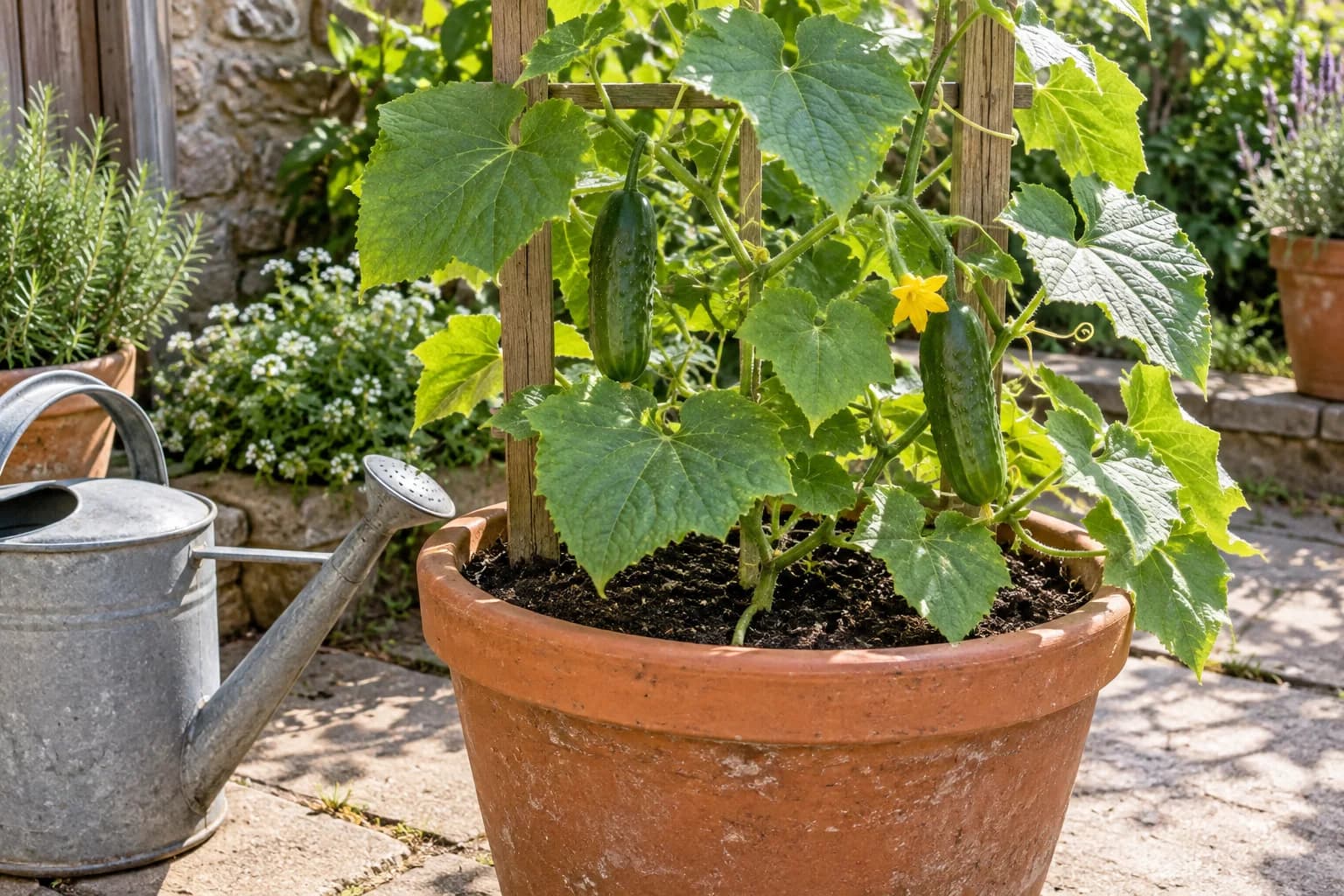
Give your first cucumber plant a generous home and keep the project small enough to watch closely. One well-planned pot teaches you when the mix dries, how the vine climbs and what picking size suits your kitchen. Extra plants add extra watering and space decisions immediately.
For this plan, choose roughly 20 litres or more, with a container also at least 30 cm wide and deep. That combines Maryland Extension’s five-US-gallon cucumber minimum with the RHS container dimensions for one central plant. Capacity and dimensions are separate checks: a tall, narrow pot can satisfy one and disappoint on the other.
The patio position can rule out the project
Watch the actual spot through the day. Maryland’s guidance for warm-season container crops is 6–8 hours of direct sun. A bright-looking corner under an overhang may receive much less. Check before buying a trellis or sowing more plants than the space can support.
Then stand where you would water and pick. Can you reach the far side? Is there somewhere for drainage water to go? Will the support obstruct a doorway? We would choose an accessible, sheltered position over the last spare corner: routine care becomes harder when the pot is awkward to reach.
Choose a variety for the available space
Small fruit does not promise a small plant. A compact cucumber and a vigorous vine harvested young can both make small pickles while demanding very different spaces. Use the variety finder to narrow the options, then check the named-variety comparison before committing to a support.
Pollination is another buying decision. Johnny’s cucumber terminology guide distinguishes types that need pollination from those that set fruit without it. An all-female packet is not enough information by itself. A single-plant plan must fit the variety’s actual needs, including any companion pollinator seed supplied.
Spend on the container basics first
Use a pot with open drainage holes and commercial container mix. Penn State’s container guide explains why straight garden soil is a poor substitute: it can be too dense for drainage. Plastic holds moisture longer than porous terracotta; heavier containers can help stability. There is no one material that solves every patio.
A watering can is a perfectly reasonable starting tool. Add a plant label, soft ties and a support appropriate to the cultivar. Keep the mix label too: it tells you whether feed is already included. An elaborate watering system can wait until you understand this pot’s needs.
Move the seedling without taking its roots apart
An indoor-raised plant needs gradual exposure to outdoor conditions. RHS hardening-off guidance starts with sheltered daytime conditions and continued protection at night. This preparation does not make cucumbers frost-hardy.
For UK outdoor planting, RHS advises reliably warmer conditions above 12°C. Treat that as identified UK guidance, not a date for every climate. If nights at your growing site are still unsuitable, keep the plant protected. The sowing guide explains the earlier indoor stage.
Once the position is suitable, use this sequence based on RHS container planting:
- Water the seedling before easing off its nursery pot. Keep the roots and surrounding mix together as one rootball.
- Part-fill the final container. Put the plant in the centre with the rootball’s top just below the rim, leaving room for watering.
- Fill around it and firm gently. Keep the stem at its existing planting level rather than burying it under extra mix.
- Water gently and thoroughly, allowing excess to drain. Install the support now while access is easy.
Have somewhere for the vine to go
A wall trellis, netting on firm stakes or suitable canes can guide a vining cucumber upwards. Tie in the young stems as needed; support height depends on the cultivar. Our cucumber trellis guide for pots works through fitting and training. Decide before the plant sprawls across the place where you need to stand.
Check daily; water when the pot needs it
Feel the mix below the surface. When watering is needed, wet it thoroughly and let it drain. Penn State notes that hot-weather containers may need daily watering, but “may” matters. Automatically pouring more onto wet mix can compound a problem.
Feed according to what is already in the mix and the product instructions. RHS guidance on feeding fruiting vegetables discusses potassium-rich feed. Stacking full doses of several products is not a useful response to slow growth. Keep the dates and dilution on a short watering and feeding record.
If a wilted plant sits in wet mix, inspect drainage before reaching for the can. If water races down the pot wall while its centre remains dry, the mix may have shrunk and need gradual rewetting. Both problems appear in Maryland’s container troubleshooting advice.
The first useful harvest can be small
Check behind the leaves as fruit develops, using the harvest guide to judge picking size. You can make one refrigerator jar of cucumber slices without waiting for a large haul. That is a practical finish line for this first pot.
Flowers without fruit call for a different check from a thirsty pot. Before changing the feed or removing flowers, work through why cucumber flowers may not set fruit with the variety name beside you.
Sources and further reading
The one-plant setup combines the identified UK and US guidance.
Keep your project growing.
Still choosing? Find my cucumber.Compare pickling cucumber varieties
Look at named varieties and match a choice to your space and growing conditions.
Read the guideNext stepSow your cucumber seeds
Get your seeds started and know what to look for as seedlings appear.
Read the guidePlan the supportSupport a cucumber growing in a pot
Choose a suitable support and keep the plant accessible as it grows.
Read the guide