Grow it. · PickleRadio
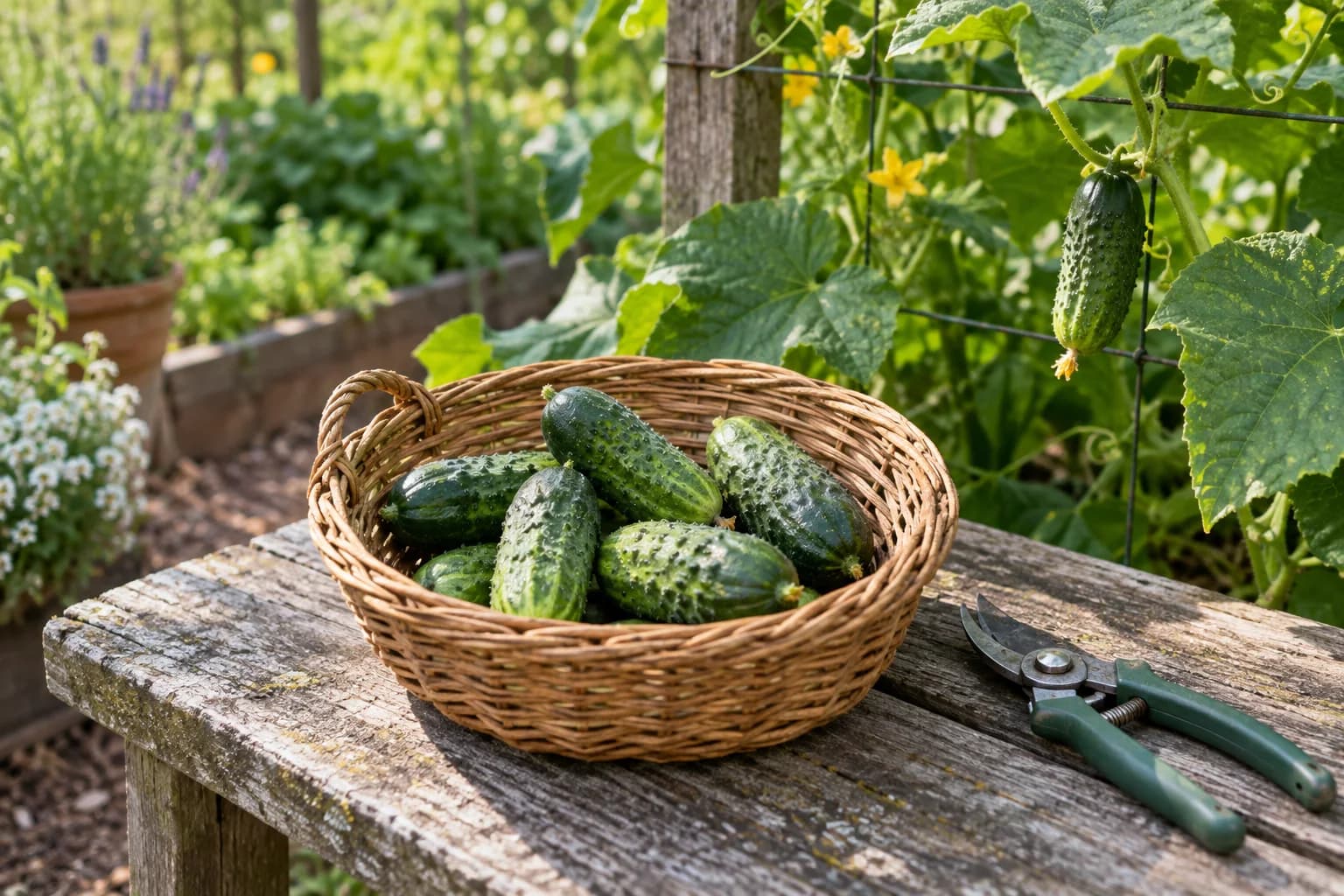
When to harvest pickling cucumbers
Catch cucumbers at the size your recipe needs, cut them without damaging the vine, and turn a modest harvest into a first jar.
In this guide6 sections
Pick at the size your recipe needs
For pickling, you usually want young cucumbers before the seeds harden. University of Georgia’s harvesting advice makes that maturity point more useful than a countdown from sowing. Our preference is to pick for a recipe already chosen, instead of letting the fruit grow while deciding what to make.
A small first crop is enough to begin. The one-pint refrigerator pickle recipe needs 1½ cups of prepared cucumber slices. You do not need to wait for a preserving-day glut to make something with your plants.
How big should a pickling cucumber be?
Iowa State gives 2–4 inches, roughly 5–10cm as general guidance for pickling types. Treat that as orientation, then use the cultivar and recipe. A small whole gherkin and a cucumber destined for slices need not have the same target.
For example, Adam has a documented 5–8cm small-pickle picking window, explained in the greenhouse mini-cucumber comparison. Our other named varieties have different descriptions. Put a ruler beside the first few fruit while learning to judge yours.
Check around and behind leaves. On ordinary green pickling types, yellowing can signal over-maturity; waiting for a colour change is the wrong harvest cue. A cultivar with a different normal colour needs its own interpretation.
Cut the cucumber from the vine
- Support the cucumber with one hand so its weight does not pull at the stem.
- Cut the stem above the fruit, leaving a short piece attached. UGA describes a cut about ¼ inch/6mm above it. Keep the blade clear of the vine and nearby fruit.
- Place the cucumber gently in a container. Look behind the leaves for another ready fruit before moving on, without pulling the whole vine around.
Check behind the leaves regularly
Leaving over-mature fruit on a cucumber plant can inhibit further fruit production. Regular inspection is worth doing even when you do not have a full batch ready. Remove the overgrown fruit rather than leaving it simply because it missed your preferred picking size.
For small whole pickles, the practical commitment is visiting often enough to catch that size. If your routine cannot support it, plan a recipe and cultivar with a more suitable picking window next season. That is a better adjustment than repeatedly hoping the smallest cucumbers will wait.
Sort the crop before mixing a brine
Choose fresh, firm cucumbers without spoilage for pickling. The NCHFP ingredient guidance is clear that sound produce and the right ingredient proportions matter. A damaged, deteriorating cucumber is not rescued by being put in vinegar.
Refrigerate the harvest if you cannot use it straight away. Keep named varieties separate if you want to compare the actual harvest later, and note what you picked rather than predicting what every other plant will produce.
Use a complete recipe that fits the crop. Keep its vinegar, water and vegetable proportions intact; do not invent a brine to fit the contents of your basket. If you are deciding between a fridge jar, fermentation and pantry storage, choose the pickling method first.