Grow it. · PickleRadio
Why cucumbers taste bitter, and what to do with the crop
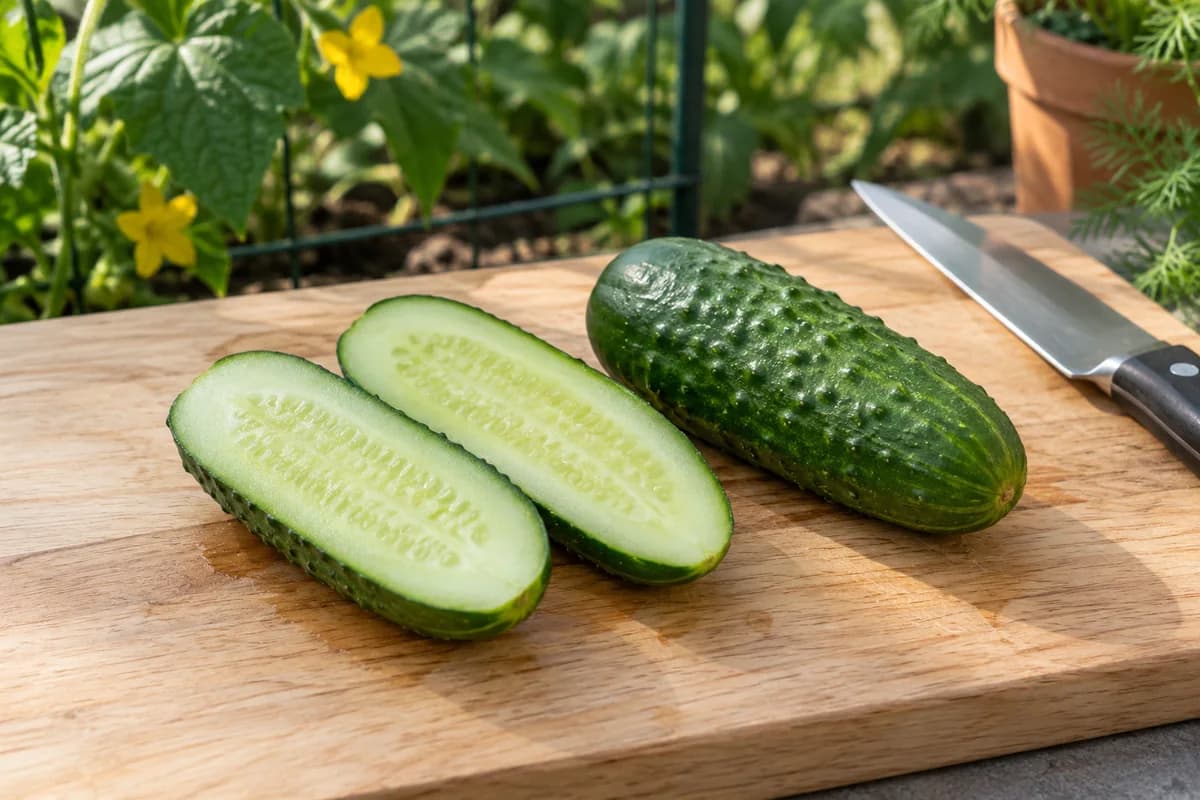
Separate the cucumber on the chopping board from the growing problem outside. Unusual bitterness changes what you use today; moisture and variety choices affect later fruit.
In this guide7 sections
Keep an unusually bitter cucumber out of the batch
Cucumbers can become bitter because of compounds called cucurbitacins. Iowa State links the problem to plant stress, particularly hot, dry weather in its growing region. The variety also matters. A cucumber can reach the expected picking size and still disappoint when you cut it.
If a cucumber tastes unusually bitter or markedly different from its normal flavour, stop eating it and discard it. The Hong Kong Centre for Food Safety includes cucumber in its advice on bitter cucurbit fruit. Significant amounts of these compounds can cause illness. We would choose another cucumber rather than try to hide an unexpected taste in a salad or jar.
Deal with that fruit first. Then look at the plant and its recent conditions; that investigation is about improving the next harvest, not making the discarded cucumber usable.
Start the growing check at the roots
Look back over the days when the affected fruit developed. Maryland Extension identifies drought, other plant stress and cultivar differences as contributors. Its advice also notes that bitter compounds may extend into the flesh when plants are severely stressed.
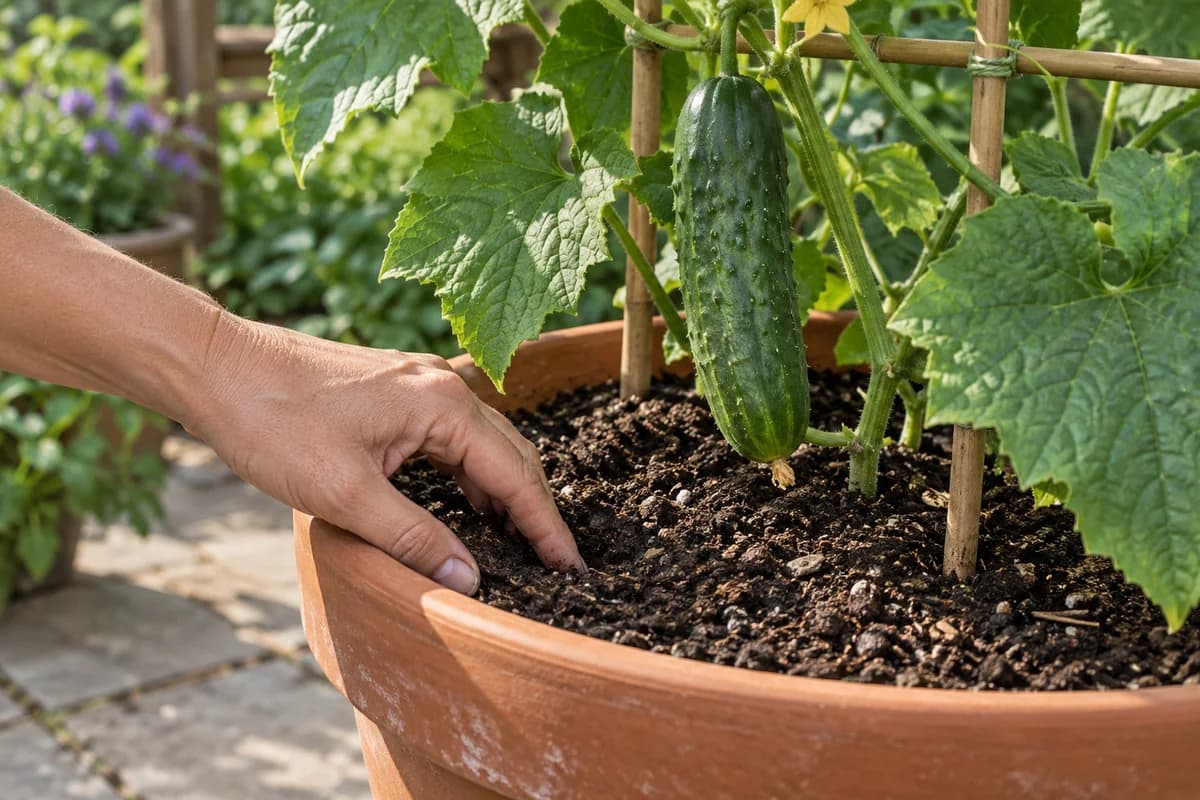
Check the actual growing mix before changing the routine. A pot left dry between visits calls for a different correction from one that has been standing in a full saucer. Do not add a large dose of water simply because the fruit was bitter.
Use the wet-versus-dry checks in the watering guide and write down what you find. If you have irrigation, watch it run: a timer switching on is not the same observation as water arriving at this plant. Check the outlet serving the affected cucumber, not only the nearest dripper.
- Note any missed watering, dry rootball or unusually hot period. Record the observation, rather than choosing a cause from the taste alone.
- Look over the leaves and stems as well as the fruit. Damage or a persistent decline deserves its own diagnosis. Take a whole-plant photo and close views of the affected parts for local horticultural advice.
- Keep the fertiliser name, recent doses and container-mix information together. Do not make an unexplained bitter harvest the reason for a stronger feed.
Give later fruit a fair comparison
A single bitter picking does not establish that the whole remaining season is lost. Purdue explains that newly formed fruit can become less bitter when environmental conditions improve. Keep the observation tied to a plant and picking date so a later harvest can tell you something.
For example, note that one container was dry at the roots, correct the watering problem, and record the next picking separately. If you change the feed, watering, shade and position all at once, you will have little basis for choosing which adjustment to keep.
Continue checking fruit at the appropriate harvest size. That avoids adding over-maturity to the problem. Picking earlier is not a safety treatment for a fruit that already tastes unusually bitter.
If it keeps happening, reconsider the variety
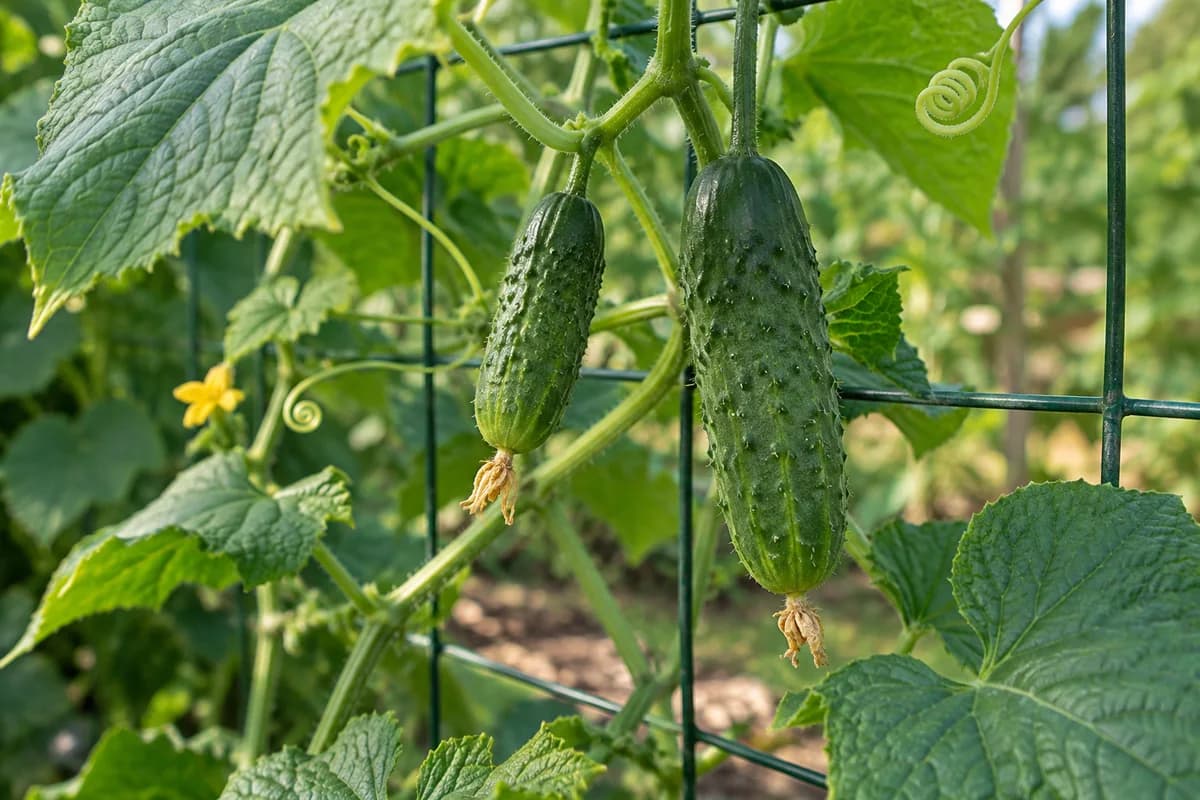
Some cultivars are more prone to bitterness than others; Maryland recommends looking for documented bitter-free types. Treat that as one selection criterion alongside the space, growing environment and kind of cucumber you want. A long slicing cucumber is not automatically the right replacement for a small-pickle crop.
Keep the exact name from the packet. Our pickling cucumber comparison helps with plant habit and intended use, while the variety finder narrows growing constraints. Check the breeder or supplier for a specific bitterness claim; we do not infer one from an attractive fruit photograph.
Nearby melons are not a reason to pull up an otherwise suitable planting. Illinois Extension explains that cucumbers do not cross-pollinate with muskmelons or watermelons and thereby make the fruit bitter. Identify the actual variety and growing problem before blaming the neighbouring crop.
Can you eat a bitter cucumber after peeling it?
Mild bitterness around the skin or stem end is the flavour problem addressed by some gardening advice. Iowa State describes trimming and peeling as ways to reduce it because the compounds tend to be concentrated there. That does not provide a home test of the amount present throughout an unusually bitter fruit.
For an unusually bitter cucumber, our recommendation remains to discard it, following the food-safety advice on abnormal bitterness. Do not keep tasting pieces to work out how much you can tolerate. If you feel unwell after eating it, seek medical advice promptly.
Can you pickle bitter cucumbers?
Do not use pickling as a rescue for unusually bitter fruit. A strong dressing or brine can make judging the original taste harder; we have no validated home treatment to offer for this problem.
Choose sound, normally flavoured cucumbers for the one-jar refrigerator recipe or another complete recipe. Keep the rejected fruit separate while preparing the rest of the crop.
Sources
- Iowa State University Extension: cucumber bitterness and plant stress
- University of Maryland Extension: off-flavour, stress and cultivar differences
- Purdue Extension FoodLink: cucumber growing conditions and later fruit
- Hong Kong Centre for Food Safety: unexpectedly bitter cucurbit fruit
- University of Illinois Extension: cucumber and melon pollination
Keep your project growing.
Still choosing? Find my cucumber.Water and feed your cucumber plant
Use the plant, potting mix and conditions to guide its everyday care.
Read the guidePick the next cropPick at the right time
Recognise a useful harvest and handle the cucumbers with care.
Read the guideCompare seed choicesCompare pickling cucumber varieties
Look at named varieties and match a choice to your space and growing conditions.
Read the guide