Grow it. · PickleRadio
Angular leaf spot on cucumbers: spots, holes and next steps
Angular leaf spot is a bacterial disease, but several cucumber problems make similar marks. Learn what to inspect, how to limit spread and when a struggling plant needs a diagnosis.
In this guide9 sections
A hole may have started as a spot
When brown patches fall out of a cucumber leaf, angular leaf spot is one possibility. Minnesota identifies the cause as Pseudomonas syringae pv. lachrymans, a bacterium. Shape alone cannot confirm it.
For a small home planting, our first move would be to reduce splashing and leave wet foliage alone while arranging a closer inspection. Buying a spray before checking the pattern can waste time on the wrong problem.
Look at the edges of the spots
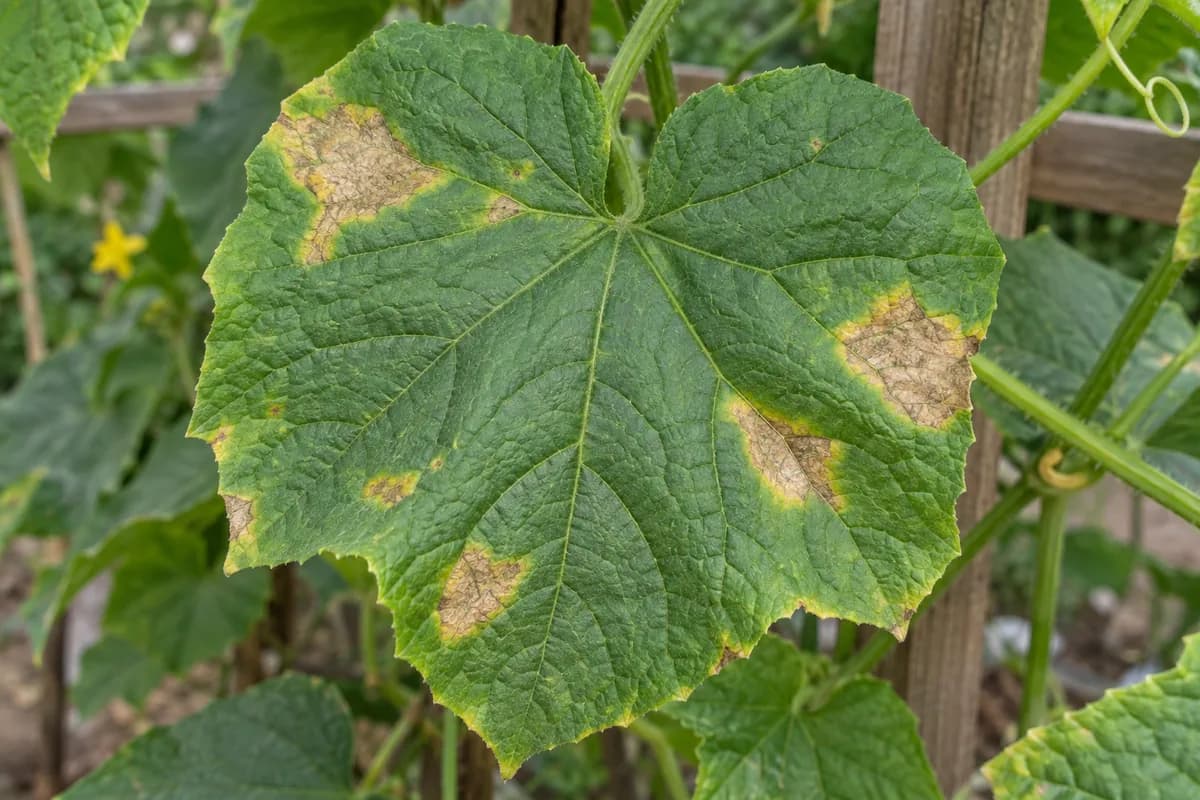
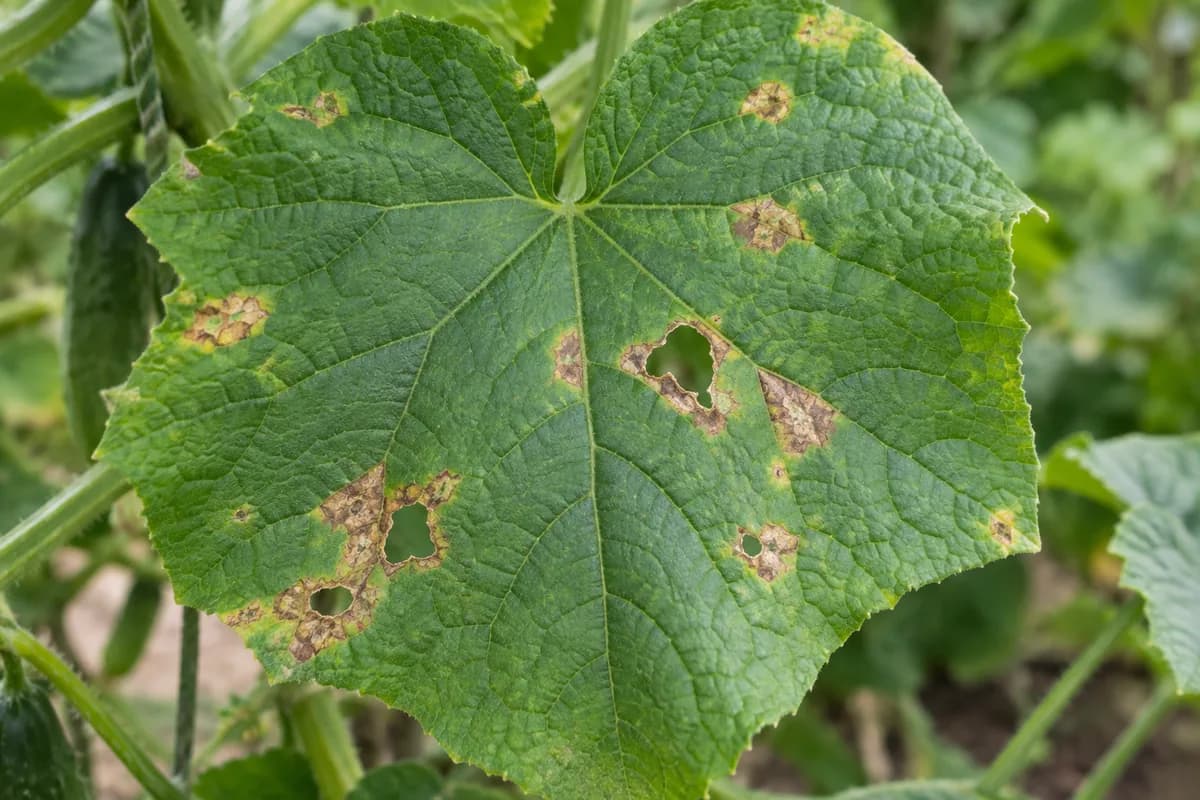
On an affected leaf, small veins can stop a patch expanding, giving it straight sides and corners. Early wet-looking spots become grey or tan, sometimes with a yellow halo. As damaged centres dry and fall away, the leaf can look ragged. Record both intact patches and holes; a hole by itself leaves out that history.
Pale ooze may be visible beneath damp leaf lesions. Record what is visible without wetting the leaf; wait until foliage is dry before handling it.
Photograph the same attached leaf from above and below, then take a view of the whole vine. Include a newer leaf so you can compare the pattern at different levels. Avoid rubbing off a mark before you have recorded it.
Downy mildew and scab can look similar
The overlap is real: Cornell’s cucumber leaf key shows angular, vein-limited patches in both angular leaf spot and downy mildew. It also describes scab producing holes in older lesions. A tidy shape between veins cannot distinguish a bacterium from a fungus-like pathogen or a fungus. Our downy-mildew inspection guide follows that alternative in detail.
Use the yellow-leaf checks to record spotting, fine speckling and distorted growth separately. If white dusty patches dominate, compare them with the powdery-mildew guide. Several symptoms can occur on one plant; choose the next inspection from what is actually present.
How it gets between plants
An outbreak can begin with infected seed. The disease can spread through splashing water, insects and people working among plants in warm, moist conditions. Check how you reach neighbouring vines and where your hose stream lands.
Keep the seed packet or transplant receipt with the date you first noticed damage. If several plants came from the same batch, record that without assuming the supplier caused the problem. The history is useful to a diagnostician even when the entry route remains unknown.
Change the watering and handling today
Harvest when vines are dry and limit overhead irrigation. Apply that to the next job you had planned: postpone picking or tying a wet vine, and avoid brushing through its leaves to reach another pot.
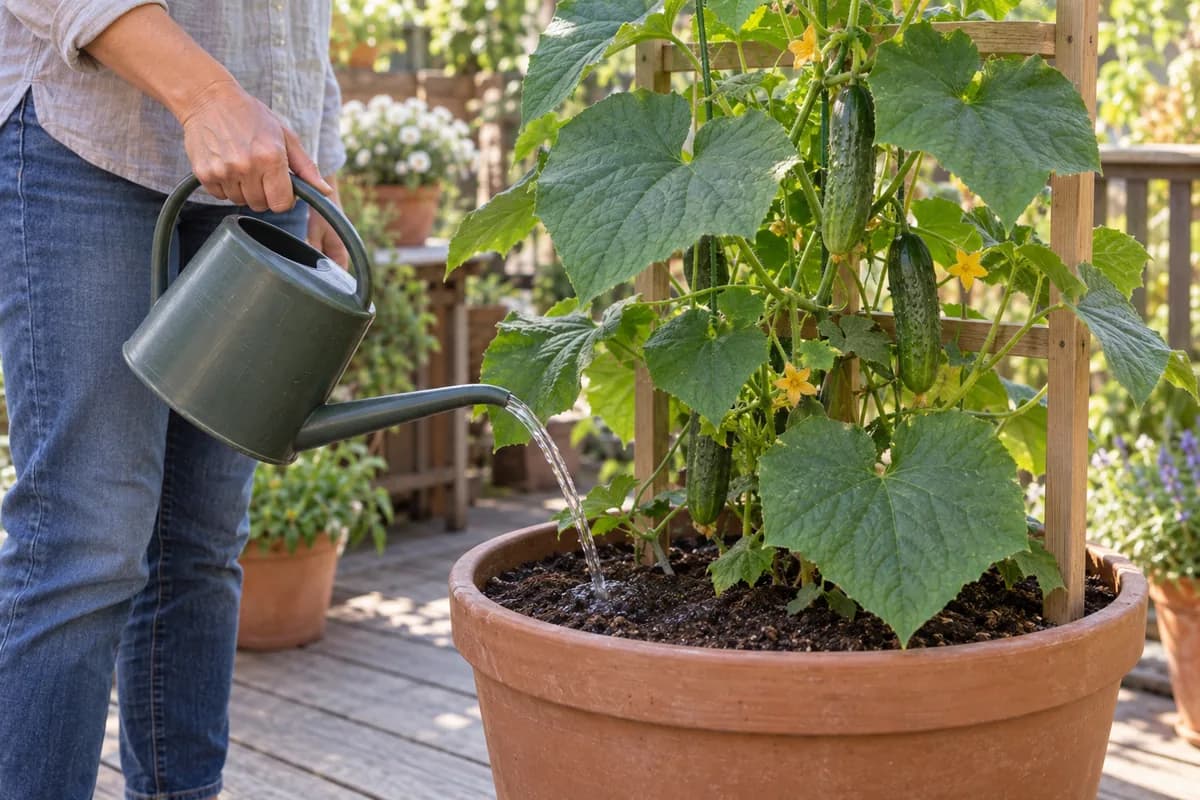
- Direct water gently onto the growing mix, keeping splash off the foliage. Check moisture before deciding how much to add; the watering guide covers the difference between a dry root zone and a pot that is already wet.
- Make space to reach the pot without dragging leaves against your clothes. Check the route from the tap to the furthest plant, including any vine lying across the path.
- Record what changed and compare the next set of photographs. Watch for new affected leaves, spreading patches and changes in growth. Existing holes are not a useful measure of recovery.
Decide whether this plant is worth keeping
A newly affected seedling beside healthy plants deserves prompt attention. Cornell recommends early removal of individual affected plants, especially in transplant trays. Once the problem is identified, replacing that seedling may be more sensible than carrying it into a new bed.
For an established vine with a few marked leaves, we would inspect the remaining growth before deciding to discard it. Keep the decision tied to its condition and the diagnosis. Cutting off every spotted leaf from a badly affected plant can leave very little foliage.
Check the cucumbers as well as the leaves. Fruit lesions can be associated with internal decay and poor growth. Photograph any wet-looking spots or decay and keep affected fruit apart from the sound harvest while asking for advice. A leaf photograph cannot certify fruit for eating or preserving.
If damage is increasing quickly or stems and fruit are affected, contact a local plant clinic or horticultural adviser. Ask what material it needs before cutting or posting a sample. Delaware’s diagnostic guidance explains why tissue crossing from healthy to affected areas is more useful than a completely dead leaf. Include the whole-plant photographs and growing history.
What treatment can realistically do
In its farm guidance, Minnesota says copper may slow early spread, but sprays are ineffective once the disease is severe.
Commercial recommendations need particular care: Cornell explicitly separates its crop-production pesticide guidance from home-garden use. Ask for a current local option labelled for cucumber, the diagnosed disease and your growing setting. Follow all use and harvest restrictions. Do not assume a product sold for mildew will treat this bacterial disease, or substitute a household spray mixture.
Plan the next sowing around the diagnosis
For the next packet, Cornell recommends seed tested for bacterial pathogens and cucumber varieties with resistance. Check specifically for angular leaf spot in the cucumber catalogue; resistance to powdery mildew answers a different question.
The bacterium can survive in crop remains. Minnesota advises avoiding seed from infected plants, removing affected crop remains and leaving at least two years between cucurbit crops in the same location. In a bed, replacing cucumber with squash or melon does not provide that break. For containers, ask the adviser how to handle the growing mix and equipment after the confirmed problem; moving an unchanged pot is not a cleaning procedure.
Sources
Checked 18 September 2026. This guide explains observations and practical decisions; it does not provide a laboratory diagnosis.
- University of Minnesota: angular leaf spot biology and management
- UC IPM: angular leaf spot in home gardens
- UMass: cucumber-family leaf spots and fruit damage
- Cornell: comparing cucumber leaf symptoms
- Cornell: angular leaf spot management and treatment scope
- University of Delaware: selecting useful diagnostic samples
Keep your project growing.
Compare signs of downy mildew
Check angular yellow patches on both leaf surfaces and separate the closest lookalikes.
Read the guideCheck the broader patternCheck yellowing cucumber leaves
Read the leaf pattern and inspect the root zone before choosing a treatment.
Read the guideReduce leaf wetnessWater and feed your cucumber plant
Use the plant, potting mix and conditions to guide its everyday care.
Read the guide