Grow it. · PickleRadio
Grow dill for pickling: leaves, heads and seeds
Decide which part of the dill your recipe needs, then grow for that harvest. A pot of leaves and a crop of mature seed follow different plans.
In this guide9 sections
Read the dill ingredient before sowing
A recipe asking for dill seed is not asking for a handful of feathery leaves. Start with the jar you intend to make and note the plant part it requires. That small check changes whether you should keep snipping leaves or let some plants flower.
Our one-jar refrigerator pickles use dill seed. The fermented dill pickle recipe specifies fresh heads. Leaves have plenty of uses too, including the fresh cucumber and dill-pickle salad. Follow the chosen recipe’s ingredient and amount rather than inventing a leaves-to-seeds exchange.
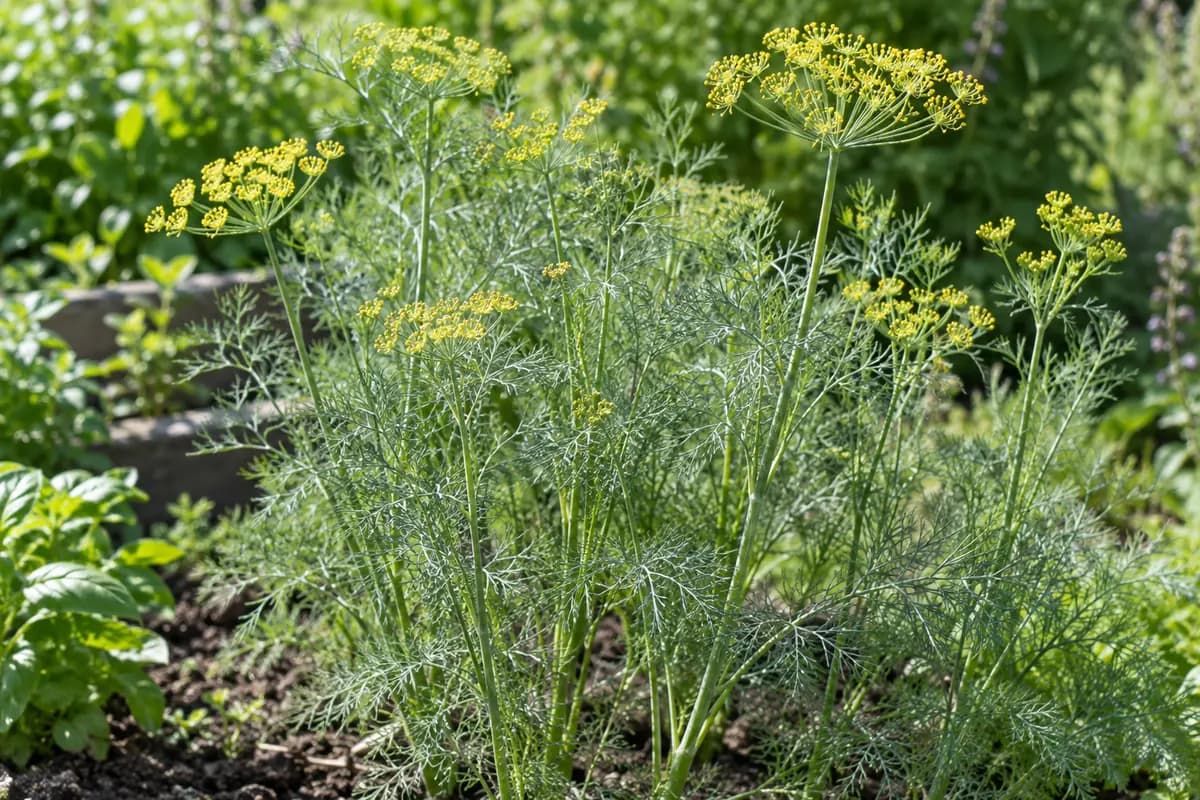
Dill is the herb Anethum graveolens. Utah State distinguishes its feathery “dill weed” foliage from the flowers and seed. All can be useful, but they are harvested at different stages.
Give it its own reachable space
For a first cucumber-and-dill project on a patio, we would use a separate dill pot. You can leave selected stems to develop heads while continuing to tend the cucumber, and move between the two without reaching through its trellis.
The RHS recommends a container at least 30cm/12in wide and deep with peat-free multipurpose compost, and suggests compact varieties for pots. A tiny kitchen-herb sleeve is not that long-term growing space.
Choose a sunny position with shelter from strong winds. Minnesota recommends six to eight hours of direct sun and warns that tall hollow stems can fall over. Look at the space through the day before placing dill behind a cucumber that will eventually shade it.
If you are still arranging the cucumber’s home, the container-growing guide covers its setup. Leave room to inspect and water each plant separately.
Sow where the dill will stay
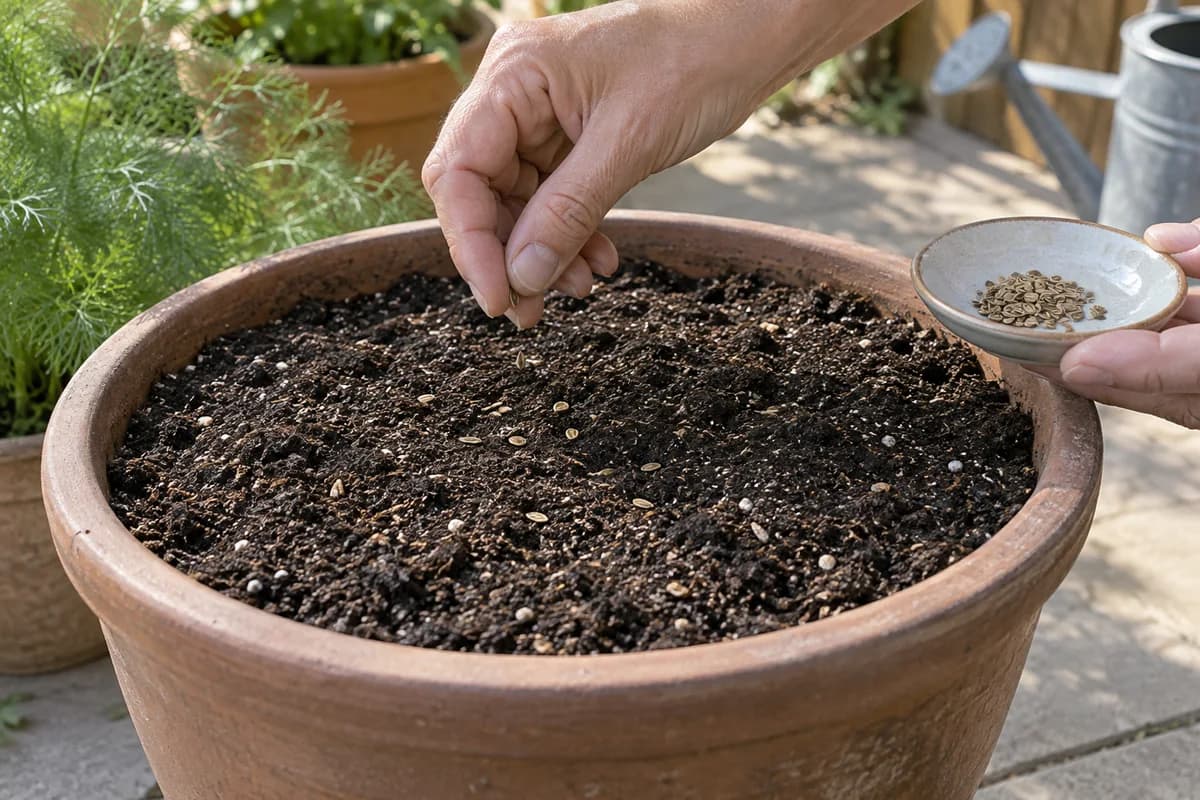
Direct sowing avoids the root disturbance dill dislikes. For an outdoor pot, the RHS sowing method uses a thin sowing covered with about 1cm of compost once conditions are suitable. Follow the seed packet’s spacing for that variety and thin crowded seedlings.
Label the sowing date. Water gently so the seeds remain in place and the mix stays moist without sitting in water. Keep the eventual watering point clear of other pots; the small job you can reach is the one you are more likely to keep checking.
Utah State gives 7 to 21 days for emergence, depending on soil temperature. Leave room for that range before deciding the sowing failed. A packet date or a photograph of someone else’s seedlings cannot tell you the temperature in your pot.
Plan a second sowing before the first one flowers
Dill is an annual, and a single sowing will not supply young foliage indefinitely. Minnesota suggests sowing small batches every two to three weeks through midsummer for repeated harvests in its climate. Use your local growing season and packet guidance rather than treating a northern calendar as universal.
A modest home version is to mark one pot for the present leafy harvest and a later sowing for its replacement. If you need heads for fermentation, reserve some of the earlier plants for that purpose. Write the intended harvest beside the date so you do not cut the last flowering stem for tonight’s dressing.
You do not need every plant at the same stage. Staggering the crop also gives you a choice when the cucumbers are ready before the dill heads are. Buy the specified ingredient if necessary; changing the preserving recipe to fit whatever is in flower is the wrong way to resolve the timing.
Pick leaves without taking the whole plant
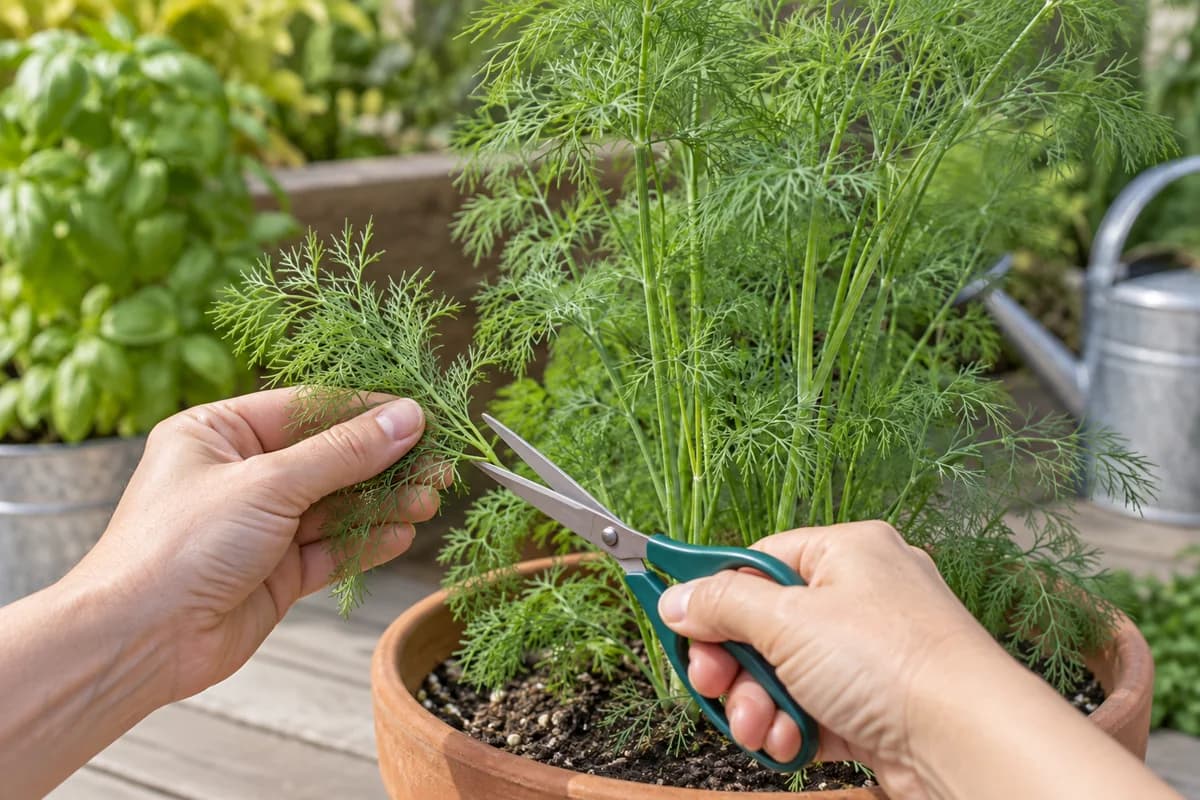
Snip a small amount of leafy growth as needed. The RHS advises taking only a few leaves from young plants and leaving at least a third of the plant in place. Do not cut a tiny seedling back to bare soil and expect a repeated harvest.
Keep the amount you pick close to the meal you are making. With a small pot, several recipes competing for the same handful of dill can exhaust it faster than you expect. Count that as a reason to sow another batch, rather than increasing how much you remove at each visit.
For extra leaves, Utah State recommends freezing fresh sprigs. Keep frozen foliage identified as leaves; it does not become dill seed or a fresh head because it is going into a pickle recipe.
Let the right plants reach heads and seeds
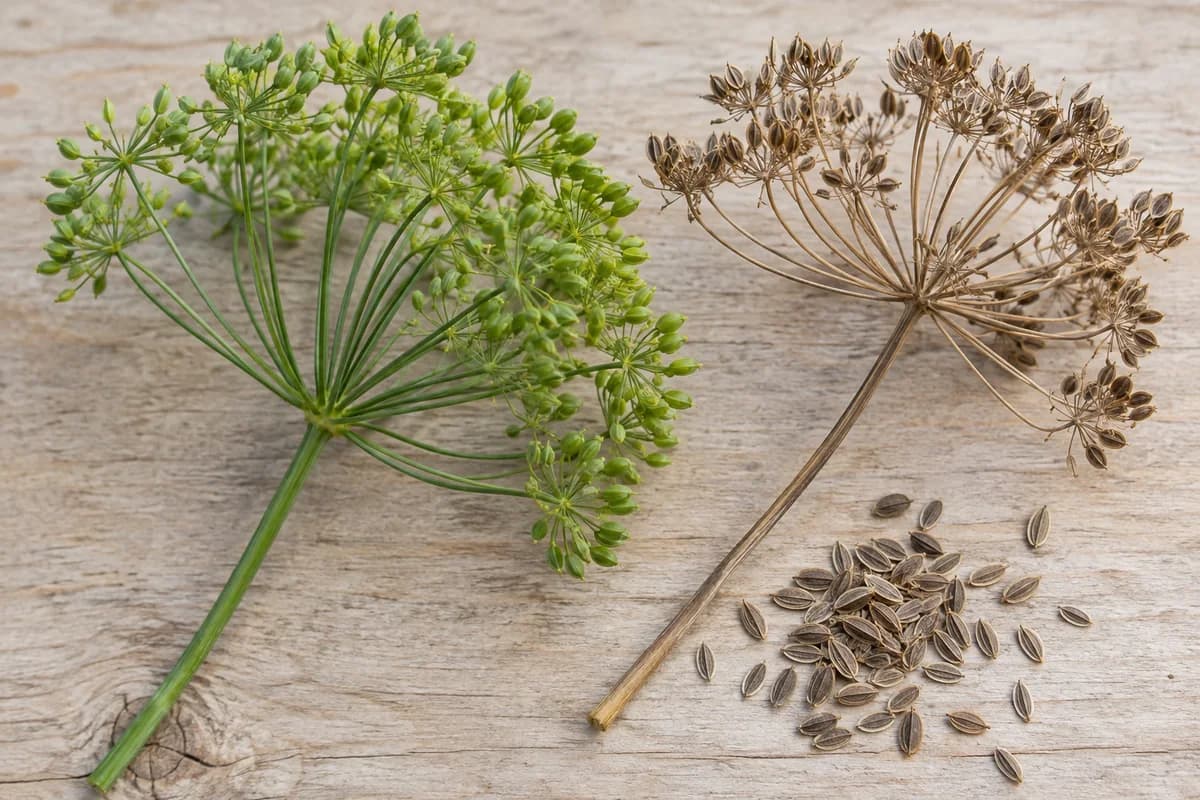
For a green pickling head, Minnesota describes the stage after flowers give way to seeds while the head is still green and flexible. That is visibly different from a dry brown head. Check the exact preserving recipe before cutting.
For dry dill seed, Utah State advises waiting until heads turn brown, then collecting the shedding seeds in a paper bag. Let the seeds dry before storage in a cool, dark place. Cut the stem over the bag so loose seeds have somewhere to fall.
Keep harvested leaves, green heads and dry seeds separate. The distinction is easy on the plant and much less clear once everything is bundled together on the kitchen counter. Label what you store with the plant part and date.
How do you harvest dill so it keeps growing?
Take small leafy harvests and leave most of the plant. Remove developing flower stems only from plants reserved for leaves; keep other plants for heads and seeds.
Repeated leaf picking does not turn an annual into a permanent herb. Make the next sowing part of the routine while the current plants are still useful.
Can you use dill flowers in pickles?
Yes, dill flowers are edible and the RHS notes their use in dill pickles. That does not make every stage or quantity interchangeable in a preserving formula. Use flowers or heads when the recipe specifies them; use seed when it specifies seed.
For a recipe that actually calls for fresh heads, read the complete fermented dill pickle method before harvesting them. Its batch size and waiting period are quite different from a quick lunch salad.
Keep your project growing.
Make your first refrigerator jar
Gather the ingredients and follow the complete illustrated recipe, from slicing to cold storage.
Read the guideGrow the cucumbers tooGrow pickling cucumbers in a pot
Choose your spot, check your container and put a workable setup together.
Read the guide