Grow it. · PickleRadio
Cucumbers turning yellow: overripe fruit or a failed start?
A large cucumber that changed from green and a tiny yellow fruit below a flower need different checks. Start with size, variety and when the colour changed.
In this guide7 sections
Compare the fruit with its earlier stage
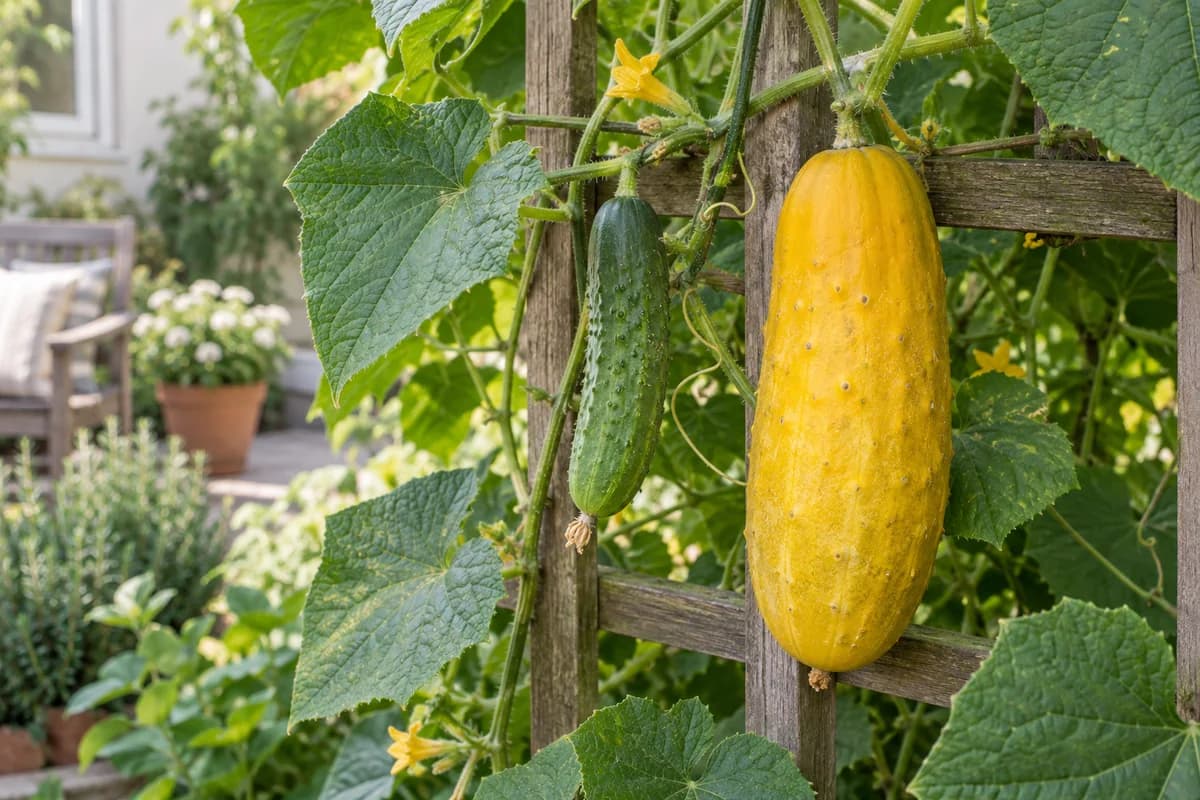
A full-sized, normally green cucumber that has become yellow is often past its best harvest stage. The RHS describes yellowing, bulbous or soft fruit as signs of overripeness. A tiny cucumber that yellows before it grows properly points you towards a fruit-set check instead.
Check the packet before treating every yellow fruit as a failure. Illinois Extension describes Lemon cucumbers as naturally yellow. A known yellow variety and a green pickling cucumber left on the vine too long are different cases. Do not identify an unknown plant by colour alone.
For a small planting, note whether the change affected one hidden cucumber, every large fruit or only the newest tiny ones. That is more useful than applying the same remedy to the whole vine.
A full-sized fruit that changed from green
Look behind leaves and along the back of the support. A cucumber can disappear from the normal picking view while still growing. Compare it with the packet’s harvest description rather than waiting for a darker yellow or a larger size.
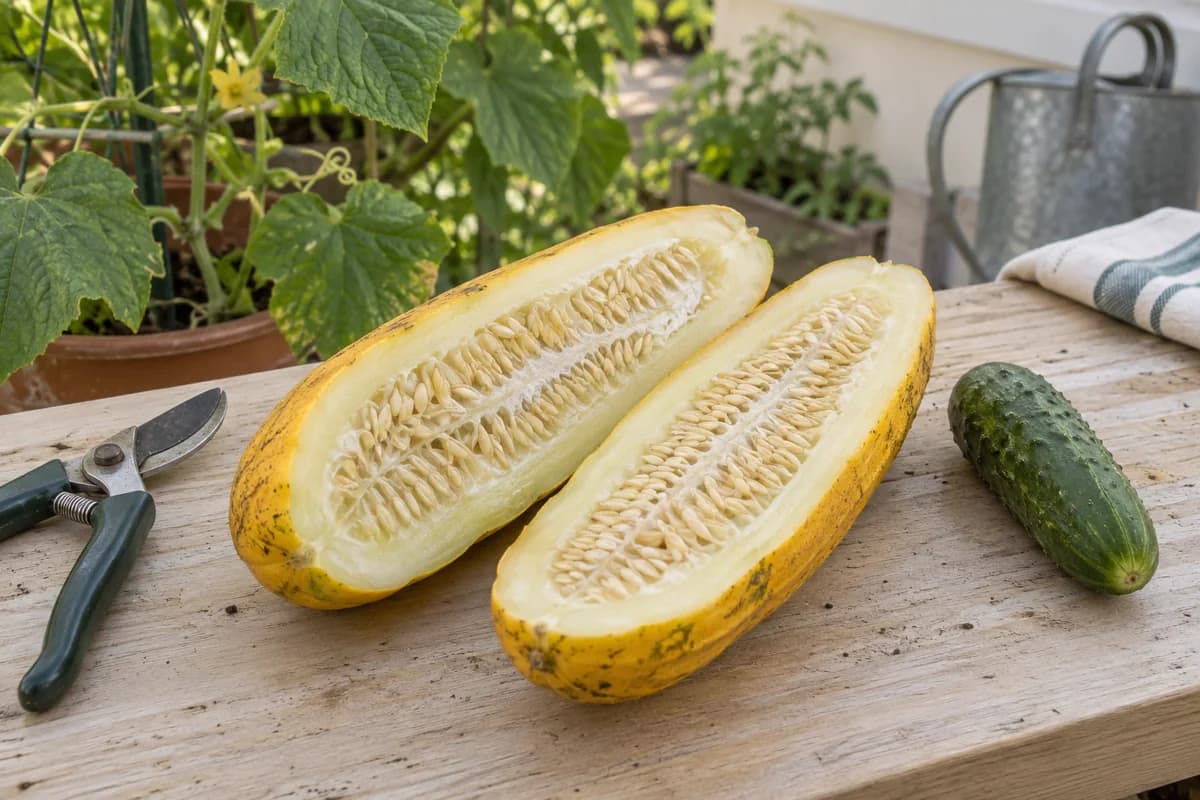
As cucumbers age, their seeds develop and skins become tougher; Utah State advises harvesting while fruit is young and tender. Cutting open one rejected overgrown fruit can help you recognise that developed seed cavity next time. It is a maturity check, not a safety test.
Remove overmature fruit carefully. Iowa State explains that leaving it on the vine can inhibit additional fruit set. Support the cucumber and cut its stalk without pulling the climbing plant off its trellis.
A tiny cucumber that yellowed before growing
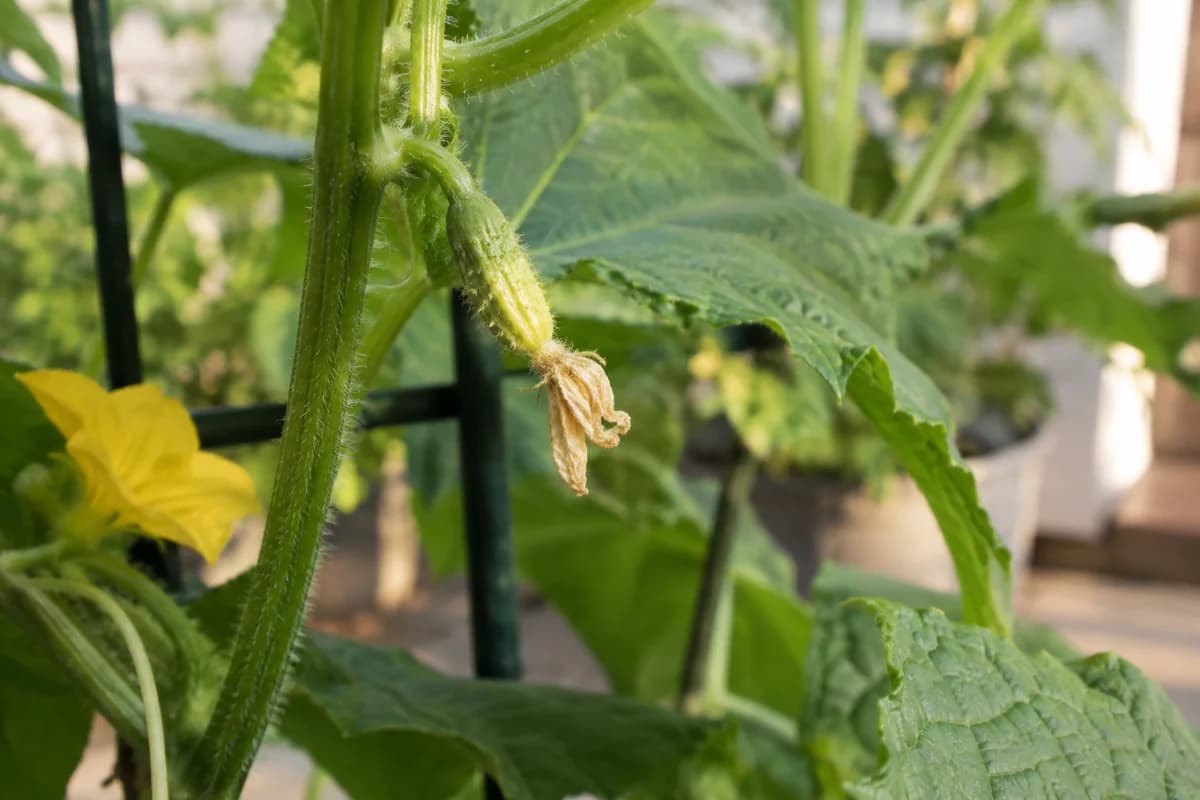
The swelling below a female flower is present before a usable cucumber has developed. If it stops growing and shrivels, check fruit set. Maryland links falling or underdeveloped small fruit with poor pollination, while also noting that weather can interfere with the process. The appearance alone does not prove which part went wrong.
Start with the variety’s pollination requirement. Minnesota distinguishes ordinary bee-pollinated cucumbers from parthenocarpic types that can set fruit without pollination. Bringing insects into an enclosed growing space is not a universal fix.
Our flowers-but-no-fruit guide takes you through flower identification, pollination requirements and plant stress. Use it for repeated failures of tiny fruit; the harvest-size advice for an oversized cucumber will not solve that problem.
Choose a newly opened female flower to follow next. Note its date and photograph the swelling from the same angle on later visits. That record lets you separate a fruit that never got going from one that grew normally and simply stayed on the vine too long.
When the whole plant looks wrong
A patchy fruit on a declining vine deserves more investigation than a single oversized cucumber on a vigorous plant. Look for distorted young leaves, leaf spots, damaged stems and uneven growth. Keep these observations with the fruit photographs.
Use the yellow-leaf checks if the foliage is changing too. They help you sort root-zone problems from patterns that need a plant diagnosis. Do not assume extra nitrogen will correct every pale cucumber.
If the only yellowing appears after harvest, record how long the fruit has been stored and what else is beside it. That is a different investigation from fruit changing colour while still attached.
For example, Utah State notes that cucumbers can yellow when stored near apples. Separating storage observations from growing observations avoids treating the vine for a problem that appeared in the kitchen.
Can you eat yellow cucumbers?
Some yellow cucumbers are grown for eating: Lemon is one documented example. For a variety normally picked green, yellowing commonly signals poorer eating quality. The colour by itself is neither proof of poisoning nor proof that a particular fruit is fit to eat.
Check that you know what was grown and inspect its condition. Do not turn a soft, decaying or mouldy cucumber into a salvage project. Nor should you taste an unidentified or suspect fruit to decide whether it belongs in dinner.
If a cucumber proves unusually bitter during normal eating, stop eating it and discard it, following the Centre for Food Safety guidance on abnormally bitter cucurbits. The bitter-cucumber guide explains that separate issue; yellow colour does not measure bitterness.
For pickles, our choice is to use the next sound, appropriately harvested fruit. Illinois Extension recommends starting preservation with good-quality produce, excluding overripe, diseased or mouldy material. Brine is not a way to reverse poor raw ingredients.
A larger cucumber that is still firm and sound may have another use: NCHFP allows more mature cucumbers in suitable relish and bread-and-butter pickle recipes. Follow a complete recipe that calls for them. That guidance does not approve decaying or unusually bitter fruit.
Pick the next crop sooner
Make the missed fruit a practical adjustment to your picking route. Check behind the trellis as well as the front, move a leaf gently to see below it, and collect fruit for the recipe you intend to make. A hidden cucumber is easier to find when you inspect the same parts of the plant each time.
Use the pickling-cucumber harvest guide to match size and tenderness to the variety and intended use. The one-jar refrigerator recipe is an option for a modest suitable harvest; follow its complete ingredient list and chilled-storage method.
Sources
- Royal Horticultural Society: cucumber harvest and overripe-fruit signs
- Iowa State University Extension: removing overmature fruit
- Illinois Extension: naturally yellow cucumber varieties
- University of Maryland Extension: small-fruit and pollination problems
- University of Minnesota Extension: variety-dependent pollination
- Utah State University Extension: maturity and storage changes
- Illinois Extension: selecting produce for preservation
- National Center for Home Food Preservation: matching firm cucumbers to a pickle style
- Hong Kong Centre for Food Safety: abnormally bitter cucurbit fruit
Keep your project growing.
Pick at the right time
Recognise a useful harvest and handle the cucumbers with care.
Read the guideCheck small fruit failuresFlowers, but no cucumbers?
Work through flowering, pollination and plant conditions before changing your care.
Read the guideIf the taste is wrongWhen your cucumbers taste bitter
Decide what to do with the fruit, then check the plant before the next harvest.
Read the guide