Grow it. · PickleRadio
Cucumber transplant shock: what to do with a wilting seedling
Inspect moisture around the original root ball, reduce abrupt exposure and watch for recovery. Know when collapse needs more than another watering.
In this guide8 sections
Pause before giving the wilted plant more water
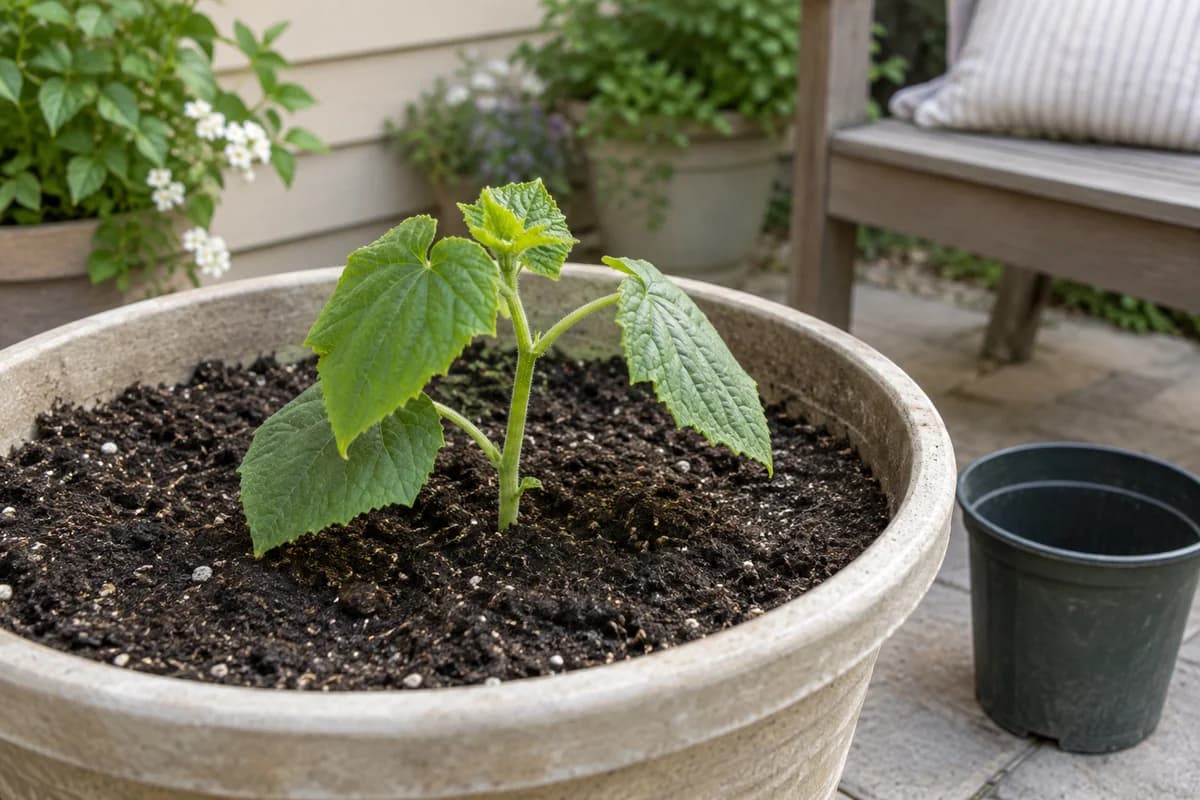
If your cucumber drooped soon after planting out, first check moisture and the change in conditions. “Transplant shock” describes a setback after the move; it does not identify every possible cause of wilt.
A seedling can wilt in dry growing mix, but too much water can also leave its roots short of oxygen. Minnesota’s seedling troubleshooting guide describes both problems. Looking only at the leaves can send you towards the wrong watering decision.
Leave an intact plant in place while you inspect it. Repeatedly lifting it to check the roots adds another disturbance. Start with the root-zone moisture, the stem at soil level and the weather since the move.
Check the original root ball as well as the new soil
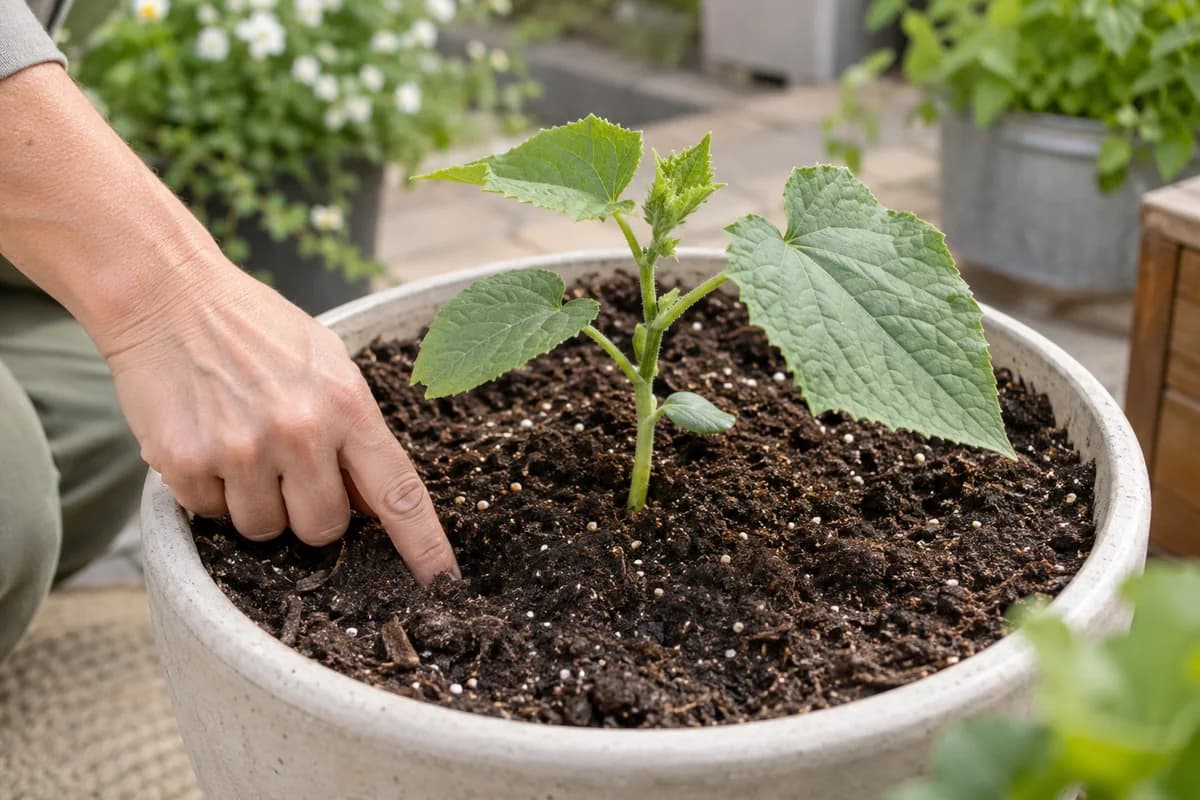
A newly planted cucumber has a small rooted area inside a much larger pot or bed. Check gently beside that original root ball as well as in the surrounding mix. Use a fingertip without digging through the roots; do not judge everything from a dry-looking surface several hand-widths away.
If the rooted area is dry, water gently around it and let water soak in. In a normal container, excess water must be able to drain. If it is already thoroughly wet, stop adding water and inspect the outlet and any saucer or outer pot. Follow the manufacturer’s instructions for a container with a designed reservoir.
The watering guide explains the wet-versus-dry decision. Check again rather than setting a recovery schedule of extra water every few hours. A small seedling cannot be assumed to use the same amount as a fruiting vine.
Also check planting depth. RHS guidance for pot-raised vegetable transplants recommends planting no deeper than their original container level. Do not mound extra wet mix around a failing stem in the hope of propping it up.
Reduce the sudden exposure
A warm windowsill or protected nursery bench can be a large change from a windy outdoor position. The RHS explains that gradual hardening helps tender plants adjust to cooler temperatures and increased air movement. Plants bought ready-grown may still need that transition.
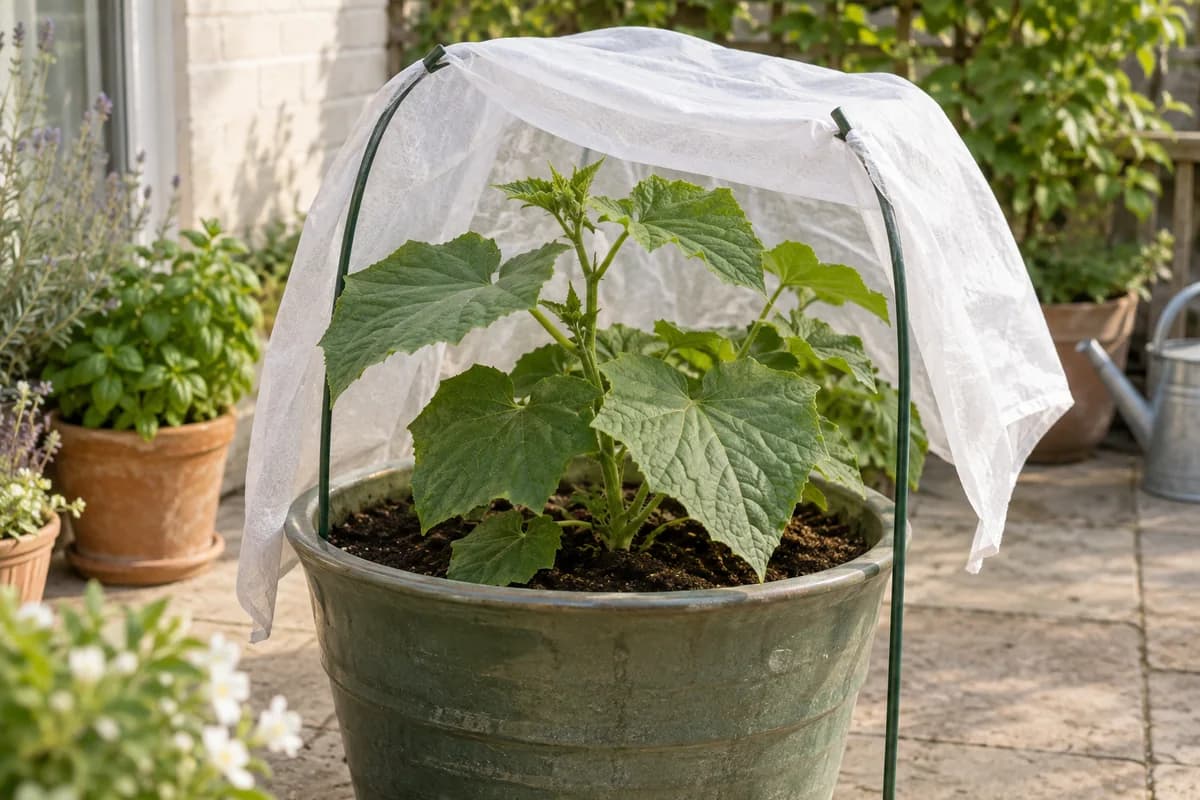
For a newly moved plant caught in strong sun or drying wind, provide temporary, ventilated shelter. An open-sided screen or supported fleece can soften the exposure without touching the leaves. Secure it so it cannot flap against the stem, and inspect the temperature beneath it. Do not seal the plant in a clear plastic bag in sunshine.
Covers can overheat. Utah State explicitly calls for ventilation and temperature checks under cucumber covers. Temporary shelter is something to manage, not something to leave closed while you go away.
Where moisture is adequate, heat-related drooping may ease in the evening, as Maryland describes for vegetables. Check again in the cooler part of the day. Evening recovery is useful information, but persistent or worsening wilt still needs investigation.
Cold changes the decision
Check the actual night forecast. Minnesota includes cold, damp conditions among causes of cucumber leaf injury and wilt. A warm afternoon does not cancel the previous night or warm the whole root zone immediately.
If the whole container can be moved safely, bring a tender transplant under suitable protection during a cold spell. For plants already in a bed, use appropriate local frost protection and keep monitoring conditions. RHS cautions that hardening off does not make frost-sensitive plants frost-hardy.
Do not make a weak seedling endure extra cold or deliberate wilting to “toughen it up”. Adjust the exposure gradually once conditions are suitable. Avoid hauling a large trellised pot around by the vine or its support.
Watch the growing point and the stem
Photograph the plant after the first inspection and compare it in similar light on later visits. Look for leaves holding themselves more firmly and fresh growth beginning to open. An old scorched patch is a poor place to look for proof that the whole plant has recovered.
A thin, softened stem at soil level or a seedling that collapses there needs a different response. Minnesota lists water-soaked, narrowing stems among damping-off symptoms and notes that affected seedlings rarely become vigorous plants. Do not simply keep soaking a collapsed seedling.
If the stem remains intact but the plant keeps declining after moisture and exposure are corrected, ask a local plant adviser to review photographs and the planting history. Include any root damage during the move, fertiliser applied, cold nights and pests you noticed. There is no reliable recovery deadline that fits every cause.
When the main stem has broken through or the young plant has collapsed at a rotting base, we would start a healthy replacement rather than keep adding rescue products. If plants repeatedly fail in the same place, investigate that site before putting another one straight into it.
Prepare the replacement without repeating the problem
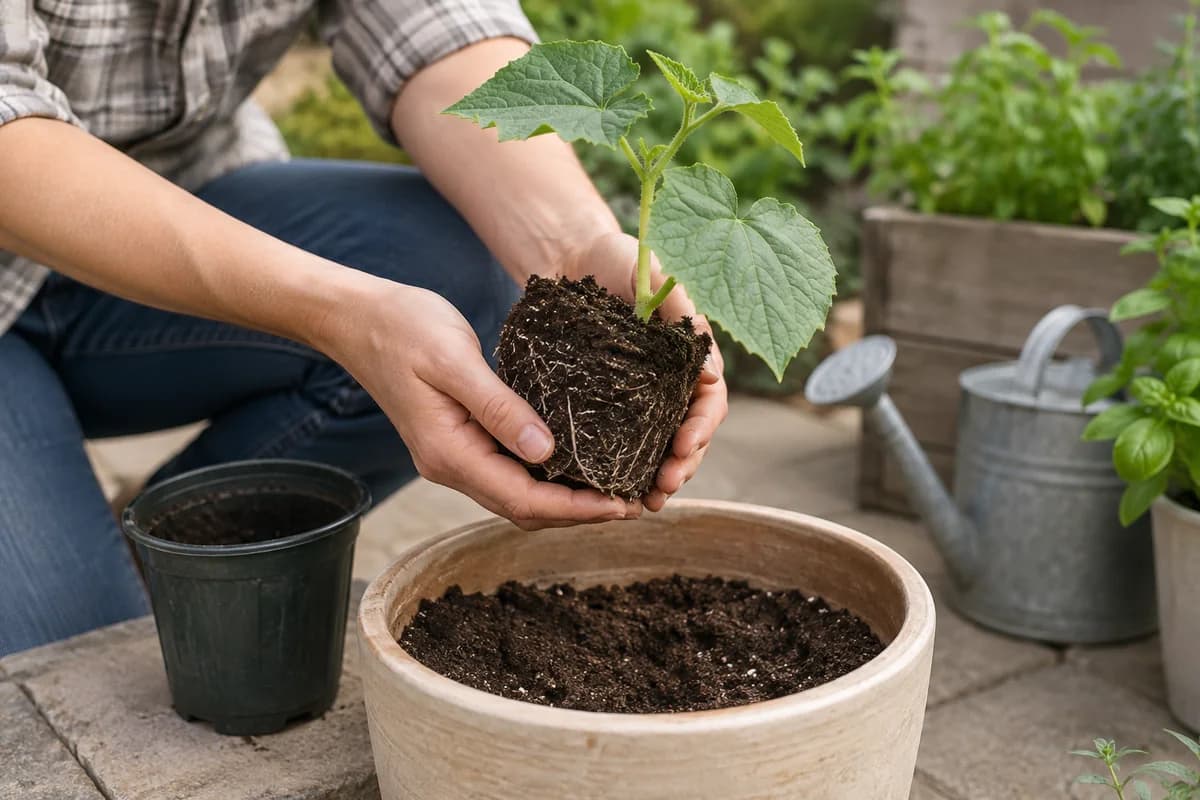
Choose a manageable young transplant with an intact root ball. Utah State advises moving cucumbers with two to three developed leaves and avoiding root damage. The tallest plant on the shop bench is not automatically the easiest one to establish.
Water the transplant before moving it and choose a calm, cloudy period or late afternoon, following Minnesota’s transplanting guidance. Have the planting hole and support ready first. Slip the plant out while supporting the mix; do not pull it free by its stem or tease apart healthy cucumber roots.
Allow gradual acclimatisation before planting out. The RHS gives roughly two to three weeks for hardening tender plants, adjusted for their starting conditions and the weather. The sowing guide covers the planned move; use this page when the move has already gone badly.
Should I feed a cucumber to cure transplant shock?
Do not add a stronger dose as a rescue treatment. First check whether the growing mix already contains feed and what you applied at planting. Record those details if asking for help.
Minnesota includes excess fertiliser salts among conditions associated with damping-off problems. That is another reason to follow the intended feeding programme, rather than treating wilt as proof that the plant needs more nutrients.
Sources
- University of Minnesota Extension: dry and overwatered seedling symptoms
- Royal Horticultural Society: planting depth for pot-raised transplants
- Royal Horticultural Society: gradual hardening and frost limits
- Utah State University Extension: cucumber roots, transplants and cover ventilation
- University of Maryland Extension: heat, moisture and wilting
- University of Minnesota Extension: cold injury in cucumbers
- University of Minnesota Extension: damping-off signs and prevention
- University of Minnesota Extension: preparing and moving vegetable transplants
Keep your project growing.
Still choosing? Find my cucumber.Water and feed your cucumber plant
Use the plant, potting mix and conditions to guide its everyday care.
Read the guidePrepare a replacementSow your cucumber seeds
Get your seeds started and know what to look for as seedlings appear.
Read the guideIf the leaves keep yellowingCheck yellowing cucumber leaves
Read the leaf pattern and inspect the root zone before choosing a treatment.
Read the guide