Grow it. · PickleRadio
Leggy cucumber seedlings: what to change and which plants to keep
A long, leaning cucumber seedling needs a better growing setup. Check the stem, improve light and decide whether it is worth keeping.
In this guide7 sections
Change the growing conditions first
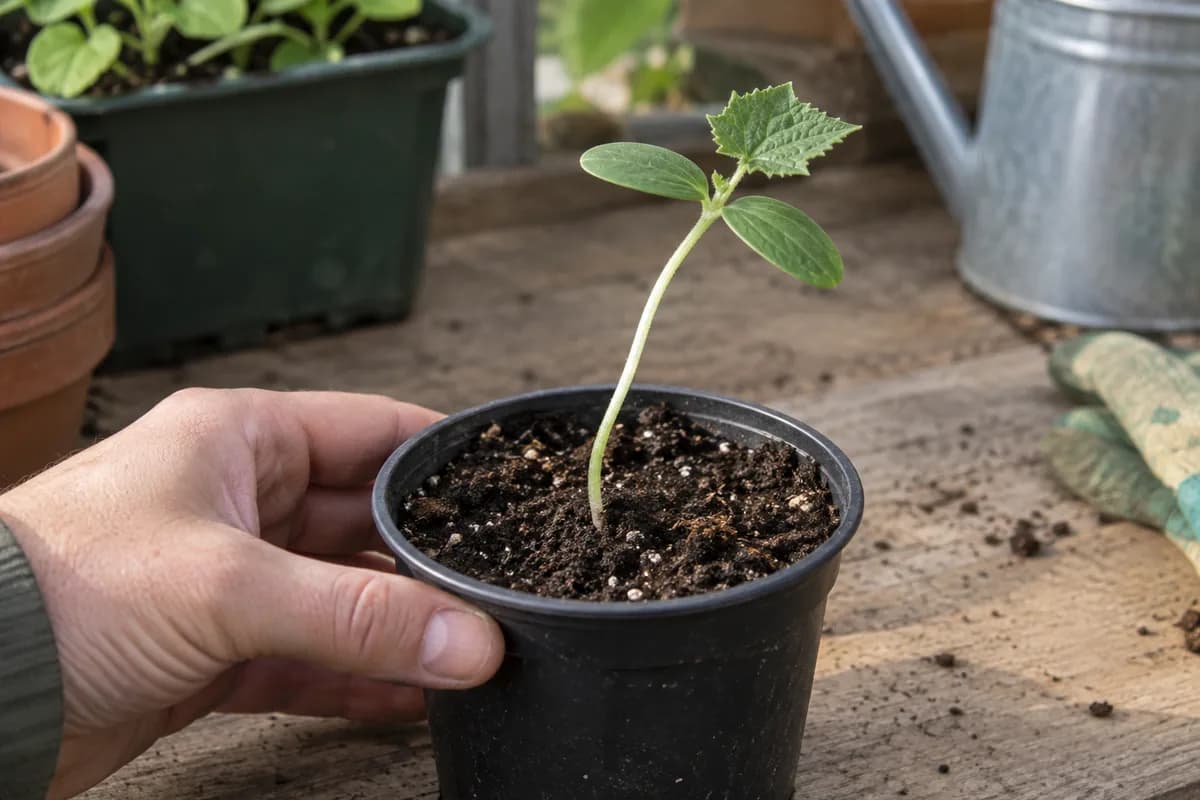
If your cucumber has opened its first leaves on a long, thin stem, start by giving it a brighter growing position and space away from neighbouring leaves. Keep it warm enough to grow. Adding compost around the stem or cutting off the top cannot make up for insufficient light.
Poor light is a recognised cause of stretched cucumber seedlings in the NSW greenhouse production manual (printed page 29). A seedling that has stretched is not automatically lost, but a brighter spot cannot undo the length already produced. Judge the next growth, rather than waiting for the old stem to become short.
Our first choice is to keep a seedling with an intact stem while correcting its setup. If several have stretched, start one replacement pot as well, provided there is still time in your local growing season.
Look at the base before calling it leggy
Find the first pair of smooth, oval seed leaves. These are the cotyledons; the later true leaves have the rougher, toothed shape of a cucumber leaf. A conspicuously long, slender stem below the seed leaves is the usual concern here. Height alone is a poor test once a healthy vine has started growing.
Look where the stem enters the compost. If it is decaying or the seedling has collapsed there, damping off is a different possibility. Do not rely on a photograph to identify the cause. Our seedling failure guide covers this branch of the problem. A plant that wilted after moving into its final pot or bed belongs with the transplant-shock checks.
Make room for the leaves
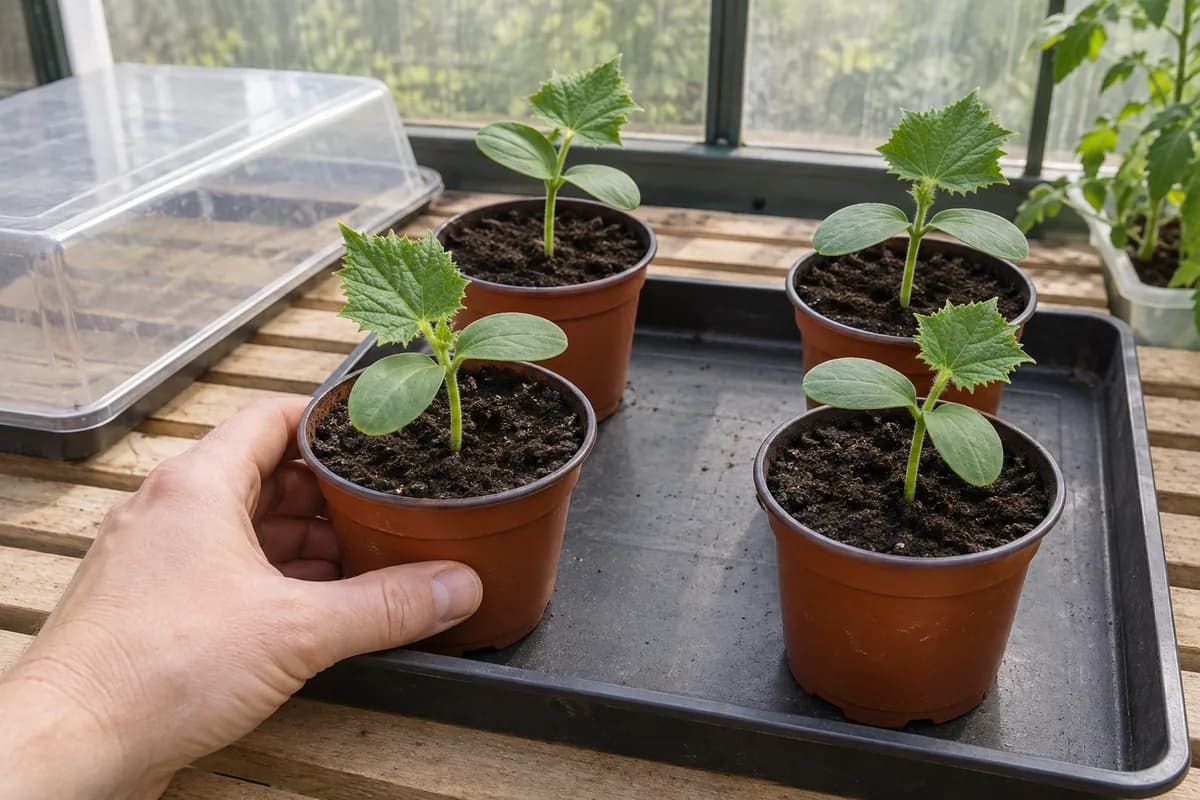
Separate the pots so their leaves are not shading one another. The cucumber propagation guidance warns against crowding. Allow room around each plant as its leaves expand.
Remove a germination lid once the shoots appear, following RHS indoor-sowing aftercare.
Choose the new position by looking from leaf height: is the plant facing open daylight, or the back of a curtain, window frame or another pot? Check again later in the day. Carry each pot by its container, using a tray if necessary; avoid lifting or straightening a seedling by its stem. Turning the pot may change the direction of its lean, but it does not solve a shortage of light.
Keep the warmth appropriate after germination
A hot propagator setting is not a reason to keep adding heat after emergence. Equally, a cold porch is a poor rescue space for cucumbers. Teagasc’s Irish cucumber guidance gives 20–24°C (68–75°F) for growing seedlings on after germination. Treat that as a practical reference for this protected stage, not a required outdoor planting temperature.
Check the temperature where the pots actually stand, including overnight. If the only brighter place is chilly, solve that conflict before moving the plants there permanently.
Keep the compost moist without leaving it saturated, as the RHS seedling aftercare guidance advises. Do not try to make a stretched stem tougher by withholding water until the plant wilts.
Can you bury the long stem?
For a beginner’s rescue attempt, we recommend retaining the existing planting depth. Teagasc’s indoor planting method places the top of the cucumber rootball about level with the surrounding compost. Potting deeper is not our substitute for fixing the growing conditions.
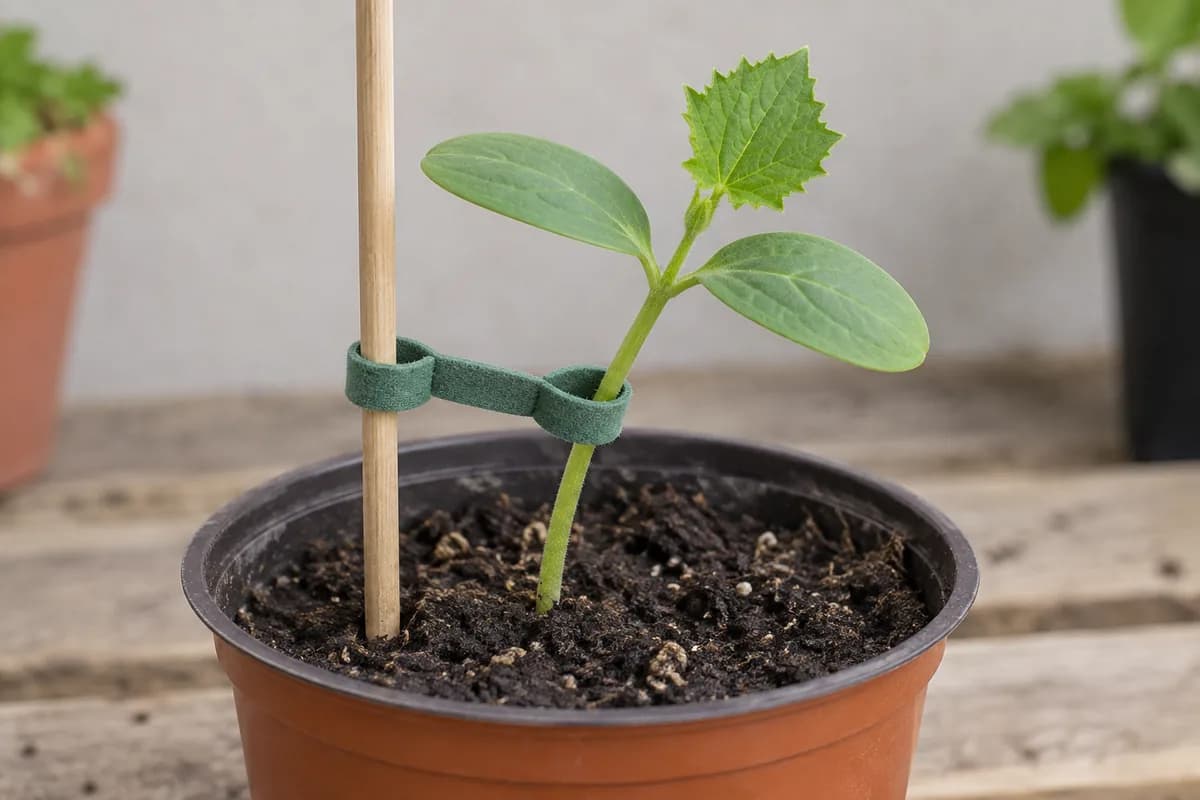
If the plant needs a larger pot, move the intact rootball rather than shaking it bare. A small support can prevent an otherwise sound seedling flopping while you handle the pot. Use a loose, soft tie if necessary, without forcing a bent stem straight. Check that the tie is not rubbing or tightening as the plant grows.
Would a grow light help?
It is worth considering when the available window cannot supply enough light. The Australian manual describes a 12–16-hour day when supplementary lighting is used. That means a lit day, not an instruction to add sixteen lamp hours after a full day of daylight.
Use the lamp maker’s seedling instructions for mounting height and operation. There is no useful single distance for every lamp. Check that the leaves remain within its intended coverage; crowding more pots around the edge recreates the problem. A lamp is optional equipment, not a promise to recover a damaged plant.
Decide what deserves the space
Keep a plant that remains sound and is producing new leaves in the improved position. Take a simple photo now to compare its next growth. Replace one with a broken or rotting base, or one you cannot handle without it collapsing. Those are practical selection decisions, not a diagnosis or a fixed recovery deadline.
Before sowing the replacement, reserve its bright growing-on space. Use our cucumber sowing guide for the individual-pot method and timing. When plants are ready to move outdoors, harden them off gradually rather than using a sudden day of strong sun and wind as a cure for legginess.
Keep your project growing.
Still choosing? Find my cucumber.Seeds not coming up?
Check warmth, moisture and timing before you sow again.
Read the guideStart a replacement potSow your cucumber seeds
Get your seeds started and know what to look for as seedlings appear.
Read the guidePlan a gradual move outdoorsHelp a wilted cucumber transplant
Check the original root ball, exposure and stem before adding more water.
Read the guide