Grow it. · PickleRadio
Sowing cucumber seeds: from pot to planting out
Start one seed in its own pot, give it warmth, then make room for the seedling. Choose your sowing date around the greenhouse or outdoor bed it will move into.
In this guide7 sections
Work backwards from planting out
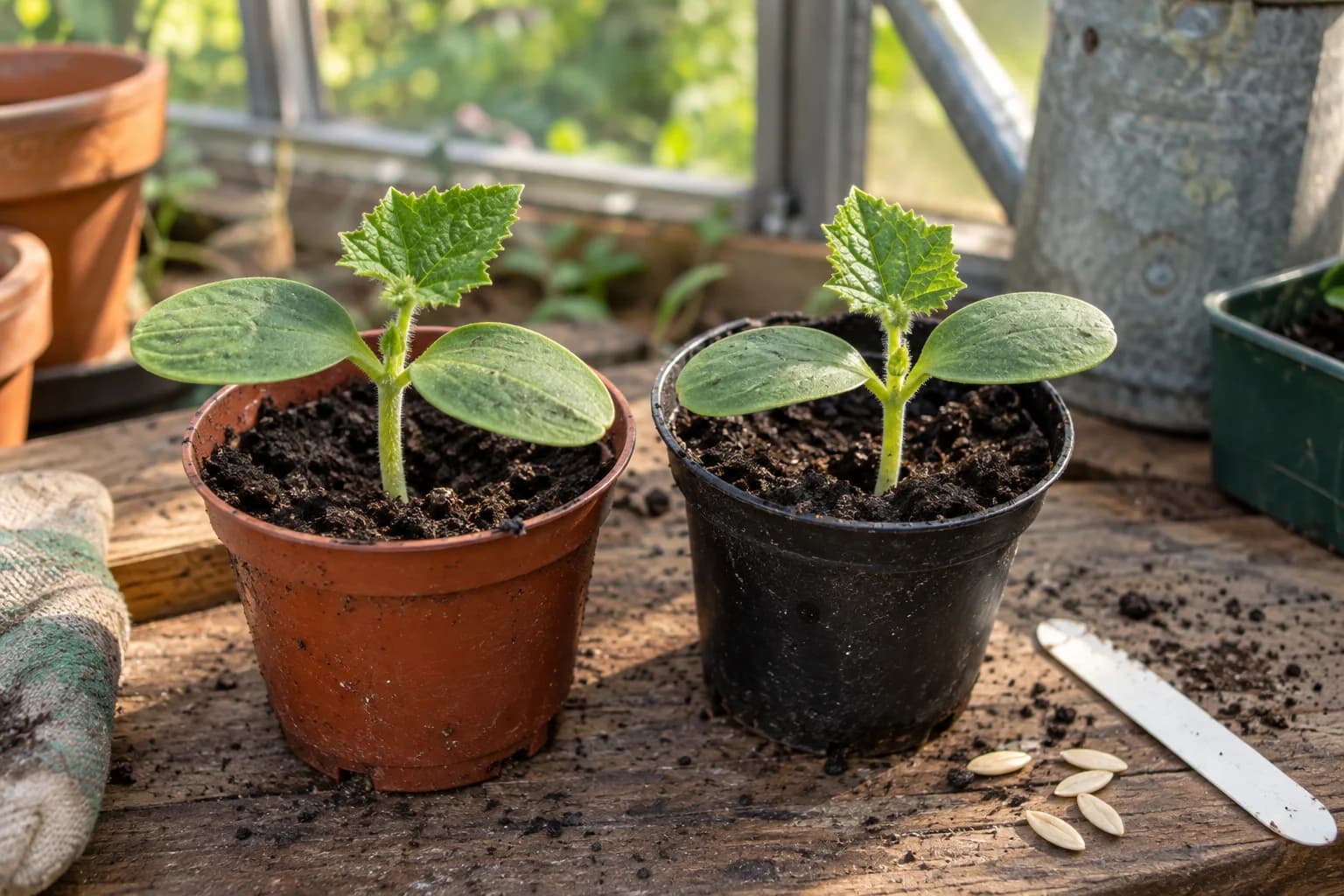
A sunny windowsill can tempt you to start before the greenhouse is ready. The awkward part comes later: a growing cucumber still needs somewhere warm and bright while you wait. For a first attempt, start with a few individually potted seeds and a realistic next home for each plant.
The RHS indoor cucumber method allows about a month in pots. Check the destination before choosing the date:
- Heated greenhouse: plan around the conditions you can maintain, including overnight, rather than the first sunny day.
- Unheated greenhouse or polytunnel: measure what happens inside at night. Having a roof is not evidence that it is ready for tender seedlings.
- Outdoor bed or patio: leave time to acclimatise the plants and wait for suitable weather. If you cannot keep them protected during a cold spell, sow later.
Put these on the bench
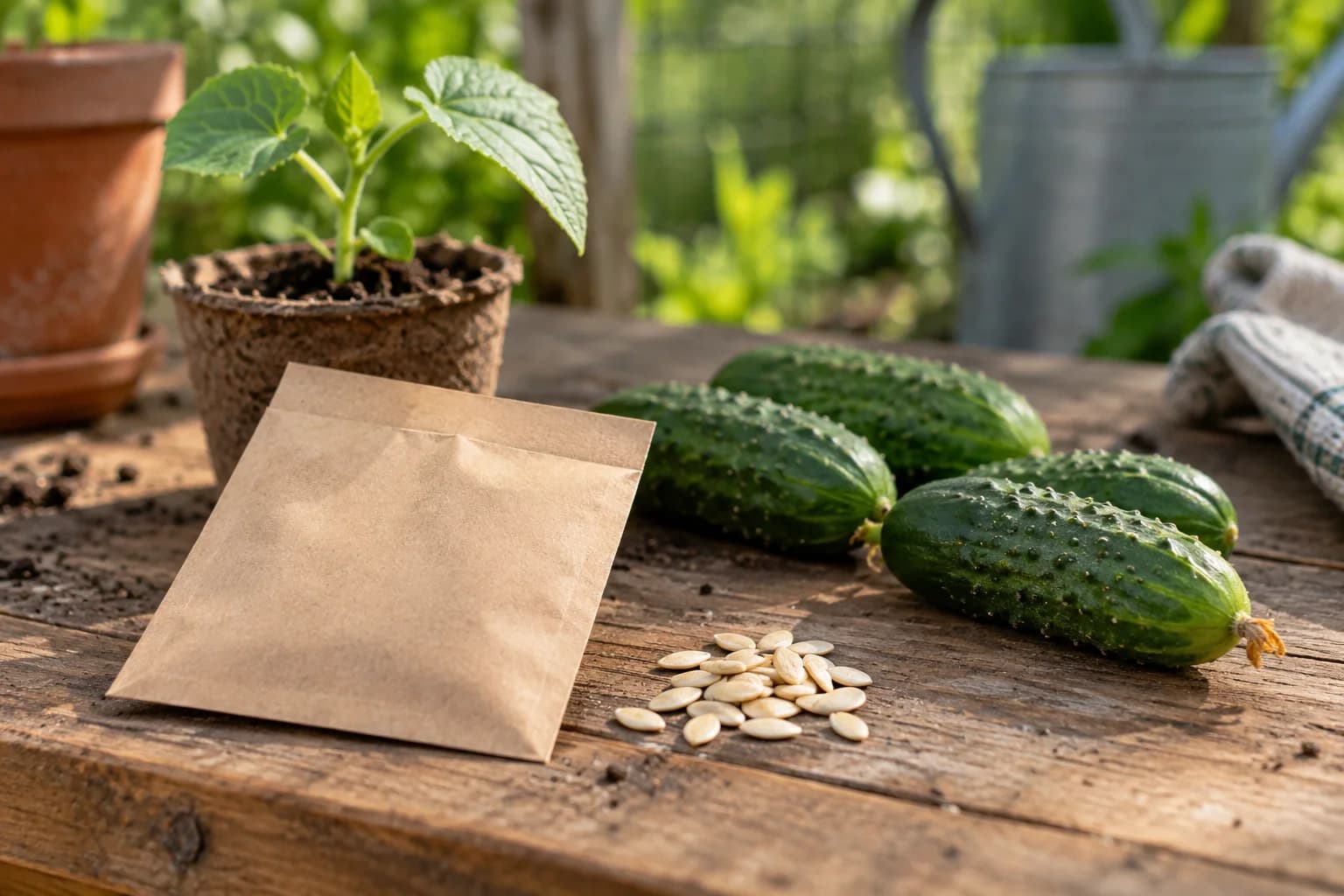
Set out clean 10cm/4in pots with drainage, seed-starting mix, your labelled packet, water, a ruler and a thermometer. Seed compost means a fine, free-draining growing mix, not unfinished material from a compost heap.
Check that the variety suits its eventual home. The cucumber variety finder can help if the packet choice is still unsettled. Write the cultivar and sowing date on each label; identical green shoots will not remind you later.
Sow the seed
- Fill a pot with seed mix, leaving a little space below the rim for watering. Firm gently, moisten the mix and let excess water drain.
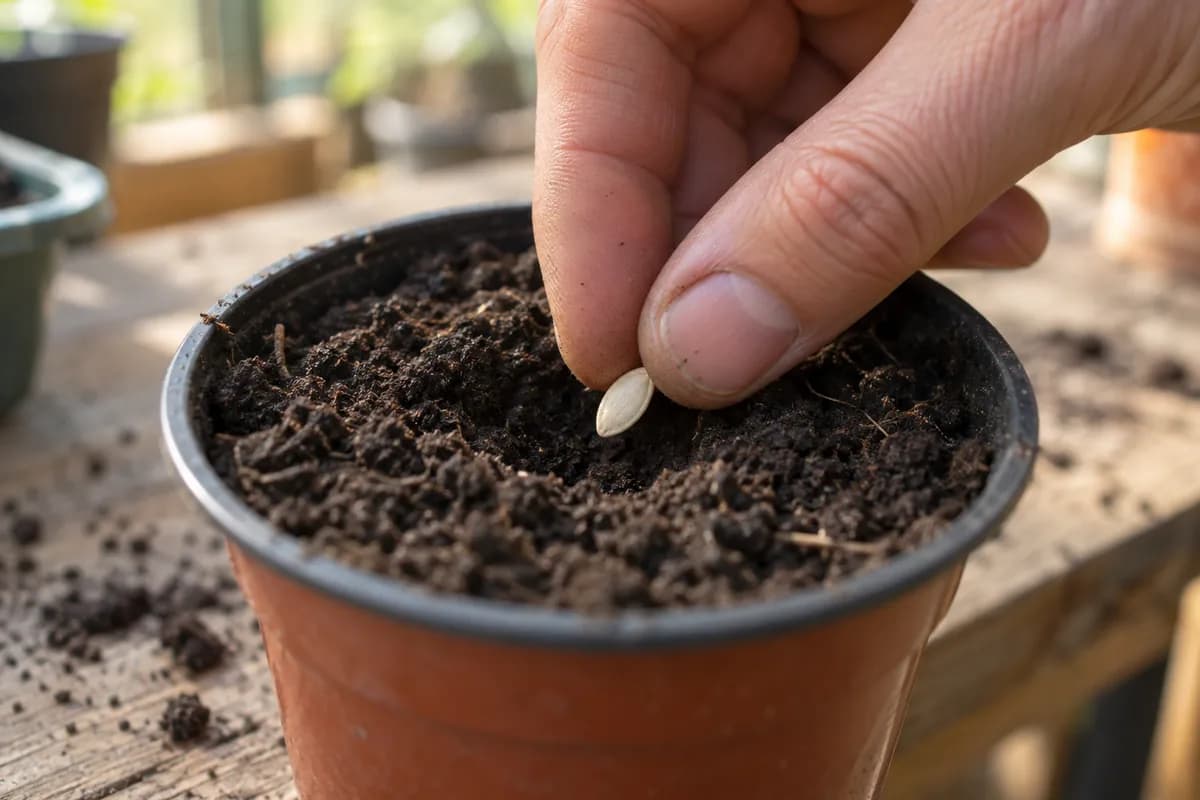
- Check the packet’s depth; the RHS pot method uses 1–2cm, about ½–¾in. Make a central hole, place one seed on its side and cover it.
- Water gently as needed to settle the covering without washing the seed out of place. Add the label. Leave the pot draining freely, rather than standing in a puddle.
- Put the pot somewhere warm and check it daily. A clear cover can help retain moisture; remove it when the seedling appears. Have its bright growing-on position ready before that happens.
The quiet days are still part of the job
The heated-propagator setting is 21°C/70°F; allow roughly one to two weeks for emergence. Follow any more specific packet instructions. Measure where the pots actually sit: a room thermostat across the house tells you little about a cold windowsill. Keep the mix moist without repeatedly soaking an already wet pot.
You may see warmer propagation instructions elsewhere. In Latvian LLKC advice for raising cucumber seedlings, horticultural adviser Māris Narvils specifies 25–27°C air during germination, then lowers it after emergence. He also warns against a cold surface beneath the trays and insufficient light afterwards. This is a covered-tray seedling regime, not an outdoor soil-temperature target.
The useful lesson is to follow a complete setup and change the conditions as the plant develops. If nothing appears, note the temperature and moisture before adding water or starting again. The germination troubleshooting guide separates a slow start from rotting seed and collapsed seedlings.
If you want to sow straight outside
Use an outdoor variety and wait until frost danger has passed and the soil is warm. The packet matters here: Weibulls’ instructions for the pickling cucumber Vorgebirgstrauben require soil above 15°C/59°F, while Utah State’s garden guide uses about 18°C/65°F. These are direct-sowing benchmarks, not a temperature range to average or a guarantee for every cultivar.
Choose a sunny, sheltered spot, clear weeds and prepare the growing sites at the packet’s spacing. Sow at its stated depth, cover and water gently; keep the seedbed moist while waiting. Mark the sites so you can find them again. If the packet directs you to sow several seeds per site, follow its thinning instructions rather than leaving every seedling crowded together.
For a Latvian garden, a UK sowing month cannot settle whether your soil is ready. Use the actual growing place, your packet and the weather outlook. Starting in pots remains an option when outdoor conditions are lagging behind.
Prepare the young plant for its next home
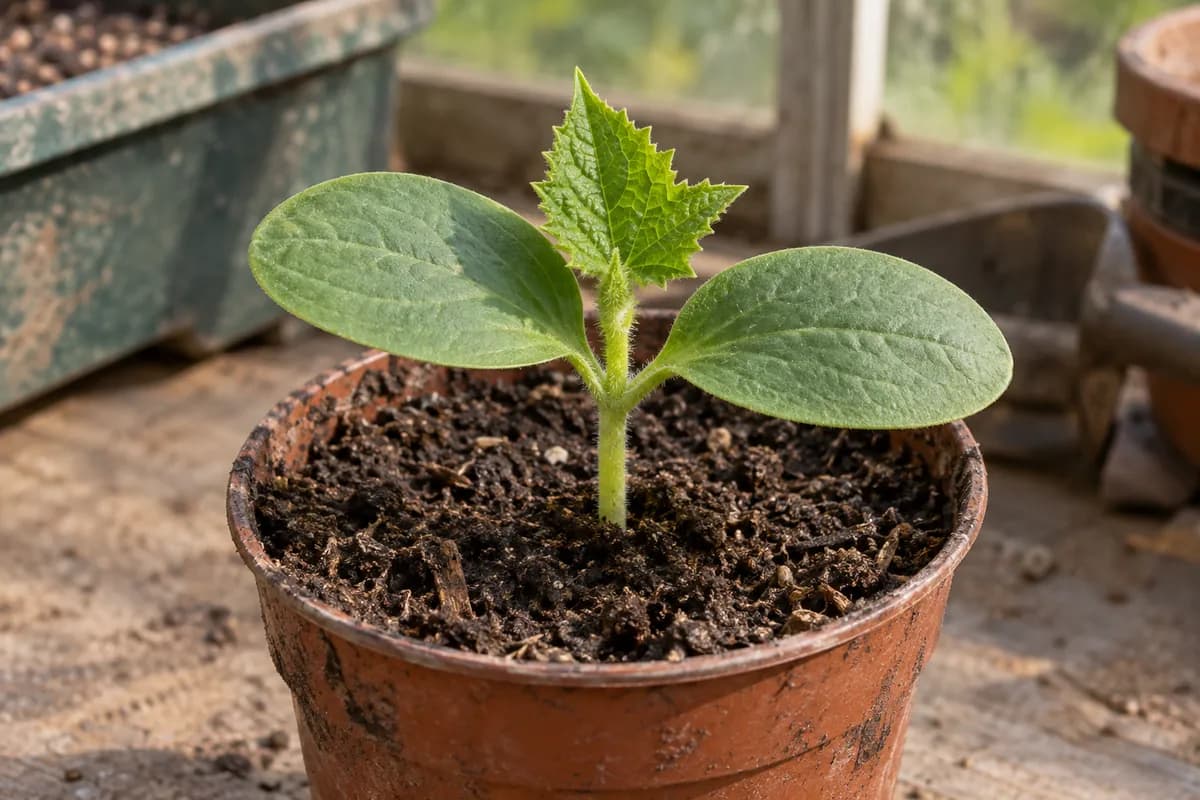
Before moving a strong young plant, check that its destination stays reliably above 12°C, about 54°F, the RHS planting benchmark. Its calendar dates are UK guidance. Keep the plant protected if the forecast threatens frost or a cold spell.
For an outdoor destination, harden it off gradually: begin with a sheltered position during suitable days and bring it under protection at night. Increase exposure over roughly two to three weeks, adjusting to the weather. This does not make a cucumber frost-proof.
Have the final pot or bed ready before lifting the plant. Water it beforehand, then support the rootball as you ease it out; do not pull on the stem or tease its roots apart. The container planting sequence takes you through the move. Afterwards, base watering on the moisture around the roots, rather than carrying on the same routine used for a small seed pot.
Sources
- RHS: cucumber sowing and planting, with UK timing
- LLKC, Māris Narvils: Dēstu laiks ir klāt, part 2 (Latvian; March 2018, page 9)
- Weibulls: outdoor sowing instructions for Vorgebirgstrauben (Swedish)
- Utah State University Extension: cucumber garden-sowing conditions
- RHS: sowing seeds indoors
- RHS: hardening off tender plants
Keep your project growing.
Recognise your seedling’s leaves
Separate the first oval pair from true leaves, then check what the growing plant needs.
Read the guideIf nothing comes upSeeds not coming up?
Check warmth, moisture and timing before you sow again.
Read the guideIf a shoot collapses at its baseCheck a seedling that has collapsed at the base
Inspect the stem, protect the remaining pots and prepare a clean restart if needed.
Read the guideIf seedlings grow long and thinHelp a long, leaning cucumber seedling
Inspect the stem, improve its growing conditions and decide which plants to keep.
Read the guideNext stepWater and feed your cucumber plant
Use the plant, potting mix and conditions to guide its everyday care.
Read the guideIf a moved seedling wiltsHelp a wilted cucumber transplant
Check the original root ball, exposure and stem before adding more water.
Read the guide