Grow it. · PickleRadio
Cucumber seedlings: seed leaves vs true leaves
The first two cucumber leaves look quite different from the next one. Learn which leaves to count, what to check in the pot and how to choose the next step for your seedling.
In this guide5 sections
Two oval leaves, then a different shape
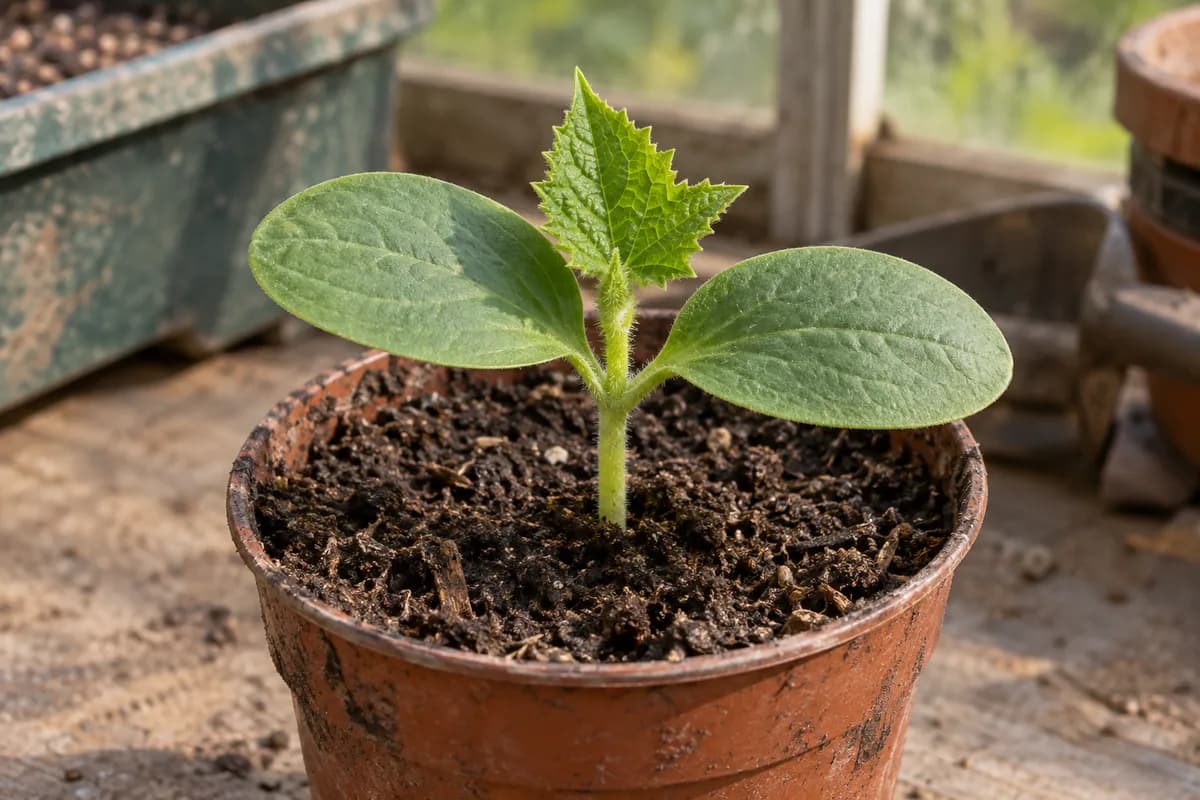
The two broad, oval leaves in the image above stretch out to either side of the stem. The leaf rising between them has a pointed outline and a toothed edge. These are two seed leaves and one true leaf.
Seed leaves are called cotyledons. They are part of the seedling’s earliest growth; the true leaves that follow resemble the leaves of the mature plant. Penn State’s seedling biology guide explains that distinction. A cucumber’s first pair need not look like the leaves on a fruiting vine.
Keep the pot label and seed packet with the plant. This comparison helps you recognise its stage; it cannot identify the cucumber variety or establish that the whole plant is healthy.
Count the true leaves separately
When advice asks for a particular number of true leaves, leave the original oval pair out of your count. In the image, three visible leaves means one true leaf. Look into the centre for the next developing leaf without pulling the leaves apart.
Record the date and how many true leaves have opened. Note a small folded tip as an emerging leaf, then check it again as it opens. Your notes give you a way to follow the same plant over time.
If nothing has emerged yet, start with cucumber seeds not germinating. Leaf counting becomes useful once there is a shoot to inspect.
Set up the pot for its next leaf
For cucumbers started indoors under a germination cover, remove the cover once seedlings appear. Keep them warm and in bright light, as the RHS cucumber guide recommends. Move neighbouring pots apart when their leaves begin to overlap.
Check the growing mix before watering and let excess water drain away. A small nursery pot and a large final container need separate checks; neither needs to be watered simply because another pot does.
If several seedlings share a nursery cell intended for one plant, wait until true leaves develop, choose the strongest and snip the others at mix level. University of Minnesota’s seed-starting guidance recommends cutting rather than pulling them out, which can disturb the roots of the plant you keep.
For the continuing routine, use water and feed cucumbers alongside the instructions on your growing mix and plant feed.
A leaf count is only part of planting readiness
Check the roots and local growing conditions along with the leaf count when deciding whether to plant out. Utah State’s cucumber guidance considers both developed leaves and an established root system when judging a transplant.
Keep the root ball together when moving the plant. For an outdoor destination, introduce outdoor conditions gradually and wait for suitable local warmth and the end of frost risk. The sowing and planting guide takes you through that move; the container-growing guide helps you prepare the final pot and support.
If the seedling needs a closer look
Choose the guide that matches what changed. Inspect the stem and growing mix as well as the leaves.
- A long, thin stem leaning towards the light: check leggy cucumber seedlings.
- A seedling collapsing at its stem base: compare the signs in cucumber damping off.
- Drooping soon after a move: work through cucumber transplant shock.
- Yellowing that needs investigating: use the leaf pattern and root-zone checks in yellow cucumber leaves.
Keep your project growing.
Still choosing? Find my cucumber.Water and feed your cucumber plant
Use the plant, potting mix and conditions to guide its everyday care.
Read the guidePrepare the move outdoorsSow your cucumber seeds
Get your seeds started and know what to look for as seedlings appear.
Read the guideIf the stem is long and thinHelp a long, leaning cucumber seedling
Inspect the stem, improve its growing conditions and decide which plants to keep.
Read the guide